
- DHS S&T has made biosurveillance one of its top three strategic priorities
- Austin, Miami and Seattle are potential sites for expanded biosurveillance testing
- The 2026 Homeland Security Summit will examine technology validation and AI-driven intelligence
The Department of Homeland Security’s Science and Technology Directorate, or DHS S&T, is preparing to make significant investments to modernize its national biosurveillance and threat detection capabilities, FedScoop reported.
Speaking Tuesday during a fireside chat hosted by the Homeland Security & Defense Forum, DHS S&T leaders said biosurveillance has become one of the research arm’s top three strategic priorities. Biosurveillance encompasses detecting and countering chemical, biological, radiological and agricultural threats. The rapid rise of artificial intelligence and emerging biosecurity threats has pushed the agency to expand its technology stack to address increasingly complex biothreat vectors.
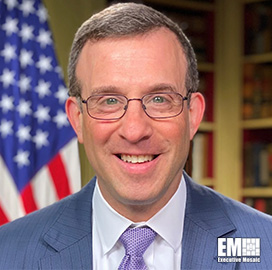
“It’s a major investment that the government does need to make to really advance the integration of data we have, as well as the ability for environmental biodetection in high-threat spaces,” said Julie Brewer, deputy under secretary for science and technology.
Samuel Howerton, chief scientist at DHS S&T, said he regularly considers the potential escape of biological agents, whether by people with “nefarious intent” or by careless scientists. He said preparing the directorate for that moment is a major consideration.

Ready to hear how DHS is turning bold technology investments into mission-ready capabilities? Join Julie Brewer of DHS S&T and fellow homeland security leaders at the Potomac Officers Club’s 2026 Homeland Security Summit on Nov. 10 at The Ritz-Carlton, Tysons Corner, where she’ll share insights on building trust through technology validation. Register now to join the discussion!
Where Will DHS S&T Expand Biosurveillance Field Testing?
DHS S&T has historically centered its biosurveillance field testing in New York City, home to its National Urban Security Technology Laboratory. Brewer noted that about 16 detection technologies are under test and evaluation in the city’s subway system in coordination with state and local teams.
The directorate is exploring expansion sites that include Austin, Miami and Seattle. The effort will build on an existing partnership with the Department of Energy’s Pacific Northwest National Laboratory.
How Is DHS S&T Scaling Its Biosurveillance Workforce?
To drive this multiyear strategic initiative, DHS S&T is increasing its federal personnel capacity and establishing clear research and development roadmaps across government bodies.
According to Brewer, the agency will hire for new programmatic positions within the Homeland Security Advanced Research Projects Agency specifically to manage the expanding biosurveillance portfolio.
DHS S&T leadership has also engaged with congressional committees, interagency partners and White House advisers to formulate a unified “biosurveillance of tomorrow” framework. The effort aims to streamline data integration across federal entities and establish standard operational protocols for responding to complex biosecurity incidents.
How Is DHS S&T Using AI to Detect Biological Threats?
DHS S&T is turning to AI and machine learning to improve data fusion, anomaly detection and early-warning systems, recognizing that sensor hardware alone cannot solve the biosurveillance challenge.
On Sept. 9, the agency launched Ready, Set…ID the Biothreat, an AI-Assisted Algorithmic Biodetection Prize Challenge. The three-stage open-innovation competition offers up to $999,990 in awards for algorithms capable of isolating threat signatures in environmental metagenomic datasets.
David Alexander, senior science adviser at DHS S&T, said tackling evolving biological threats requires a convergence of hardware sensors, data analysis layers and scalable system architectures. Through prize challenges and requests for information, the directorate aims to source nontraditional technology solutions to identify biological agents rapidly and reliably.