- The FY 2026 NDAA mandates a review of OSW’s digital structure
- STIB will assess cloud and AI use on classified networks
- The 2027 Defense R&D Summit will explore trusted AI and more
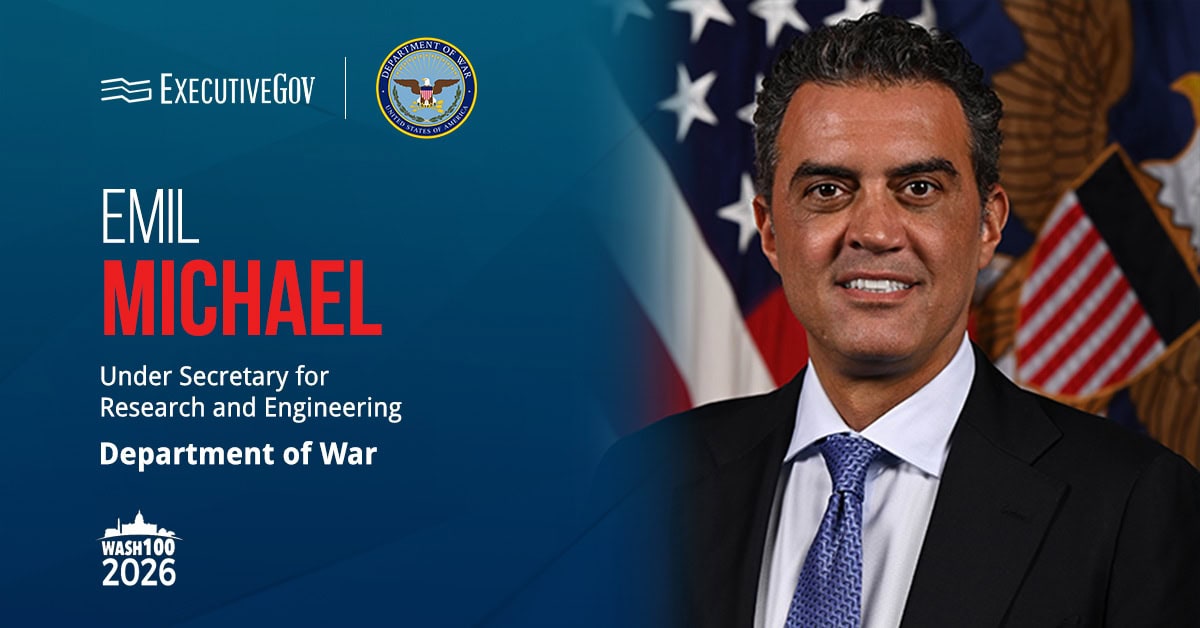
Emil Michael, under secretary of war for research and engineering, has released a memorandum directing the Science, Technology and Innovation Board, or STIB, to study the most effective organizational structure for the Department of War’s digital engineering and software delivery work and its adoption of commercial digital and artificial intelligence services, including software-as-a-service.

DOW’s latest review of its software and commercial technology practices comes as the department works to move new capabilities to warfighters faster. Government and industry leaders will dig into the technologies, strategies and policies shaping the future of warfare at the Potomac Officers Club’s 2027 Defense R&D Summit on Feb. 4, where panel discussions will cover trusted AI, combat-ready AI, assured connectivity, supply chain security and more. Book your spot now!
In the Oct. 27 memo published Friday, Michael wrote that fragmented, layered organizations and slow acquisition processes can limit how quickly software and software-as-a-service offerings reach warfighters, and that commercial-sector practices may offer useful lessons for the defense enterprise.
The study fulfills a Section 907 requirement in the fiscal 2026 National Defense Authorization Act to align digital engineering and software delivery within the Office of the Secretary of War.
What Will the Study Examine in Digital Engineering & Software Delivery?
The study will review DOW’s current software delivery organizations, focusing on:
- Their roles, requirements and outputs
- Limits tied to existing enterprise data management platforms
- Resource allocation and use
- Integration across departmentwide software initiatives
The board will also weigh organizational options for OSW, including:
- Creating a new defense agency or DOW field activity
- Merging the function into an existing agency or field activity
- Consolidating digital development within OSW staff offices
- Refining current structures and authorities
- Hybrid models or other approaches
Its recommendation will consider each option’s costs and trade-offs, lessons from industry and academia, governance frameworks including AI model management, and acquisition authorities that could speed up deployment.
What Will the Study Cover on Commercial Cloud & AI?
The board will assess the value of running commercial cloud, data, AI and compute services on classified networks and how these offerings could advance DOW’s innovation goals.
It will also review how vendors gain authorization and network access for these offerings, including:
- Technical requirements such as facilities, infrastructure and vendor access to data across classified enclaves
- Security requirements for offerings that serve multiple DOW components and intelligence organizations, including a possible reciprocal authorization framework
- Whether current acquisition and financial management regulations support these purchases
- Barriers to entry for small businesses and nontraditional defense contractors
The board will then recommend steps to remove these obstacles, including the roles, resources, authorities and legislative or administrative action needed.
What Is the Timeline for the STIB Study?
The study will begin within 30 days of the memo’s signing and run no longer than 12 months from the first meetings to the final briefing or report, unless the board receives an extension.
The board’s permanent subcommittee on national security innovation will conduct the study and present its findings to the full board at public meetings. The board will then submit its recommendations to Michael as the study’s sponsor, including a transition plan with implementation milestones, funding needs and any required legislative or regulatory changes.
Michael also authorized board staff to request information and personnel access from OSW and DOW component leaders. The board can receive materials at the highest classification levels.
What Other Steps Has Michael Taken to Speed Up DOW Tech Adoption?
The STIB study builds on the board’s mandate to accelerate digital solutions and improve software delivery across the department. DOW outlined that focus in May, when it named a new slate of members and brought the advisory body to 33 members.
Michael has also pushed broader changes to how DOW develops and fields technology. His office released recommendations to reform the department’s R&D enterprise following a 90-day assessment, which he said showed how siloed the enterprise had become over the past half century. DOW also recently unveiled initiatives under the White House science strategy aimed at removing barriers to commercialization, modernizing its labs and securing taxpayer-funded research from foreign exploitation.
At the Potomac Officers Club’s 2026 Defense R&D Summit, Michael and Michael Duffey, under secretary of war for acquisition and sustainment and a 2026 Wash100 honoree, laid out plans to move the Pentagon’s tech incubation past the “valley of death,” where promising technologies stall before fielding. Michael described a funding pipeline that runs from the Defense Innovation Unit’s rapid prototyping contracts to scaling support through APFIT and low-cost production loans from the Office of Strategic Capital.
Michael said the approach expects industry to deliver quickly and share risk. He added that blending new entrants with traditional primes makes DOW’s environment more competitive. Ultimately, he said, he wants to turn the valley of death into a “rainforest of opportunity.”
Michael has also made applied AI the leading priority among the six critical technology areas he set for the department.