

- DOW has tapped In-Q-Tel for technology scouting
- Effort covers six critical technology areas
- The 2027 Defense R&D Summit will explore trusted AI, quantum and more
The Department of War has partnered with the CIA and In-Q-Tel to help move commercial capabilities developed by nontraditional performers into the hands of warfighters faster.

As DOW works to bring early-stage commercial innovations into military operations, defense and industry leaders will gather at the Potomac Officers Club’s 2027 Defense R&D Summit on Feb. 4 to discuss the technologies and strategies shaping the future of warfare. The event will cover unmanned systems, future-generation wireless and 5G, trusted AI and autonomy, quantum computing, advanced space technologies and more. Sign up now to join the conversation.
The department said Friday the agreement was announced by the Office of the Under Secretary of War for Research and Engineering through the Office of the Assistant Secretary of War for Critical Technologies.
What Is the Scope of the Partnership?
The agreement gives DOW’s research and engineering organization access to IQT’s global technology-scouting capabilities and its network of early-stage portfolio companies, with the goal of shortening the time needed to field mature commercial products from non-traditional performers.
IQT will conduct technology scouting and technical due diligence across DOW’s six critical technology areas, or CTAs: applied artificial intelligence; contested logistics technologies; biomanufacturing; quantum and battlefield information dominance; scaled directed energy; and scaled hypersonics. The department will identify transition sponsors and pathways for technologies that pass validation.
The partnership will apply IQT’s venture capital model to evaluate early-stage commercial offerings that match DOW mission needs. Pairing the Critical Technologies Office’s transition pathways with IQT’s scouting network is intended to lower the risk of integrating commercial hardware and software into national security applications.
The organizations plan to launch joint pilot programs in the coming weeks to address near-term battlefield challenges.
What Did DOW Assistant Secretary Michael Dodd Say About the Partnership?
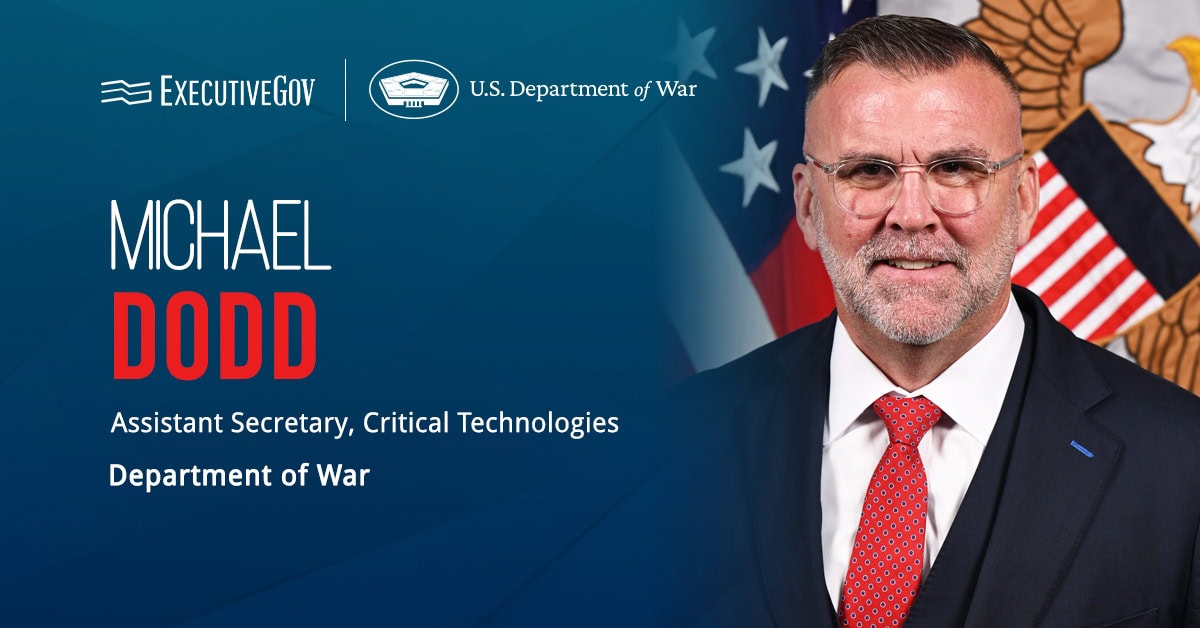
Michael Dodd, assistant secretary of war for critical technologies, said the IQT partnership will help cut bureaucratic barriers across the six CTAs as the department shifts from serving only as a long-term developer of technology to acting as a fast and dependable buyer for nontraditional performers.
“In a contested global threat environment, technological superiority will not be determined by who invents a capability first, but by who delivers it to the warfighter fastest,” Dodd said.
He added that the department will gauge the partnership’s success over the next year by its ability to advance validated commercial prototypes into operational field evaluations with combatant commands.
What Other Critical Technology Efforts Has DOW Pursued?
The IQT partnership builds on a series of DOW actions this year to advance its critical technology priorities.
In February, the Office of the Under Secretary of War for Research and Engineering named senior officials to lead each of the six CTAs, which the department described as enterprisewide priorities for moving research into operational use.
In September, DOW selected NWS Crane to host the Navy’s first shore-based nuclear microreactor. The Critical Technologies Office is helping manage the joint Army, Navy and research and engineering effort, which falls under the contested logistics CTA and aims to field the capability within 24 months.