

- DOT has unveiled five proposed rules for commercial space licensing
- Proposals target the FAA’s Part 450 launch and reentry process
- Former DOT digital chief Pavan Pidugu will keynote the 2026 FedCiv Summit
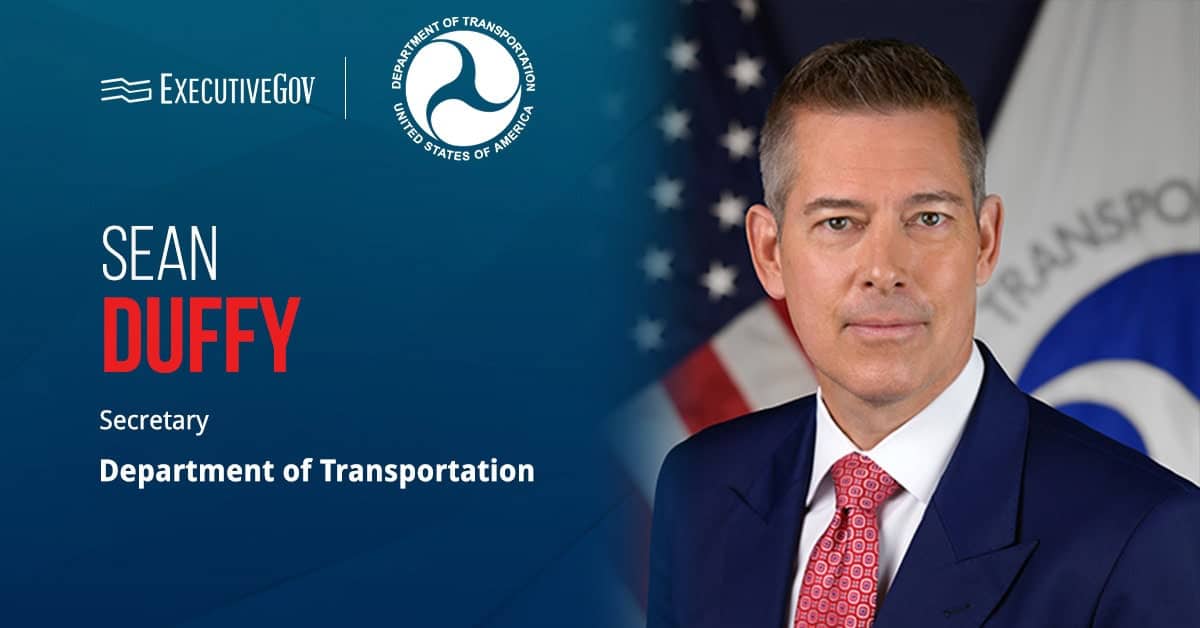
Transportation Secretary Sean Duffy has announced five proposed Federal Aviation Administration rules to streamline and modernize commercial space launch and reentry regulations.

As the Department of Transportation moves to digitize and streamline its commercial space licensing process, federal civilian agencies continue to pursue modernization across their operations. Government and industry leaders will gather at the Potomac Officers Club’s 2026 FedCiv Summit on Oct. 29 to discuss AI, data and cloud infrastructure, cybersecurity, federal and more. Pavan Pidugu, former chief digital and information officer at DOT, is set to keynote the event. Register now to gain firsthand insights from leaders shaping federal civilian modernization priorities.
DOT said Tuesday FAA developed the proposals in coordination with the recently launched Space Policy Administration, Coordination and Execution, or SPACE, Task Force. The proposed rules represent the first pillar of the task force’s effort to reduce regulatory barriers for the U.S. space industry.
How Will the Proposals Change Commercial Space Licensing?
The proposed rules would revise the FAA’s Part 450 licensing process by allowing electronic launch applications, giving operators more flexibility to demonstrate an equivalent level of safety, consolidating required safety analyses into a single submission and eliminating duplicative analyses.
According to DOT, the changes would make licensing more efficient and flexible while maintaining the FAA’s safety standards. The rules also support the Enabling Competition in the Commercial Space Industry executive order and the National Space Transportation Policy, which target 1,000 commercial launches per year by 2030.
The U.S. accounted for 217 of the 329 commercial space launches worldwide in 2025, and DOT expects FAA-licensed launches and reentries to reach 10,000 per year by 2035.
What Are the 5 Proposed Rules?
The FAA’s proposed rules are:
- Streamlining Flight Safety Analysis Methodology Means of Compliance: Applicants would submit three required flight safety analysis items once for the overall analysis instead of for each individual sub-analysis.
- Simplifying Physical Containment Requirements: Operators using physical containment as a hazard control strategy would define flight hazard areas based on the vehicle’s energy, without performing the FAA’s existing flight hazard area analysis.
- Lightning Hazard Mitigation Burden-Reducing Exception: Operators would be exempt from lightning mitigation requirements during descending phases of flight if the vehicle’s flight path is clear of the public and critical assets once it reaches an altitude where lightning is foreseeable.
- Digital Modernization for Licensing Electronic Application Submissions: Applicants could submit license and permit applications, waiver requests and safety element approval requests through electronic methods approved by the FAA administrator, including the agency’s Licensing Electronic Application Portal, which is under development. The rule would also remove the paper submission option.
- Overpressure Blast Effects Analysis Burden Reducing Clarification: Far-field overpressure blast effects analyses would only need to account for existing locations where people could be at risk, not hypothetical locations of members of the public.
The public comment period for each proposed rule closes on Nov. 4.
What Did DOT Officials Say About the Proposed Rules?
Duffy noted that modernizing the commercial licensing process will strengthen the U.S. position in commercial space transportation while maintaining safety standards.
“We can’t unlock the final frontier if we let red tape hold American innovators back from leading the way,” said Duffy.
Ryan McCormack, under secretary for transportation, described the SPACE Task Force as moving quickly to advance U.S. superiority in space. He added that the commercial space industry is evolving rapidly and that federal regulations must keep pace.
According to Liam McKenna, acting deputy FAA administrator, the proposals mark the beginning of the agency’s effort to reduce unnecessary burdens on the commercial space industry.
“These changes will give operators greater flexibility and make the licensing process more efficient, while ensuring the safety of the National Airspace System remains our top priority,” McKenna said.
How Do the Proposed Rules Build on Earlier Commercial Space Efforts?
The proposed rules follow several federal actions aimed at easing regulations for the commercial space industry.
In August 2025, President Donald Trump signed an executive order to promote competition in the commercial space industry. The order directed the transportation secretary to speed up environmental reviews for launch and reentry licenses and remove outdated requirements.
In March, the FAA moved all commercial space licensing under Part 450. The rule lets operators cover multiple missions, vehicles and sites under a single license.
In August, the White House released a national space transportation policy targeting more than 1,000 launches and reentries per year by 2030.