
- Emerging technologies are helping FedCiv agencies share data at incredible speeds
- CMS created a new office to better share healthcare data
- Uncover bridging organizational and jurisdictional boundaries at the 2026 FedCiv Summit!
Emerging technologies like AI are helping federal civilian agencies share trusted data at speeds and complexity never before possible. This helps agencies achieve missions like connecting Americans to valued government services, enhance cybersecurity and improve healthcare access.
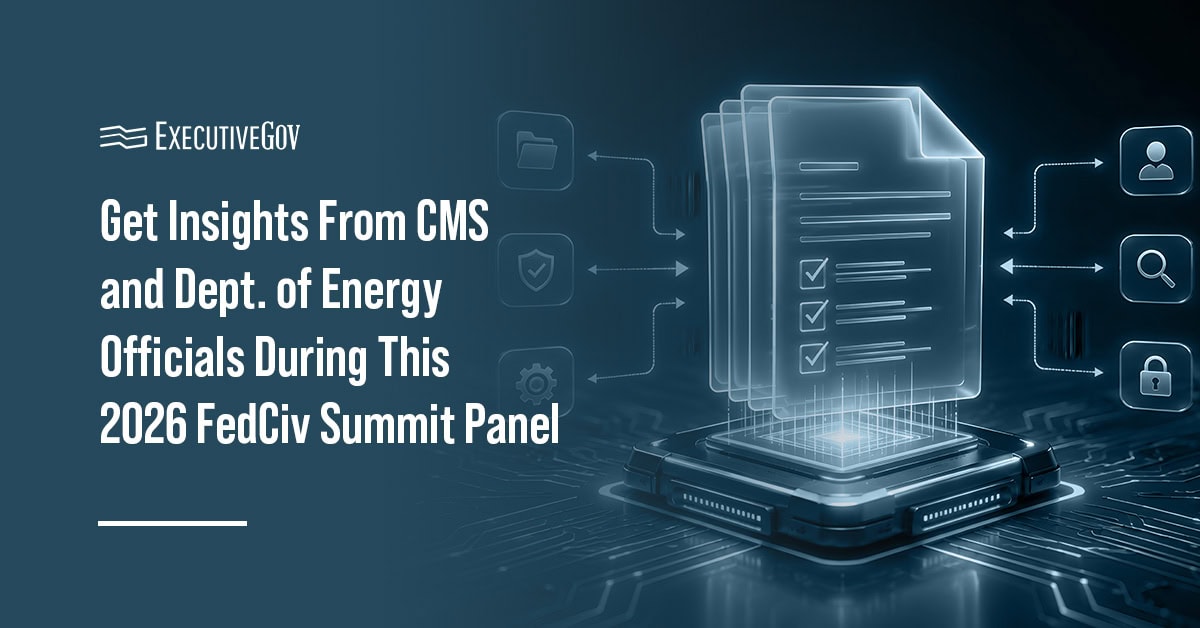
The Connecting the Mission: AI, Interoperability, and Trusted Information Sharing panel discussion at the Potomac Officers Club’s 2026 FedCiv Summit next Thursday, Oct. 29, will dive into bridging organizational and jurisdictional boundaries and strengthening decision-making across the federal enterprise.
This is a fantastic opportunity for GovCons to unpack supply chain resilience and critical infrastructure protection and trusted information-sharing across government and industry. Here are four critical issues around federal civilian agency data-sharing and why this topic should be at the top of every GovCon’s priority list. Sign up today!
What Are Some Key Issues Around Federal Civilian Agency Data-Sharing?
1. CMS Creates New Office to Better Share Data
The Centers for Medicare and Medicaid Services has created a new office to lead the agency’s health technology strategy and better share healthcare data, Healthcare Dive reported. The Office of Health Technology and Products will also supervise the design and development of digital health tools and manage AI implementation.
The office will be led by Amy Gleason, U.S. DOGE Service administrator who will serve as chief product officer and deputy administrator. Gleason has previously served as a strategic advisor to CMS during the Trump administration and leads the agency’s Health Tech Ecosystem program, which has a goal of improving data sharing and digital health adoption.
2. A Cyber Law Extension Stuck in Senate Disagreement
A long-term extension of the bipartisan Cybersecurity Information Sharing Act of 2015 is being blocked by an influential lawmaker, without resolution in sight, according to Roll Call. The legislation, known colloquially as CISA 2015, shields companies providing indicators of a cyber threat with the federal government, or with other firms. This is considered the foundation of federal civilian data sharing in cyber.
But permanent authority for CISA 2015 protections expired in September 2025 and Sen. Rand Paul of Kentucky, Homeland Security Committee chairman, is blocking a pair of bipartisan extension bills that would extend CISA 2015 through fiscal year 2035.
One would extend the program without changes. The other, introduced during the partial federal shutdown in late 2025, has a provision that would have made the liability protections retroactive during the period they lapsed. Both bills are sponsored by Sen. Gary Peters of Michigan, Homeland Security Committee ranking member. Paul has his own amendment that he says would regulate government contacts with social media platforms.
Protecting data-sharing is essential in an era of increased nation-state and ransomware attacks. CISA 2015 provided for a strong response to Salt Typhoon, a China state-sponsored persistent threat actor targeting U.S. telecommunication networks, according to the Wiley law firm.
3. U.S. Releases America.gov AI-Powered Digital Information Gateway
The federal government released America.gov, an innovative digital gateway that is also a cross-agency example of shared citizen-facing data. America.gov combines information from more than 29,000 federal websites with AI-enhanced search functions through a single and simple platform.
Rather than sorting through fragmented individual web pages, forms and agencies, Americans can leverage America.gov to perform common services, like replacing a Social Security card, registering to vote, comparing Medicare plans or registering a business, according to Axios.
The website opens with a chat box similar to mainstream AI tools with suggested queries like “how do I update my address with the U.S. Postal Service?” Users can add attachments or use a voice feature.
4. NIST Joins Genesis Mission
The National Institute of Standards and Technology and the Department of Energy’s Office of Science signed a memorandum of understanding creating a teaming arrangement to use AI to address national science and technology challenges established by the Genesis Mission. NIST and DOE have extensive expertise and a shared interest in using AI to address foundational national challenges and opportunities.
The MOU will allow the two agencies to work together and leverage complementary resources in Genesis Mission areas like quantum science, biotechnology and materials design and discovery.
NIST will perform a pair of its efforts in support of the Genesis Mission through its Centers for AI in Manufacturing and Critical Infrastructure. This is a public-private partnership with the MITRE federally-funded research and development center that has a goal of progressing the delivery of AI-based technology services to industry.
Who Will Be on the Connecting the Mission Panel?
Attend the 2026 FedCiv Summit to hear these distinguished government and industry experts speak.
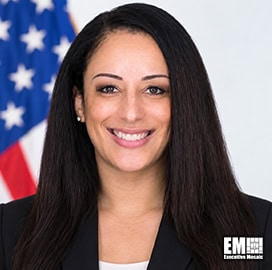
Acting Deputy Director for the Office of Information Technology, CMS
Tiffany Swygert is the acting deputy director for the Office of Information Technology at CMS. Here she oversees infrastructure, enterprise IT platforms, tools and services, Medicare applications and systems modernization, IT communications and the AI portfolio.
Swygert most recently served as deputy director for the Office of Program Operations and Local Engagement, Innovation and Financial Management. Swygert also helped establish CMS’ Technology, Coding and Pricing Group, where, as deputy group director, she helped launch an online portal streamlining coding and payment reviews for new medical technologies.
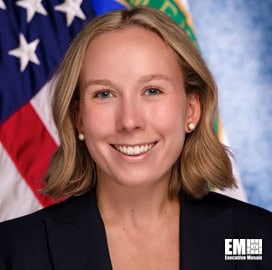
Principal Deputy Director for the Office of Cybersecurity, Energy Security and Emergency Response, U.S. Department of Energy.
Emily Burdick is the principal deputy director for the Office of Cybersecurity, Energy Security and Emergency Response, or CESER, in the DOE. She is responsible for protecting the nation’s energy systems against evolving cyber and physical threats, enhancing preparedness and response, and developing partnerships across federal, state, local and private sector stakeholders.
She was previously both chief of staff for the Office of the Under Secretary of Energy and for CESER. As chief of staff, she was consequential in guiding CESER’s organizational priorities to address rising energy demand and evolving cyber and physical threats.

Chief Growth Officer, Nokia Federal Solutions
Richard Miller is the chief growth officer at Nokia Federal Solutions. He leads business development efforts across the company’s federal government business, providing advanced communications solutions including mobile and tactical communications, optical networking, and routing and switching.
Miller joined Nokia through the acquisition of Infinera and brings more than 30 years of experience in telecommunications and network infrastructure sales, product line management and R&D. He began his career as a U.S. Navy surface warfare officer.

Reid l’Anson (Moderator)
Economist, Kpler
Reid l’Anson is an economist at Kpler. He has spent nearly 10 years studying how macroeconomic policy and geopolitics are moulded by commodity markets. He also provides macroeconomic forecasts for the global economy and the major blocs including the U.S., China, Europe, India, Japan and Brazil.