- Steve Feinberg has named the Air Force secretary as ACME executive agent
- Initial deployment set within 180 days
- The 2027 Defense R&D Summit will explore trusted AI, autonomy and more
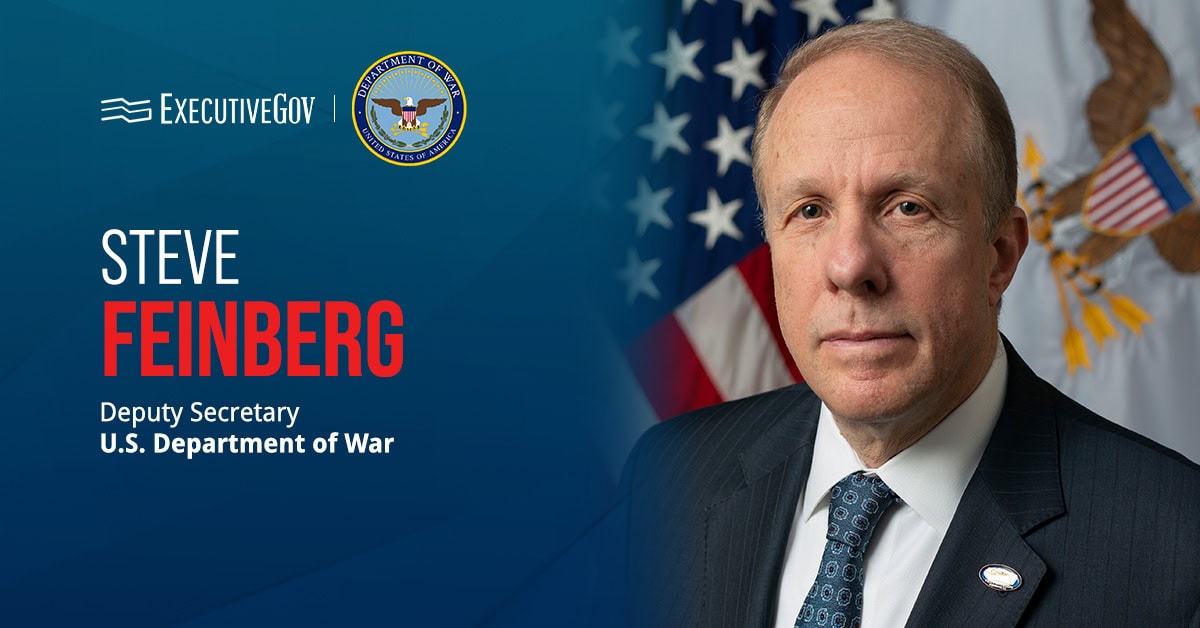
Deputy Secretary of War Steve Feinberg has issued a memorandum calling for a pilot program that will use artificial intelligence-enabled tools to modernize how the Department of War classifies and declassifies documents and data.

As DOW turns to AI to modernize the handling of sensitive information, defense leaders continue to prioritize emerging technologies that support the warfighter. Government and industry experts will gather at the Potomac Officers Club’s 2027 Defense R&D Summit on Feb. 4 to discuss trusted AI and autonomy, quantum computing, unmanned systems and other technologies central to the department’s research and development priorities. Sign up now to join the conversation.
The memo, dated Oct. 5 and addressed to senior Pentagon leaders, combatant commanders and defense agency directors, designates the secretary of the Air Force as the DOW executive agent for the Automated Classification Management Environment, or ACME, a set of AI-aided tools the Department of the Air Force developed to update security classification processes and the management of sensitive information.
“Outdated procedures for the classification and declassification of documents and data are endangering the DoW’s ability to achieve its mission,” Feinberg wrote in the memo. “The dysfunction caused by these procedures leads to incorrect classifications that burden our national security systems, impede interoperability, and slows innovation by trapping vital data in stovepipes.”
What Will the ACME Pilot Do?
Under the memo, the executive agent will roll out a limited automated security classification capability within 180 days. If the pilot meets its goals, the capability will become the department’s “single, digital authoritative reference” for all original classification decisions.
The under secretary of war for intelligence and security will oversee the effort, with technical scalability and cybersecurity support from the DOW chief information officer. Feinberg also directed the under secretary to work with the CIO and the under secretary of war for research and engineering on technical solutions for modernizing classification and declassification, and to issue supporting policies.
DefenseScoop reported that a spokesperson for the Department of the Air Force said the service will follow the memo’s direction.
What Did the Air Force’s ACME RFI Seek?
In August, the Air Force issued a request for information referencing ACME that sought industry input on a classification management ecosystem to replace the labor-intensive manual process the military has used for decades, according to DefenseScoop.
The notice said hundreds of officials hold original classification authority and rely on outdated programs, contributing to high error rates and frequent overclassification. It also noted that the department has a hard-copy backlog of approximately 140 million pages.
How Does the Pilot Fit Into DOW’s Broader AI Push?
The pilot program is the latest step in DOW’s push to expand AI use across its operations.
In January, Secretary of War Pete Hegseth, a two-time Wash100 awardee, issued a memo introducing the department’s Artificial Intelligence Strategy, which seeks to speed up AI adoption across the Pentagon.
In May, DOW signed agreements with eight companies to deploy AI capabilities on its classified networks. The companies include OpenAI, Google and Oracle.
The department has since added ChatGPT Mil and Grok for Government to GenAI.mil, its enterprise generative AI platform. It is also seeking AI tools to track space and missile threats using data from multiple sources, including classified intelligence reports.