
- HHS has reported progress on procurement consolidation
- NIH leads division moves to enterprise acquisition platform
- The 2026 Healthcare Summit on Dec. 3 will explore AI governance and more
The Department of Health and Human Services has detailed its fiscal year 2026 procurement modernization milestones, including the launch of a departmentwide acquisition task force and the shift of contracting activity to shared enterprise systems.

Federal health agencies are rethinking how they acquire technology and services as they pursue enterprise-wide modernization. The Potomac Officers Club’s 2026 Healthcare Summit on Dec. 3 will convene leaders from HHS, the Defense Health Agency, the Veterans Health Administration and other organizations to examine fiscal year 2027 contracting priorities, AI adoption, data privacy and modernization. Register now to hear directly from senior federal health officials.
HHS said Thursday the FY 2026 milestones build on the department’s FY 2025 efficiency work, which generated more than $16 billion in acquisition savings through contract terminations, scope reductions and nonrenewals.
The effort supports President Donald Trump’s executive order on consolidating federal procurement.
What Does PACT Do?
Launched in FY 2026, the Procurement Alignment and Collaboration Taskforce, or PACT, turns lessons from the department’s FY 2025 savings work into repeatable processes. It gives acquisition leaders a shared venue to identify efficiencies and standardize proven buying practices. Under its “One HHS” model, the department can manage requirements shared across divisions as a single effort when doing so improves performance, lowers costs or strengthens accountability.
What Other Procurement Milestones Did HHS Reach in FY2026?
In addition to launching PACT, HHS said it reached the following milestones during the fiscal year:
- Shared services expansion: HHS fully stood up the Office of Mission Acquisition Solutions, or OMAS, which now includes all HHS divisions, has absorbed more than 4,000 contracts from eight divisions and oversees roughly $2.5 billion in FY 2026 obligations.
- Cloud migration: HHS moved its enterprise acquisition platform, the HHS Consolidated Acquisition System, or HCAS, to a Federal Risk and Authorization Management Program-authorized cloud environment. The shift transferred 3.1 terabytes of acquisition data and allowed the department to retire the system’s legacy infrastructure.
- First major division transition: The National Institutes of Health shifted more than 1,000 active awards for common IT and professional services from its legacy business system to HCAS on June 30. HCAS now supports more than 19,500 award actions tied to approximately $6.5 billion in FY2026 obligations.
- Unused funds review: A separate undelivered orders review identified about $174 million in unneeded funds across 882 expired contracts, which HHS deobligated. The department also expects to complete 5,782 contract closeouts this fiscal year.
What Did HHS Officials Say About the Milestones?
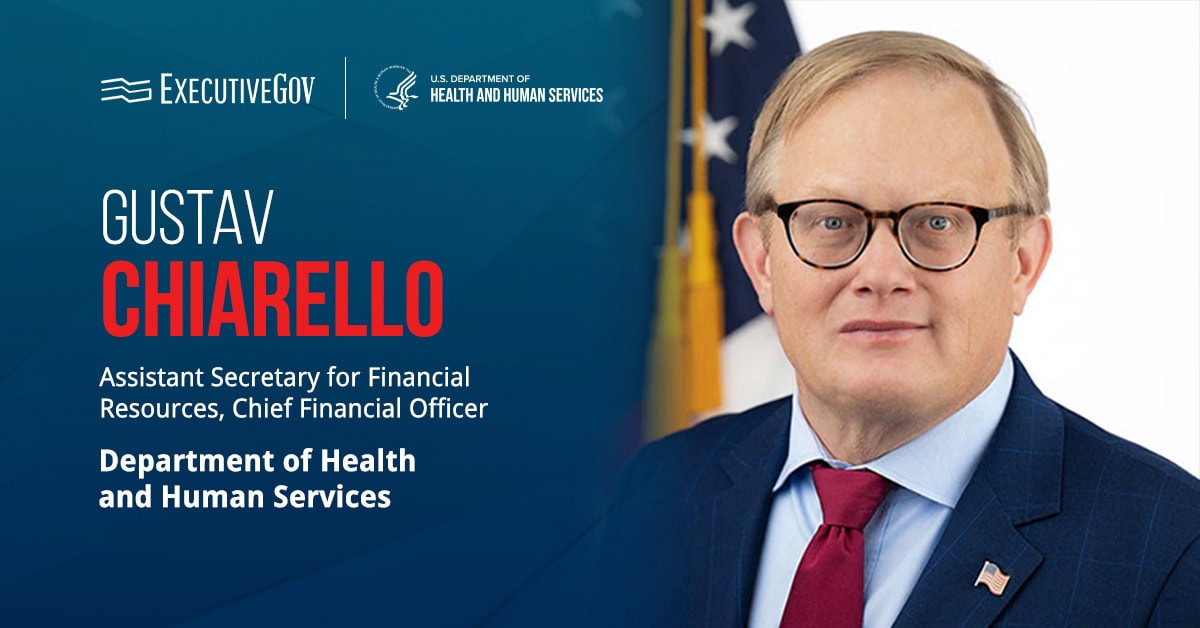
Gustav Chiarello, assistant secretary for financial resources and chief financial officer at HHS, said the department is building lasting systems around the lessons from its FY 2025 savings.
“PACT is helping HHS buy as one organization. It is replacing fragmented processes with shared solutions and strengthening accountability for every dollar entrusted to the Department,” Chiarello added.
Anthony Figliola, principal deputy assistant secretary for financial resources and leader of the department’s enterprise transformation efforts, noted that HHS created PACT to turn its prior-year findings into durable business processes.
“We are consolidating common spending, standardizing how we buy, and replacing duplicative processes with shared solutions. This work will streamline operations and make every taxpayer dollar work harder for the American people,” Figliola stated.
What’s Next for HHS Procurement Modernization?
HHS plans to broaden operations supported by OMAS and evaluate additional categories of common spending for consolidation. Upcoming work includes developing enterprise contracting vehicles for recurring requirements, moving targeted procurement activity to shared acquisition systems and tightening oversight of expired contracts and outstanding obligations. Additional division transitions to HCAS are underway.
How Has HHS Reshaped Its Contract Vehicles?
The milestones follow earlier changes to HHS’ contract vehicles. The National Institutes of Health Information Technology Acquisition and Assessment Center, or NITAAC, canceled the $50 billion CIO-SP4 governmentwide acquisition contract earlier this year, and HHS later announced plans to sunset all NITAAC GWACs on Oct. 29 to consolidate procurement and reduce duplication, with agencies shifting to General Services Administration vehicles.
The department’s Grants Quality Service Management Office has also worked with GSA to create a grants management special item number under the GSA Schedules program.