

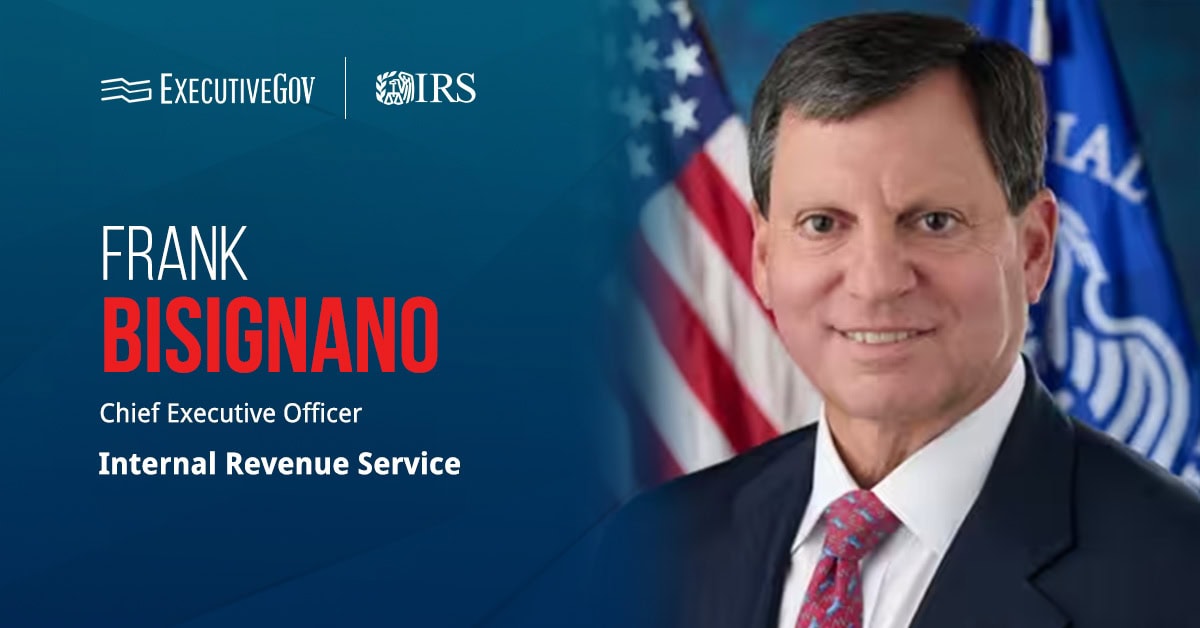
- Frank Bisignano assured IRS employees that an AI-first policy will not eliminate their jobs
- The IRS receives about 5 million amended tax returns annually
- The agency made more than 4,000 hires this year
The Internal Revenue Service is expanding its use of artificial intelligence to enhance service as it prepares for a more complex 2027 tax filing season, Nextgov/FCW reported Friday.
IRS CEO Frank Bisignano said that an “AI-first IRS” will support employees rather than eliminate their jobs and could help the agency boost revenue collections while reducing taxpayer wait times.

The IRS’ use of AI and automation comes as federal agencies weigh how technology can support government services. The Potomac Officers Club’s 2026 FedCiv Summit on Oct. 29 will examine federal shared services and observability, with Commerce Department Deputy CIO Matheus Passos and NOAA’s Adam Nemethy among the panelists. Register today.
How Is IRS Staffing Changing?
Chief Human Capital Officer Alex Kweskin said that despite adding more than 4,000 employees during the year, the IRS ended with about 74,000 workers, roughly the same headcount it had at the start.
The agency plans to continue hiring ahead of the next filing season, which Pandya said will involve twice as many provisions from the One Big Beautiful Bill Act as the 2026 filing season.
How Is the IRS Using AI?
The IRS is already using AI to process amended tax returns, which number about 5 million annually. Chief Information Officer Kaschit Pandya said some amended returns that previously took several weeks can now be processed in fewer than three days with AI and automation.
The IRS had an inventory of 225 AI use cases as of December 2025, according to a recent review by the Treasury Inspector General for Tax Administration. The watchdog has called for stronger documentation of risk assessments and data quality for high-impact AI systems.
The agency also expects broader AI adoption to help address the tax gap between taxes owed and amounts collected. Bisignano said technology could help the IRS raise its compliance rate, which currently stands at about 85 percent based on the agency’s latest estimate.