

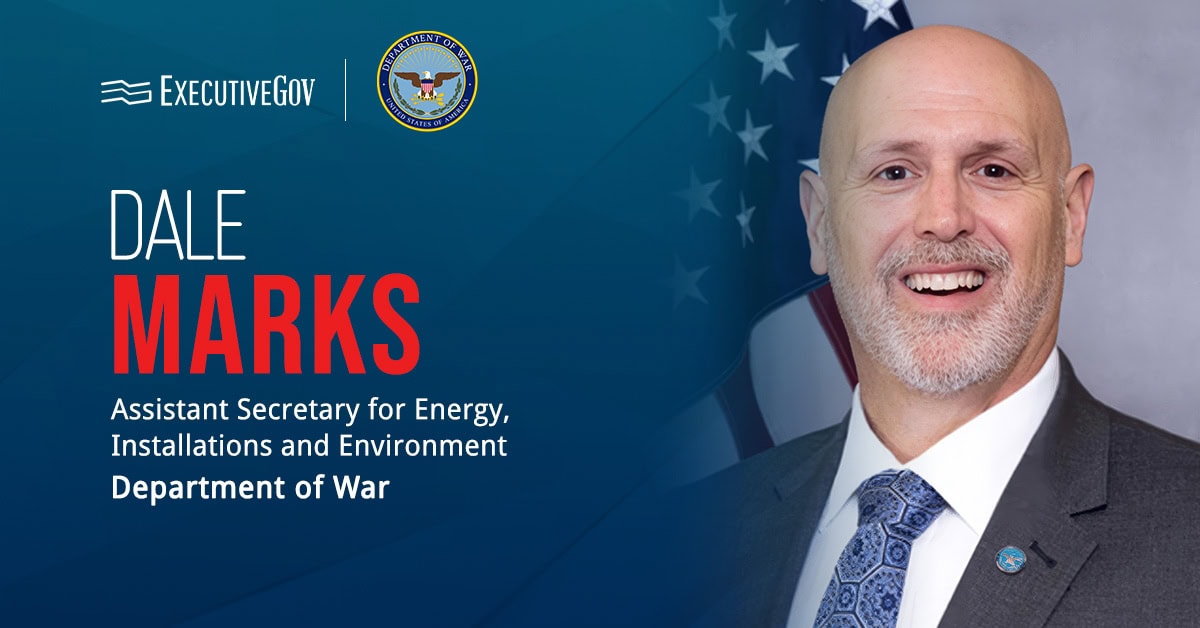
- Dale Marks said the DOW’s prototype base will draw power from microgrids and a small nuclear reactor
- The installation is designed to sustain itself for 30 days if civilian utilities fail
- Marks said industry partners that move quickest will win the chance to build the base
Dale Marks, assistant secretary of war for energy, installations and environment, has outlined plans for a prototype military installation that would produce its own electricity and keep running for 30 days if the civilian grid around it goes down, the Pentagon said Thursday.
Marks laid out the concept during remarks at a recent Association of Defense Communities convention in Tampa, Florida, describing it as the centerpiece of the Next Great American Base initiative. He paired it with Fortress America, a broader effort to harden the military’s infrastructure at home.
“The visions for Fortress America and the Next Great American Base are not business-as-usual bureaucratic programs,” he said. “They are a national calling.”
Secretary of War Pete Hegseth, a two-time Wash100 Award winner, introduced both efforts among six DOW initiatives he unveiled at Marine Corps Base Quantico.
What Will the Next Great American Base Prototype Include?
Marks said the prototype will put Fortress America’s principles into practice as a self-reliant combat installation. Microgrids and a small nuclear reactor will supply its power, its computer networks will be air-gapped and a closed-loop system will protect and reuse its water. While the effort will follow a public-private economic model, the base is meant to operate entirely on internal systems for 30 days, cut off from outside utilities.
“We are no longer building real estate,” he said. “We are building sovereign combat weapons systems.”
The Army is separately pursuing on-site nuclear power through its Janus Program, which awarded up to $2.2 billion to five vendors to build and operate microreactors at military installations.
Marks anticipated skepticism about starting from scratch rather than upgrading current bases, likening a retrofit to “riding a horse into a drone storm.” Once validated, the prototype’s systems and lessons will carry over to older installations, he said.
How Will Industry Help Build the New Base?
Marks named time and bureaucratic inertia as the largest barriers to reshaping the department’s installation footprint. “We must discard the comfortable complacency of a peacetime mindset and execute at a wartime tempo,” he said.
He told attendees that the companies offering the quickest execution and the most ambitious vision will win the opportunity to construct the department’s flagship military community. Under the process Hegseth announced, states will compete to host the base, with governors and adjutants general pitching proposals to DOW leadership.
What Threats Is Fortress America Meant to Counter?
Marks pointed to three warning signs driving both initiatives. He said hostile actors have already embedded access in U.S. energy, water and communications systems, allowing an adversary to cripple domestic infrastructure from within rather than enforce a blockade. He also said one-way attack drones and precision-guided cruise missiles have eliminated any safe rear area, noting that “geography no longer guarantees survival.”
Third, he said adversaries rewrite code, retrain targeting algorithms and field modified autonomous systems within weeks, while DOW algorithm updates can stall for months or years in red tape and outdated IT networks.
The department is already testing responses to the drone threat. Its Joint Interagency Task Force 401 recently selected four laser and microwave systems for a domestic counter-drone pilot.
Fortress America, short for Federal Operations for Resilience, Troop Resources, Energy, Supply and Survivability, rests on five pillars: energy independence, resilient domestic supply chains, hardened and cyber-resilient installations, strategic defense reserves, and space and spectrum resilience. Marks called the effort “our national insurance policy.”
Why Does Marks Tie Base Modernization to Troop Retention?
Marks said the human dimension must stay central as both initiatives advance. Service members, he said, should not be expected to handle high-stakes, multidomain operations and then return to quarters plagued by black mold, broken plumbing and leaking roofs.
“Substandard living conditions are not minor inconveniences,” he said, citing their toll on readiness, morale and retention.
The prototype base will feature a compact, walkable design with quality schools, advanced health care and town centers intended to build community.