
- NOAA is considering a joint cloud migration and modernization effort in FY27
- The agency could use an acquisition strategy similar to its NCEI OneGov procurement
- Hear from NOAA’s Rick Miner and Adam Nemethy at the 2026 FedCiv Summit this Thursday—Oct. 29!
The U.S. National Oceanic and Atmospheric Administration’s National Environmental Satellite, Data and Information Service, or NESDIS, is considering a combination cloud computing migration and modernization project in fiscal year 2027 as it seeks to complete cloud migration efforts from 2026, according to an agency official.
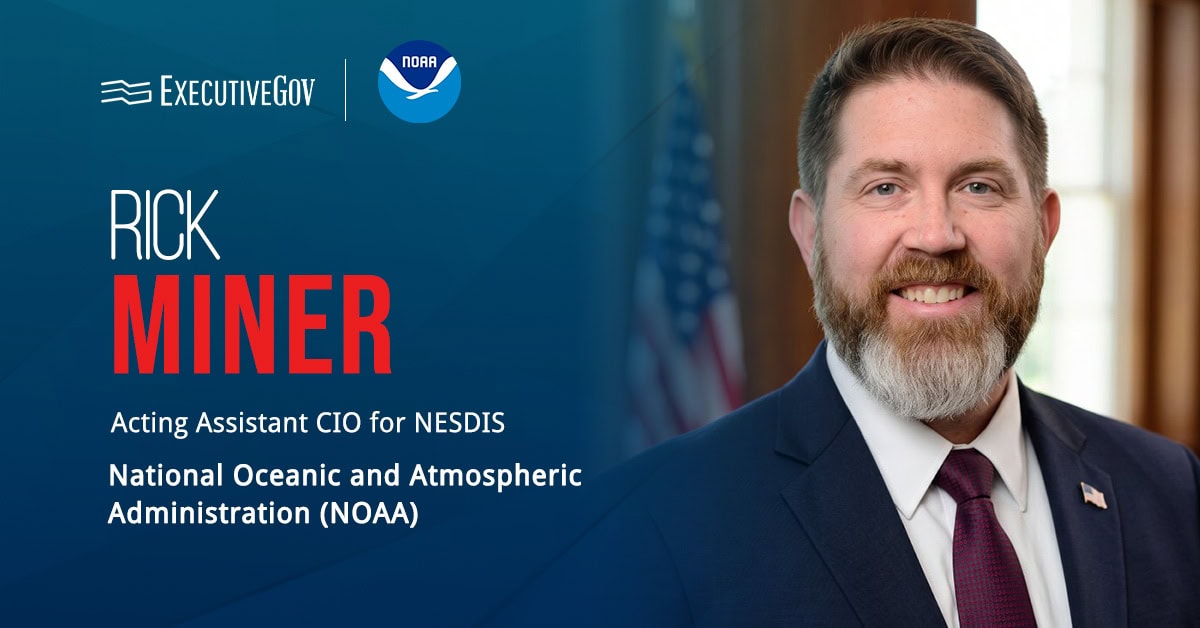
Rick Miner, NOAA acting chief information officer for NESDIS, told ExecutiveGov in an exclusive interview ahead of his appearance at the Potomac Officers Club’s 2026 FedCiv Summit this Thursday, Oct. 29, that one of the agency’s priorities in 2027 is to finish some of its cloud migration efforts. While NOAA doesn’t currently have any active cloud migration procurements, Miner said NOAA could use a solicitation similar to its OneGov procurement that it performed for its National Centers for Environmental Information, a.k.a. NCEI, acquisition for this combination cloud migration/modernization program.
Get exclusive insights from Miner and NOAA N-Wave Director Adam Nemethy at the Potomac Officers Club’s 2026 FedCiv Summit this Thursday—Oct. 29. Hear Miner dive into translating OneGov buying power into modernization outcomes and AI-driven assessment of legacy IT portfolios on The OneGov Effect: Leveraging AI to Accelerate Agency Modernization and Migration panel. Unpack strengthening compliance and cyber posture and observability for hybrid and multi-cloud modernization with Nemethy on the Observability: The Foundation for Federal Shared Services panel. Secure your seat today!
Who Won the NCEI Cloud Contract?
Amazon Web Services ProServe said in June it won the bid to partner with NCEI, which the company called the world’s largest provider of environmental data. AWS ProServe is migrating roughly 1,000 virtual machines and up to 20 petabytes of environmental data from on-premesis data centers to an AWS FedRAMP Moderate cloud environment, while maintaining zero downtime across about 300 active data streams.
NOAA will also consider ways to further commercialize and automate data with AI to improve data quality. Miner said NOAA has been working with the National Hurricane Center and Google on the company’s WeatherNext AI for weather predictions program.
This is part of an overall push, he said, to make sure that the best data feeds not just government weather prediction models but any other private or government advanced technologies like large language models or machine learning to ensure the U.S. has the world’s best weather forecasting.
“One of the responsibilities of NESDIS and NOAA is that authoritative stamp of approval on the quality of the data that’s being provided and the quality of what we do,” Miner said.
The White House is requesting $76 billion for IT programs across federal civilian agencies in fiscal year 2027. Join the conversation with top technology officials on how that money will be spent by attending the Potomac Officers Club’s 2026 FedCiv Summit this Thursday, Oct. 29. Explore generative AI, cloud, zero trust and robotic process automation during keynotes from these leading technology experts:
- Sonny Bhagowalia, U.S. Customs and Border Protection assistant CIO, Office of Information and Technology assistant commissioner and two-time Wash100 Award winner
- Mangala Kuppa, U.S. Department of Labor CIO
- Sunil Madhugiri, CBP chief technology officer
- Bill Briggs, U.S. Small Business Administration deputy administrator
- Polly Hall, U.S. General Services Administration Office of Governmentwide Policy executive lead of the practitioner workstream
Sign up now for this essential GovCon forum!
How Budget Tightening Is Impacting NOAA Missions
NOAA is prioritizing boosting efficiencies to meet mission needs in an era of budget tightening. Miner sees a lot of room for commercialization in data production.
Miner said NOAA is exploring performing satellite management and mission operations with commercial vendors. But NOAA is being careful here, he said, because this data impacts life and safety.
Miner said NOAA in the past performed a pathfinding type of acquisition with a Polar Operational Environmental Satellite and transferred it to a commercial vendor right before it expired. NOAA, he said, wanted to see this could work in a low-risk scenario.
NOAA recently issued a request for information asking if this type of transfer could be done with primary operational satellites and how much that would cost and what it would look like.
“We’re starting to think about that and consider it, if it gets to that point, that would be a great candidate,” Miner said.
Which Contractors are Servicing NOAA Operational Data?
Spire, Tomorrow.io and other companies, he said, are great examples of organizations able to produce some of the observational data NOAA uses, and that the agency is evaluating partnerships and contracts with them to acquire some of that data to augment its own services.
But NOAA also does this type of data exchange with sister agencies across the world to further boost efficiencies.
“We have good partnerships with other foreign governments…where we share data back and forth,” Miner said. “This has the benefit of each of us kind of sharing the cost of acquiring the data while also getting access to more types of data than we would with each of our own budgets individually.”