

- Pete Hegseth has signed a directive to speed up counter-drone fielding
- JIATF-401 to coordinate C-UAS weapons safety reviews
- The 2027 Defense R&D Summit will explore unmanned systems, AI and more
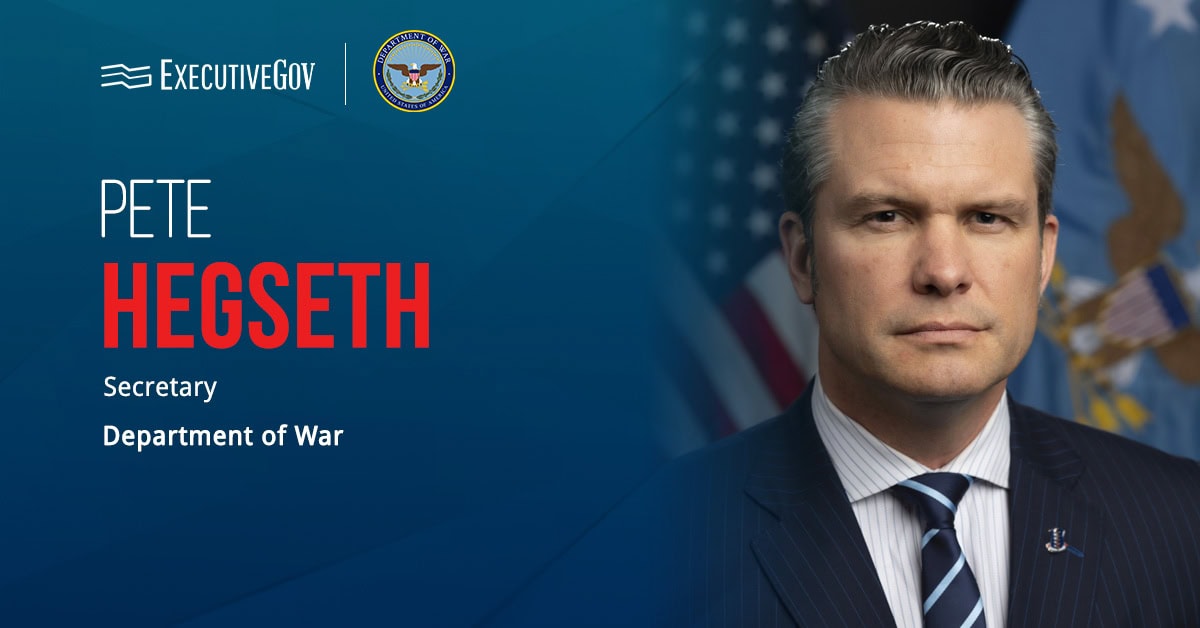
Secretary of War Pete Hegseth, a two-time Wash100 awardee, has issued a memorandum instructing Department of War components to shorten the approval process for getting counter-unmanned aircraft systems, or C-UAS, into the hands of operators.

DOW’s move to speed approvals for counter-drone technologies comes as the department looks to get new capabilities to operators faster. Pentagon technology officials and industry experts will examine unmanned systems, directed energy, trusted AI and autonomy, quantum computing and other defense technologies at the Potomac Officers Club’s 2027 Defense R&D Summit on Feb. 4. Save your seat now to hear where defense R&D investments are headed.
The department said Friday the memo, signed on Sept. 28, does not modify existing rules on operational C-UAS use.
What Barriers Does the Memo Seek to Eliminate?
Hegseth directed leaders across the department to remove obstacles in four areas that have slowed C-UAS fielding:
- Operating and connection authorities: The chief digital and artificial intelligence officer will work with the DOW chief information officer and other offices to set up a single departmentwide process within 30 days, with the goal of reducing approval times for tested systems to days or weeks.
- Spectrum access: The DOW CIO will review how components request C-UAS spectrum and recommend ways to speed up approvals. The CIO will also support the Defense Innovation Unit’s Project Spectrum Strike, an AI-enabled software that automates the coordination, approval and deconfliction of federal radio spectrum use.
- Weapons safety reviews: Services may not repeat a safety review for the same system and use case unless a material change creates new risk. Joint Interagency Task Force 401, or JIATF-401, will coordinate these reviews across the department.
- Legal reviews: C-UAS weapon reviews should be completed within 10 days of receiving the required information, and systems that are not weapons, such as passive sensors, will not face extensive review.
What Principles Will Guide DOW’s C-UAS Approval Decisions?
The memo also sets out five principles that DOW will apply right away so commanders can act quickly when drone threats arise:
- Accountability for barriers: Each approval hurdle will be assigned a responsible owner, a deadline and an escalation route, and delays or denials that cannot be settled quickly must be recorded and raised to higher levels.
- Delay as a risk factor: Commanders should weigh the risk of delay alongside the risk of employing C-UAS. Any rejected request must include a signed explanation and go to JIATF-401.
- Reciprocity across the department: When another service, combatant command, defense agency or federal agency has already cleared a component, configuration, use case, test result or mitigation measure, that existing documentation must be used to speed up approvals for commanders facing the same threat.
- Interim approvals: When testing points to low or manageable risk, approvers will issue interim, conditional or time-limited approvals so operators can use systems while longer-term documentation is completed.
- Capability beyond hardware: Acquiring, testing or delivering a system is not considered a success unless operators can use it lawfully and safely, which depends on having the right personnel, policies, permissions and training in place.
If an approval authority does not respond to a request within 30 days, the requester must notify the DOW secretary’s front office.
How Does the Latest Memo Build on Prior DOW Counter-Drone Efforts?
The C-UAS memo builds on earlier steps Hegseth has taken to accelerate the department’s drone and counter-drone work. In July 2025, he issued a memo directing the military to equip warfighters with U.S.-built drones, rescinding policies that had limited drone production and access. In July of this year, he established a direct-reporting portfolio manager for unmanned systems to oversee department-wide drone and counter-drone investments and operations.
JIATF-401, which Hegseth established in August 2025 to lead DOW’s counter-small UAS efforts, has also taken steps to speed up the delivery of drone defenses. In January, the task force released updated counter-UAS guidance for homeland installations, expanding the authority of installation commanders to detect, assess and respond to drone threats. In March, it adopted standard testing guidelines for counter-drone technologies. In July, it released a handbook on countering drone threats to promote a common understanding of the threat and of defense strategies across government partners.