- Navy has launched RASWDC, an Echelon 3 command under U.S. Fleet Forces Command
- The center will test unmanned systems and develop doctrine and tactics to certify them for the fleet
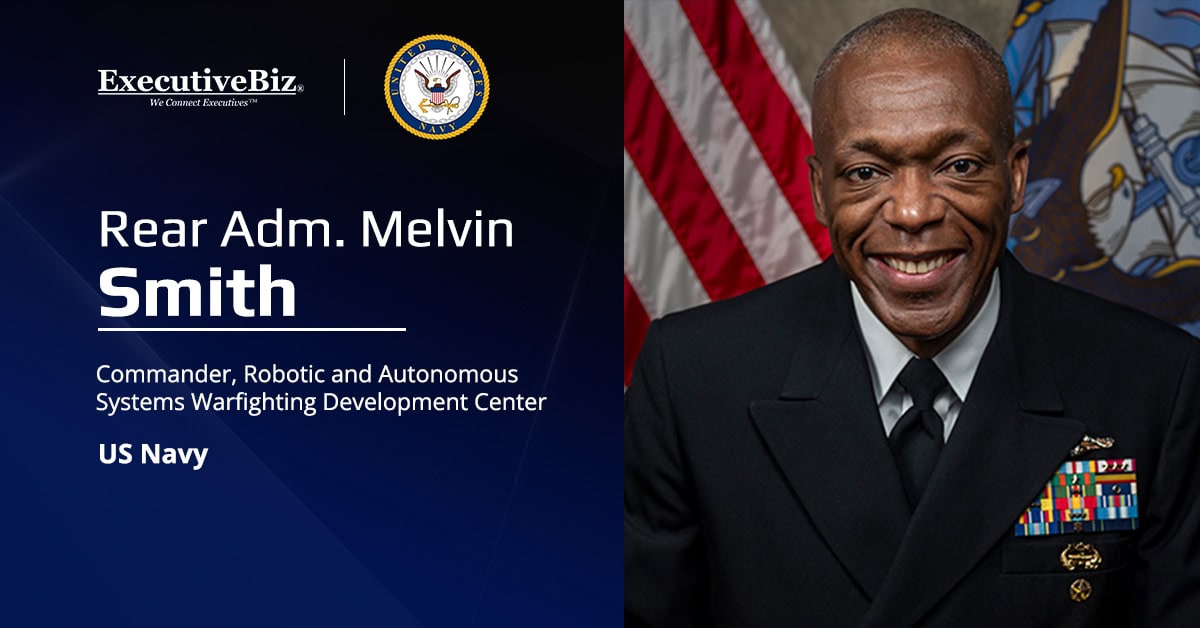
- Rear Adm. Melvin Smith leads the new command as it moves toward full operational capability
The U.S. Navy has launched the Robotic and Autonomous Systems Warfighting Development Center, or RASWDC, a new command charged with speeding how the service fields and employs unmanned platforms at sea.
Based at Joint Expeditionary Base Little Creek-Fort Story, the Echelon 3 organization reports to U.S. Fleet Forces Command. The Navy said Thursday the center will act as the fleet’s central hub for bringing robotic and autonomous capabilities into operations.
What Is RASWDC’s Mission?
The center’s work spans three lines of effort. Under “the foundry,” it will tie field experience to future capability development. For “the fleet,” it will run operational tests in realistic settings and coordinate among the service’s warfare communities. To ready sailors for “the fight,” it will develop doctrine and tactics, techniques and procedures. It will also build a tactical instruction framework to certify and deploy new platforms.
RASWDC will not supplant existing type commanders, systems commands, operational units or other warfighting development centers. It will instead work alongside them to fold in emerging requirements and exchange lessons learned.
How Will RASWDC Connect Acquisition and Operations?
RASWDC pairs with the Navy’s direct reporting portfolio manager for robotic and autonomous systems created in August. The portfolio manager holds single-point authority over acquisition, requirements, budgets, technical standards and fielding, while RASWDC concentrates on operational use.
The arrangement is intended to shorten the feedback cycle between acquisition officials and operating forces. RASWDC will relay performance data from experimentation, testing and training back to program managers and developers.
The new command adds to broader Navy robotics work. In July, the Naval Research Laboratory’s Robotic Servicing of Geosynchronous Satellites payload launched aboard SpaceLogistics’ Mission Robotic Vehicle to demonstrate on-orbit satellite repair.
Who Leads RASWDC?
Rear Adm. Melvin Smith is the center’s first commander and serves as supported commander for its stand-up. He is guiding a phased plan spanning near-, mid- and long-range goals to shape leadership, mission ties and resourcing as RASWDC advances toward full operational capability.
“This is just day one,” Smith said. “Our purpose here is to consolidate the Navy’s autonomous efforts across air, surface, and undersea domains, and give them a single home here at Little Creek.”
He added, “We are here to make sure our forces don’t just field unmanned systems, but dominate with them.”