Processing....

Logo

Digital News Coverage of Government Contracting and Federal Policy Landscape
Sticky Logo
  • Home
  • Acquisition & Procurement
  • Agencies
    • DoD
    • Intelligence
    • DHS
    • Civilian
    • Space
  • Cybersecurity
  • Technology
  • Executives
    • Profiles
    • Announcements
    • Awards
  • News
  • Articles
  • About
  • Wash100
  • Contact Us
    • Advertising
    • Submit your news
    • Jobs
Logo
News
Bipartisan Bill to Reauthorize Section 702 Intelligence Collection Authority, Introduce Surveillance Reform Measures
by Jane Edwards
Published on November 8, 2023
Bipartisan Bill to Reauthorize Section 702 Intelligence Collection Authority, Introduce Surveillance Reform Measures

Four Senate and House lawmakers have introduced a bipartisan bill that would reauthorize for four years the Foreign Intelligence Surveillance Act’s Section 702 provision and establish accountability measures and protections to prevent warrantless searches and other forms of surveillance abuse.

Sens. Ron Wyden, D-Ore., and Mike Lee, R-Utah introduced the Government Surveillance Reform Act with Reps. Warren Davidson, R-Ohio, and Zoe Lofgren, D-Calif.

“Our bill continues to give government agencies broad authority to collect information on threats at home and abroad, including the ability to act quickly in emergencies and settle up with the court later. But it creates much stronger protections for the privacy of law-abiding Americans, and restores the warrant protections that are at the heart of the Fourth Amendment,” Wyden said in a statement published Tuesday.

The proposed Government Surveillance Reform Act would protect U.S. citizens from warrantless backdoor searches, limit the acquisition of information on Americans as part of large datasets and require warrants for government purchases of private data of Americans from private brokers and for surveillance of citizens’ web browsing, location data and search records.

The legislation would also prohibit the targeting of foreigners as a pretext for surveilling Americans and would include exceptions to ensure that the U.S. government can continue to use the Section 702 authority for defensive cybersecurity purposes.

Executive Moves/News
DOD CIO Names Kevin Mulvihill Permanent Deputy Chief Information Officer for C3
by Jane Edwards
Published on November 8, 2023
DOD CIO Names Kevin Mulvihill Permanent Deputy Chief Information Officer for C3

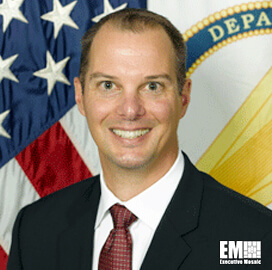
Kevin Mulvihill, acting deputy chief information officer for command, control and communications within the Office of the Department of Defense CIO, has assumed the role of deputy CIO for C3 on a permanent basis.

The Office of the DOD CIO announced Mulvihill’s appointment in a LinkedIn post published Tuesday.

In this capacity, he provides strategic direction, policy guidance and oversight of DOD’s efforts to modernize C3 capabilities, including communications systems and networks; position, navigation and timing; waveform management; tactical network management; enterprise mobility; and spectrum.

Mulvihill’s “expertise and leadership of key initiatives will ensure that DoD continues to modernize and improve support to the Warfighter – ranging from the Satellite Communications and PNT to the implementation of cutting edge 5G/Next G technologies in support of operations,” the Office of the DOD CIO said in the post.

Mulvihill previously helped the DOD CIO meet warfighter requirements by leading modernization initiatives in the fields of satellite and tactical communications and data links.

The U.S. Air Force veteran also served as a net-centric capability portfolio manager within the Office of CIO Headquarters Air Force at the Pentagon.

News/Space
NASA Invites Lunar Community Feedback on Moon Infrastructure Tech Demonstration Program
by Jamie Bennet
Published on November 7, 2023
NASA Invites Lunar Community Feedback on Moon Infrastructure Tech Demonstration Program

NASA is soliciting information from organizations that can participate in the development of its Lunar Infrastructure Foundational Technologies demonstration.

The agency on Monday issued a request for information to advance its plan for an In-situ Resource Utilization demonstration, which will be part of the Artemis Moon missions.

LIFT-1 aims to showcase technologies with capabilities such as extracting oxygen from lunar soil, generating power and landing and exploring the surface of the Moon’s South Pole region.

“Using in-situ resources is essential to making a sustained presence farther from Earth possible,” said Prasun Desai, acting associate administrator of NASA’s Space Technology Mission Directorate, which leads the program. “Just as we need consumables and infrastructure to live and work on our home planet, we’ll need similar support systems on the Moon for crew and robots to operate safely and productively.”

NASA will open an industry forum for LIFT-1 on Nov. 13, and accept RFI responses until Dec. 18.

News/Space
SDA Releases RFI for Optical Communications Waveforms
by Jane Edwards
Published on November 7, 2023
SDA Releases RFI for Optical Communications Waveforms

The Space Development Agency has started soliciting information from industry on optical communications waveforms and current work with other agencies within the Department of Defense on waveforms and datalinks.

SDA said Monday it will use the responses to the request for information to inform the planning phase for the third tranche of the Proliferated Warfighter Space Architecture that is set to begin in fiscal year 2024 and subsequent acquisition processes that are expected to kick off in FY 2025.

The agency will use the RFI responses to guide the integration of datalinks and waveforms into future tranches of PWSA and reduce risks toward interoperability within the space architecture.

Stakeholders should provide an assessment of effort and schedule needed to add, transmit and receive capabilities at their current SDA-compatible optical communication terminals, or OCTs, to enable pulse-position modulation — or PPM — waveforms and state possible challenges of operating each waveform at several space-to-space ranges.

SDA also wants information on anticipated development and operational limitations, insights on the implementation of burst mode on-off keying and PPM and suggestions for the next revision of the OCT standard.

Responses to the RFI are due Dec. 8.

News
Fermilab’s SQMS Center Opens New Quantum Information Science Facility
by Naomi Cooper
Published on November 7, 2023
Fermilab’s SQMS Center Opens New Quantum Information Science Facility

The Superconducting Quantum Materials and Systems Center, led by Fermi National Accelerator Laboratory, has opened a new quantum information science and technology facility in Illinois to facilitate QIS research collaboration among scientific communities, industries and start-ups.

The Quantum Garage is a 6,000 sq ft lab space featuring new large dilution refrigerators that host devices developed by the SQMS collaboration for performing quantum sensing, computation, metrology and communications, Fermilab said Monday.

The platforms include a commercial quantum processor; quantum memories and transducers based on novel technology approaches; quantum metrology tools for materials standards development; and quantum sensors for fundamental physics.

“The SQMS Quantum Garage will enable the scientific community, including start-ups, academia and industry to advance quantum technology and science, and break through the difficult technical barriers, with increased access to cutting-edge scientific tools and equipment,” said Geri Richmond, undersecretary for science and innovation.

Artificial Intelligence/News
Maria Roat & Richard Spires: Federal Agencies Need a System to Stay Ahead of AI Security Risks
by Jane Edwards
Published on November 7, 2023
Maria Roat & Richard Spires: Federal Agencies Need a System to Stay Ahead of AI Security Risks

Maria Roat, former deputy federal chief information officer and a previous Wash100 awardee, and Richard Spires, former CIO at the Department of Homeland Security, said government officials should get ahead of artificial intelligence-related security risks by quickly setting up a system to regulate and safeguard against AI threats.

In a joint commentary published Monday in Nextgov/FCW, Roat and Spires wrote that one of the fastest ways agencies could address AI vulnerabilities is by looking at existing frameworks and policies and iterating them rapidly.

“For instance, agencies can use the recently-released NIST AI Risk Management Framework to augment the existing processes for establishing an authority to operate for an agency system. Such an approach can provide a scalable template and groundwork for establishing an AI compliance initiative,” they noted.

Spires and Roat called on federal agencies to work with industry and form a “transformation tiger team that can handle the cross-functional challenges and opportunities posed by AI at scale.”

Agencies should tap professionals who are experienced in data risk management and cybersecurity and properly adapt existing governance models, data policies and programs for AI to accelerate secure adoption of AI tools, they added.

Roat and Spires are members of stackArmor‘s AI Risk Management Center of Excellence.

POC - 5th Annual Artificial Intelligence Summit

Register here to attend the Potomac Officers Club’s 5th Annual Artificial Intelligence Summit on March 21 and hear federal leaders and industry experts discuss the latest developments in the field.

Executive Moves/News
Jason Richards Named Deputy Assistant Director at FBI Directorate of Intelligence
by Naomi Cooper
Published on November 7, 2023
Jason Richards Named Deputy Assistant Director at FBI Directorate of Intelligence

Jason Richards, a nearly 20-year FBI veteran, has been named deputy assistant director at the bureau’s Directorate of Intelligence, serving as the senior executive leader for enterprise human intelligence and information technology.

He announced his new post Monday on LinkedIn and assumed the role after serving as section chief in the FBI’s Office of the Chief Information Officer, where he led enterprise efforts for cloud strategy and helped enhance supply chain risk management.

Before that, he was an assistant special agent in charge of multiple Joint Terrorism Task Force squads focused on detecting and disrupting international terrorism threats to Northern Virginia and Washington, D.C.

He previously served as assistant section chief of the FBI Counterterrorism Division and unit chief of the Directorate of Intelligence.

DoD/News
CBRNE Threat Detection Capabilities Developed by DARPA Advancing Toward Operationalization
by Jerry Petersen
Published on November 7, 2023
CBRNE Threat Detection Capabilities Developed by DARPA Advancing Toward Operationalization

The Defense Advanced Research Projects Agency is now in the process of transitioning to operational use the technologies developed under the SIGMA and SIGMA+ programs following the completion of three weeks of demonstrations through July involving the participation of the Port Authority of New York and New Jersey.

The demonstrations featured simulations of various chemical, biological, radiological, nuclear and explosive threat scenarios and their detection through the use of an automated mobile sensor suite integrated into Port Authority vehicles deployed in the New York and New Jersey metropolitan region, DARPA said Monday.

The event gave Port Authority officers the opportunity to familiarize themselves with the SIGMA+ systems and their capabilities and to develop procedures and tactics that would govern the use of those systems ahead of their operationalization this fall. The event also gave homeland security stakeholders the opportunity to see the SIGMA+ systems in action and determine their viability.

The demos mark the conclusion of five years of technology development that resulted in tools that, according to Port Authority Chief Security Officer Greg Ehrie, “provide an enhanced layer of vigilance to keep the millions of people who use and work at our facilities safe.”

Mark Wrobel, who managed the technology development program for DARPA’s Defense Sciences Office, praised the agency’s partnership with the Port Authority, saying: “This outstanding cooperation enabled DARPA to test cutting-edge technology in the nation’s largest metropolitan region, which significantly sped up the transition from R&D to operational use.”

Cybersecurity/News
New CISA Guide Focuses on Issuance of Software Vulnerability Exploitability Notices
by Jamie Bennet
Published on November 7, 2023
New CISA Guide Focuses on Issuance of Software Vulnerability Exploitability Notices

The Cybersecurity and Infrastructure Security Agency worked with software and other IT experts to formulate a guide to help organizations decide when to issue a vulnerability exploitability exchange — a.k.a. VEX — information.

CISA said Monday that the document will facilitate the creation of machine-readable VEX data notices that will aid downstream software users in their own discernment of vulnerability risks.

VEX information is issued by software suppliers, researchers and related entities that need to assert the level of risk that their products’ vulnerabilities pose.

VEX data may be published when the weakness is found in upstream component, or if it has been publicly disclosed. Legal circumstances such as contract terms and government requirements may also warrant VEX issuance.

Issuers of VEX data should regularly update changes in status and time, and utilize automated response tools to support maintenance of the information, CISA stated.

Cybersecurity is one of the focal points at the Potomac Officers Club’s 2023 Homeland Security Summit on Nov. 15. Register here to attend the event.

POC - 2023 Homeland Security Summit
News
Mitre Outlines Recommendations on Harmonizing Critical Infrastructure Cybersecurity Regulations
by Naomi Cooper
Published on November 7, 2023
Mitre Outlines Recommendations on Harmonizing Critical Infrastructure Cybersecurity Regulations

Mitre has developed recommendations on refining cybersecurity regulations to secure the U.S. critical infrastructure sector in response to a request for information from the Office of the National Cyber Director.

The Center for Data-Driven Policy led a cross-analysis of the RFI’s posed questions to help the ONCD develop evidence-based, actionable plans to address obstacles to harmonizing critical infrastructure cybersecurity regulations, the non-profit research organization said Friday.

According to Mitre, refinements to existing cybersecurity regulations or new policies must not specify technical requirements or implementation details for critical infrastructure owners and operators to avoid complicating continuous regulation harmonization.

Instead, regulations or administration guidance must provide sector risk management agencies with additional direction on shifting their focus to strengthening the mechanisms needed by critical infrastructure owners and operators and the industry vendors that support them.

Previous 1 … 465 466 467 468 469 … 2,656 Next
News Briefing
I'm Interested In:
Recent Posts
  • Senate Confirms Kirsten Davies as Pentagon CIO
  • Executive Order Targets 2028 Moon Landing
  • Dan Bongino to Leave FBI Deputy Director Role
  • Trump Nominates USINDOPACOM’s Lt. Gen. Joshua Rudd as NSA, CYBERCOM Leader
About

ExecutiveGov, published by Executive Mosaic, is a site dedicated to the news and headlines in the federal government. ExecutiveGov serves as a news source for the hot topics and issues facing federal government departments and agencies such as Gov 2.0, cybersecurity policy, health IT, green IT and national security. We also aim to spotlight various federal government employees and interview key government executives whose impact resonates beyond their agency.

Read More >>

RSS ExecutiveBiz
  • SES CEO Adel Al-Saleh on Satcom Convergence, Collaboration
  • Lockheed Martin Skunk Works, XTEND Integrate Drone C2 Technologies for JADC2 Missions
  • MANTECH Launches Service Offerings in AWS Marketplace for IC
  • DISA Seeks Industry Input on Draft Enterprise Service Solutions IV Managed Storage Service RFP
  • Claroty Secures ATO for Missile Defense, Intelligence Control System
  • Hanwha Defense USA to Integrate 58-Caliber Cannon Into K9 Under Army CRADA
RSS GovConWire
  • Trump Signs $901B FY 2026 Defense Authorization Bill Into Law
  • MDA Expands SHIELD Pool With 1,086 Additional Awards for Golden Dome
  • HawkEye 360 Acquires Signals Processing Tech Provider ISA
  • BigBear.ai, C Speed Partner to Deliver AI-Enabled Threat Detection Capability
  • Virtualitics Appoints Chris Brown as Public Sector CTO
  • John Martinez to Succeed Mike Kolloway as Parsons’ Chief Legal Officer
Footer Logo

Copyright © 2025
Executive Mosaic
All Rights Reserved

  • Executive Mosaic
  • GovCon Wire
  • ExecutiveBiz
  • GovCon Exec Magazine
  • POC
  • Home
  • Acquisition & Procurement
  • Agencies
    • DoD
    • Intelligence
    • DHS
    • Civilian
    • Space
  • Cybersecurity
  • Technology
  • Executives
    • Profiles
    • Announcements
    • Awards
  • News
  • Articles
  • About
  • Wash100
  • Contact Us
    • Advertising
    • Submit your news
    • Jobs
Go toTop