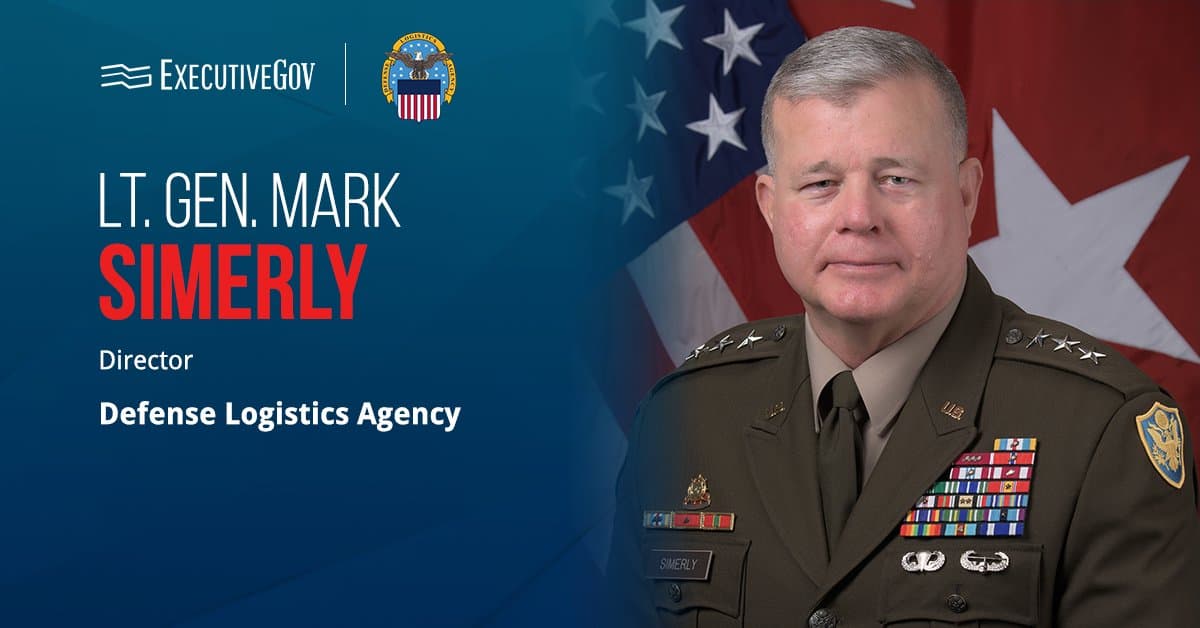
Army Lt. Gen. Mark Simerly, director of the Defense Logistics Agency, emphasized the role of artificial intelligence in the future of military logistics, describing the technology as “the new gunpowder” at a National Defense Industrial Association event held on Feb. 17.
During the event, which was also attended by other DLA leaders, Simerly stressed the role that industry partnerships play in integrating AI into sustainment operations.
“The strength of the industrial base is what will allow the U.S. to sustain a protracted fight with a peer adversary, and DLA needs to ensure it can enable a surge as needed,” he stated.

Join top military and industry leaders as they discuss AI deployment for mission execution at the Potomac Officers Club’s 2026 Artificial Intelligence Summit on March 18. Register today to secure your spot.
How Will AI Improve Military Logistics?
Army Brig. Gen. Kevin Cotman, commanding general for DLA Distribution, said he sees AI as a predictive tool that allows the military to respond proactively rather than reactively to surge demands in supplies and equipment.
“The objective is to ensure our teammates have the best tools available to ensure the readiness of our joint force and the capability of the warfighter to protect the homeland,” he added.
Meanwhile, Army Brig. Gen. Sean Kelly, DLA troop support commander, said greater visibility across the nine segments of the agency’s supply chain, in addition to AI, will deliver a greater impact in ensuring that critical materials reach warfighters at the pace of need.
How Is DLA Modernizing Its Supply Chain and Acquisition Strategy?
DLA is in the process of digitizing its global supply chains to accelerate support to the warfighter in contested logistics environments.
At the agency’s Demand Forecast and Industry Association Leadership Meeting in November, DLA leaders highlighted investments in advanced data analytics to strengthen demand forecasting, scenario analysis and risk mitigation.
In January, DLA’s Troop Support pitched AI-enabled concepts such as the Vendor Alert and Liability Oversight Resource, or VALOR, which uses analytics to flag supplier risks early. Other proposals include digital workforce initiatives designed to improve forecasting, inventory visibility and process automation.