
Processing....

Executive Gov

Digital News Coverage of Government Contracting and Federal Policy Landscape
Sticky Logo
  • Home
  • Acquisition & Procurement
  • Agencies
    • DoD
    • Intelligence
    • DHS
    • Civilian
    • Space
  • Cybersecurity
  • Technology
  • Executives
    • Profiles
    • Announcements
    • Awards
  • News
  • Articles
  • About
  • Wash100
  • Contact Us
    • Advertising
    • Submit your news
    • Jobs
Logo
News/Space
NASA Sends Quantum Communications, Solar Wind Experiments to ISS
by Kristen Smith
Published on November 6, 2024
NASA Sends Quantum Communications, Solar Wind Experiments to ISS

NASA has launched a set of scientific instruments and experiments on the SpaceX Dragon capsule as part of its International Space Station resupply mission. The space agency said the spacecraft lifted off with over 6,000 pounds of supply on a SpaceX Falcon 9 rocket from Launch Complex 39A at Kennedy Space Center in Florida on Monday at 9:29 p.m. Eastern time.

The capsule docked at the forward port of the orbiting laboratory’s Harmony module on Tuesday. 

Table of Contents

  • New ISS Experiments
  • SpaceX Launch to the ISS

New ISS Experiments

Scientists on the space station regularly conduct experiments in microgravity across a range of disciplines, from space science to biology and biotechnology. 

As part of the SpaceX 31st commercial resupply mission, NASA sent the Space Entanglement and Annealing Quantum Experiment, or SEAQUE, from the Jet Propulsion Laboratory in southern California. 

SEAQUE is a technology demonstration that will explore how quantum technologies can improve communications across vast distances. If successful, the experiment may pave the way for quantum communication systems globally and in space. 

The commercial resupply mission also brought to the ISS the COronal Diagnostic EXperiment, a study on solar winds. The CODEX uses a solar coronagraph that blocks out sunlight to reveal details on its outer atmosphere. 

NASA said the experiment aims to understand the elements that heat up solar wind to a million degrees hotter than the surface of the Sun and catapults it outward to travel across the solar system at almost a million miles per hour. 

Research on how space impacts Antarctic moss and different materials also arrived at the ISS. 

SpaceX Launch to the ISS

The mission marks the 11th SpaceX launch under NASA’s Commercial Resupply Services-2 contract. The first-stage Falcon 9 booster and the Dragon capsule used during the flight previously supported four other missions. 

Dragon will remain docked to the ISS for a month and will return to Earth in December with research and cargo. It is expected to splash down off the coast of Florida.
Digital Modernization/Government Technology/News
NAVAIR Provides Navy, USMC With Digital Tools
by Kristen Smith
Published on November 6, 2024
NAVAIR Provides Navy, USMC With Digital Tools

The Naval Air Systems Command is providing the Navy and the Marine Corps with digital applications to help the services with their launch and recovery tracking operations.

The command’s latest offering is the E-28 dashboard, a tool that monitors international military sites and provides visualizations of collected data to defense stakeholders, NAVAIR said Monday.

Built for the Aircraft Launch and Recovery Equipment Program Office by Tarun Patel of Digital Application Developer, the E-28 dashboard allows users to view airfield gear status, planned inspections and manning and supply deficiencies. The tool also informs decision-making and provides users with enhanced situational awareness.

What Does E-28 Do?

According to Patel, the dashboard enables warfighters to solve problems faster and face adversaries more efficiently. To date, the developer has delivered 14 digital tools to the Navy, including the Nimitz Launch and Recovery Readiness Tool, which supports real-time observation for aircraft carriers.

Justin Homme, Nimitz-class level two integrated product lead, described the dashboard tools as ‘complete game-changers,’ noting that they reduce work hours and increase safety and visibility.

Following the E-28 digital dashboard’s demonstration in October, Patel will again showcase the tool to a NAVAIR command leadership team. The demo will occur in the coming months once the system is fed with several months of data.

Cybersecurity/News
CISA Working to Identify Systemically Important Entities
by Kristen Smith
Published on November 6, 2024
CISA Working to Identify Systemically Important Entities

The Cybersecurity and Infrastructure Security Agency is identifying critical infrastructure organizations that should be designated as systemically important entities, or SIE, in accordance with a national security memorandum that officially designated the agency as the national coordinator for critical infrastructure, Federal News Network reported.

CISA’s National Risk Management Center is analyzing the risks facing organizations to determine whether an entity should be included in the SIE list. According to the memo, the SIE designation is for critical infrastructure entities whose operations, when disrupted, could negatively impact national security, economic security, or public health or safety.

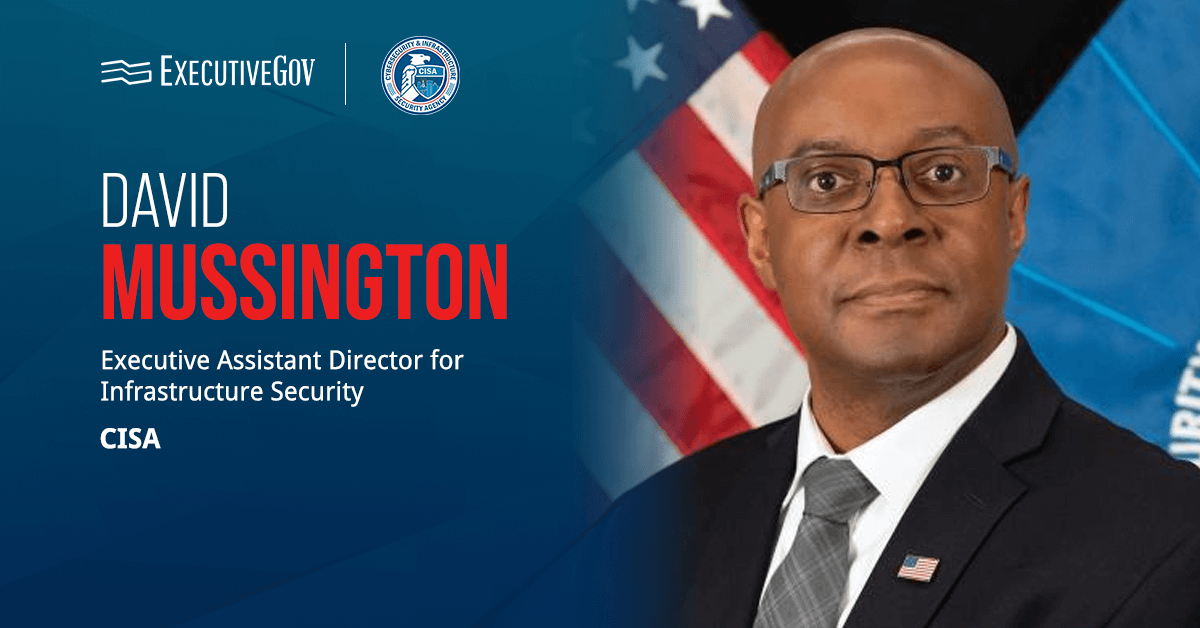
In an interview, David Mussington, executive assistant director for infrastructure security at CISA, said the effort aims to ensure those responsible for key critical infrastructure assets are known in terms of their criticality and supported by national policy and the sector risk management agencies, or SRMAs, including the Department of Energy.

SRMAs play a role in the SIE identification. The memo required such agencies to submit draft sector risk management plans to CISA before the end of October to inform the first cross-sector risk assessment, which CISA will use to develop the SIE list.

According to Mussington, understanding how threat actors target SIEs and exploit vulnerabilities will enable CISA to create a critical infrastructure-focused risk mitigation plan.

David Mussington is a speaker at the Potomac Officers Club’s Homeland Security Summit on Nov. 13. Join the event to learn more about the country’s most significant threats and what’s being done to thwart them. Register today!

CISA Working to Identify Systemically Important Entities

Cybersecurity/Intelligence/News
Hackers Attempt to Infiltrate Telecom Networks Amid US Election
by Branson Brooks
Published on November 5, 2024
Hackers Attempt to Infiltrate Telecom Networks Amid US Election

Cyber attackers are attempting to infiltrate U.S. telecommunication networks and affiliated wiretap infrastructures amid the 2025 presidential election, but federal officials say these events won’t sway the outcome of the race.

The Salt Typhoon hackers have tried to access the phone communications of presidential campaign officials and their staff as well as around 10 communication firms, including Verizon, AT&T and Lumen, the Wall Street Journal reported Sunday.

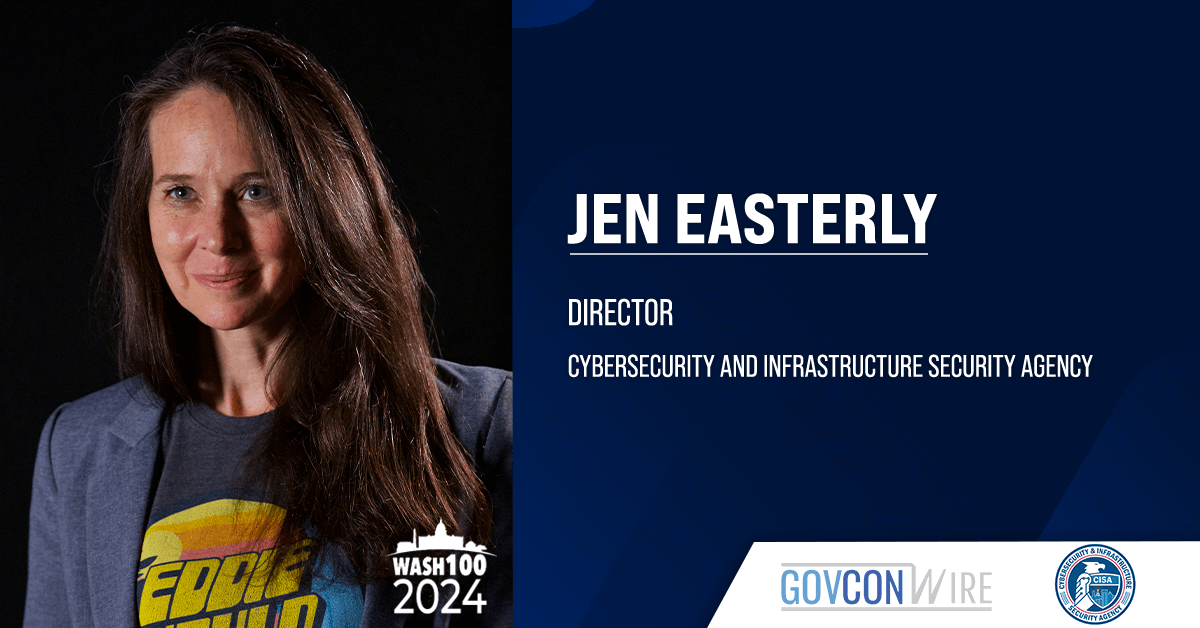
CISA Director Jen Easterly, a 2024 Wash100 awardee, gave updates on the current investigation into Salt Typhoon.

“We are working with our FBI partners on the investigation related to the Salt Typhoon activity. At this point in time, we have no reason to believe that that activity will have any material impact on the outcome of the presidential election,” Easterly said during a news conference Monday.

CISA leaders will be speaking at the Potomac Officers Club’s 2024 Homeland Security Summit on Nov. 13 about the nation’s cybersecurity efforts in today’s tense geopolitical landscape. Secure your tickets to the 2024 Homeland Security Summit now!

What Is Known About Salt Typhoon

DHS has confirmed that the Cyber Safety Review Board will spearhead an investigation into Salt Typhoon. The Unified Coordination Group, an organization that supports disaster response operations at the federal and state level, has also been assigned to the investigation. The number of affected individuals has grown since the incident was first reported about a month ago.

Neal Higgins, a former deputy White House national cyber director who’s now a partner at law firm Eversheds Sutherland, said, “At this point, there’s probably more that we don’t know than we do. It’s unclear what the access vector was, the scope of the intrusion was and how many victims are involved. The fact that a Unified Coordination Group has been convened … tells you that the administration is taking it seriously.”

Executive Moves/Healthcare IT/News
Kim Stevens Appointed Chief Health Informatics Officer at VA
by Kristen Smith
Published on November 5, 2024
Kim Stevens Appointed Chief Health Informatics Officer at VA

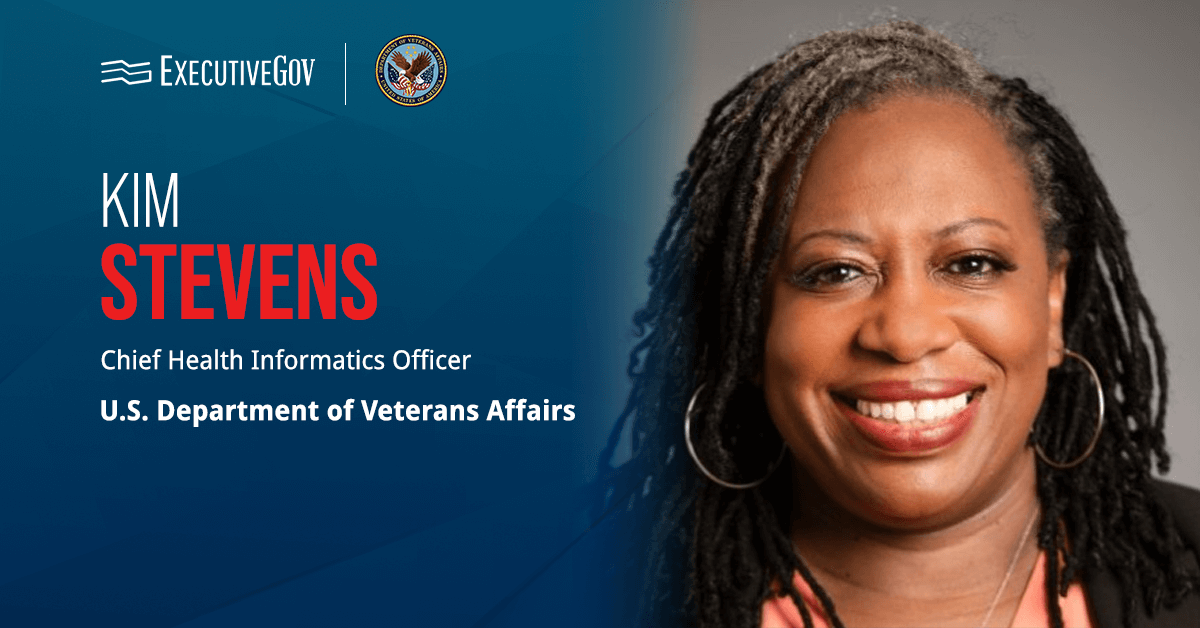
The Department of Veterans Affairs has appointed Kim Stevens its new chief health informatics officer. Stevens brings to the position more than a decade of healthcare and digital technology experience.

Announcing her new role at LinkedIn, Stevens said she will lead the VA’s efforts to develop and deploy informatics solutions to enhance patient care and organizational performance.

The new appointee most recently served as contributing faculty at Walden University, where she guided doctoral candidates in nursing practice and advanced research methodologies for shaping future healthcare leaders. Stevens was also an associate manager at Accenture, where her post focused on using digital technologies to improve scientific data management and ensure compliance and operational efficiency.

Earlier, Stevens employed her solid background in nursing and informatics during stints at Oracle, the National Institute of Health and various hospitals and universities.

Stevens earned her bachelor’s degree in nursing and master’s and doctorate in nursing informatics from Walden University.

Kim Stevens Appointed Chief Health Informatics Officer at VA

On Dec. 11, Join the Potomac Officers Club’s 2024 Healthcare Summit to explore the transformative trends and innovations shaping the future of the healthcare sector. Register now to attend the important event.

Government Technology/News
New MITRE Paper Calls for EM Spectrum Management Reform
by Jerry Petersen
Published on November 5, 2024
New MITRE Paper Calls for EM Spectrum Management Reform

MITRE has released a paper where it critiqued the unsustainability of the current electromagnetic spectrum management process and advocated for reform via the implementation of dynamic spectrum sharing, or DSS.

Table of Contents

  • Why Is Existing Spectrum Management Unsustainable?
  • How Can Dynamic Spectrum Sharing Help?

Why Is Existing Spectrum Management Unsustainable?

MITRE said Monday that accessing the spectrum is key to U.S. security and competitiveness but the way the resource is currently managed is slow, costly and inflexible. One such unsustainable method involves the static relocation of federal users in order to free up spectrum to be auctioned to commercial users. Political and economic barriers also exist that cause tension between federal and commercial spectrum users.

How Can Dynamic Spectrum Sharing Help?

The non-profit company said that, to address these challenges, the next U.S. administration can implement dynamic spectrum sharing, which can allow for flexible capacity optimization and resource allocation and enable the coexistence of various spectrum users. In the paper, the company also proposed multiple implementation strategies, including the development of artificial intelligence-powered DSS capabilities and the launch of a nationwide pilot program for a DSS platform.

MITRE went on to say that the next administration can help ensure national security and economic growth by carrying out spectrum management reform.

Acquisition & Procurement/DoD/News
Army Integrates USACE Financial Management With Contract Writing
by Jane Edwards
Published on November 5, 2024
Army Integrates USACE Financial Management With Contract Writing

The U.S. Army has integrated the Army Corps of Engineers Financial Management System, or CEFMS, with its modernized contract writing platform as part of efforts to streamline contracting processes and enhance financial management for USACE-managed projects.

The service said Monday the Program Executive Office Enterprise and the Office of the Deputy Assistant Secretary of the Army for Procurement integrated CEFMS with the Army Contract Writing System, or ACWS, to facilitate data transfer between the two platforms to help improve expenditure tracking and provide updates on contract status and funding allocations.

PEO Enterprise is fielding the integrated system to 3,250 users in waves. The Army expects the updated ACWS to reach full deployment by April 2025.

“Through the culmination of close coordination with multiple stakeholders and successful management of competing priorities on short and often reduced schedules, we are pleased to deliver this capability to our Army contracting community,” said Lt. Col. Camille Morgan, product manager for ACWS at PEO Enterprise. 

Impacts of ACWS-CEFMS Integration

The integration effort is part of the Army’s broader initiative to transform its contracting and financial management processes.

The military branch expects the newly integrated system to accelerate the processing of contracts and payments, improve reporting tools and enable project managers to easily track contract expenditures against approved budgets as part of efforts toward transparency and accountability.

Cybersecurity/News
Federal CISO, CDO Councils Unveil Zero Trust Data Security Guide
by Jane Edwards
Published on November 5, 2024
Federal CISO, CDO Councils Unveil Zero Trust Data Security Guide

The Federal Chief Information Security Officer, or CISO, Council and the Federal Chief Data Officers, or CDO, Council have issued a document to guide federal agencies as they operationalize data security using a zero trust framework.

“This guide represents insights from agency practitioners who are in the trenches working to implement zero trust and secure their organization’s data,” Kirsten Dalboe, chair of the CDO Council, said in a statement published Thursday.

“We’re building a cooperative relationship between data and cyber to tackle this government-wide challenge and ultimately ensure the public’s data is secured,” added Dalboe, who also serves as CDO for the Federal Energy Regulatory Commission.

More than 30 federal departments and agencies helped create the Federal Zero Trust Data Security Guide.

A working group of security and data experts developed the 42-page document in accordance with an Office of Management and Budget memorandum that seeks to advance the adoption of zero trust cybersecurity principles within the U.S. government.

About the Guide

The document addresses the zero trust data security into three chapters: define the data, secure the data and manage the data.

The second chapter, for instance, discusses the implementation of security monitoring and controls for data and integration of risk management and identity, credential and access management to ensure data security.

The guide also outlines several zero trust data security principles, including adopting a data-centric view, promoting data resiliency and integrity and implementing standardized least privilege and access control.

DoD/News/Space
DIU Launches TACTILE Program, Demonstrates Capability
by Miles Jamison
Published on November 5, 2024
DIU Launches TACTILE Program, Demonstrates Capability

The Defense Innovation Unit has unveiled the Tactical Launch Effort, or TACTILE, program in response to the emerging demand for low-cost, long-range suborbital energetics.

The program is intended to enhance the development of suborbital launch capabilities using technological advancements, DIU said Monday.

Table of Contents

  • Objectives of the TACTILE Program
  • TACTILE Program Demonstration

Objectives of the TACTILE Program

The TACTILE program is a Department of Defense initiative that aims to accomplish the following goals:

  • Integrate advanced manufactured solid propellant, or AMSP, to the commercial prototype modular launch system as an alternative to liquid and cryogenic rocket fuels
  • Test an AMSP printed motor in a relevant flight environment and assess its scalability and flexibility
  • Develop and evaluate affordable system design capable of high-cadence launches using a commercially available launch service.

TACTILE Program Demonstration

X-Bow Systems, the primary contractor, held a demonstration on Sept. 12 to showcase a 3D-printed AMSP motor. The XB-32 rocket, using the 3D-printed propellant, was launched and reached an altitude of 32,000 feet. It was also able to travel at a speed of Mach 1.2.

The DIU worked with the Space and Missile Defense Command to conduct the launch and evaluate the AMSP-printed rocket motors. The demonstration was focused on the potential of lowering labor expenses, transporting and storing fuel safely and operating efficiently.

Major General Steve Butow, space portfolio director at DIU, stated, “The successful demonstration of 3D-printed propellant through the TACTILE program is a major step forward in delivering low-cost, rapidly deployable suborbital solutions, including in hypersonics.”

DoD/News
USAF Leaders Discuss Re-optimization for Great Power Competition
by Kristen Smith
Published on November 5, 2024
USAF Leaders Discuss Re-optimization for Great Power Competition

U.S. Air Force leaders pushed for re-optimization and structural reorganization to better counter threats, particularly from China, amid the Great Power Competition. 

At the 56th Airlift/Tanker Association Symposium, Air Force Secretary Frank Kendall, a Wash100 awardee, said the United States must adapt to evolving tactics. 

“For a long time, we’ve been able to operate relatively freely,” he told the audience. “China has, like the Soviet Union, adapted. So must we.” 

Air Force Modernization

The Air Force began the process of reoptimizing for the Great Power Competition in early 2024 with the release of a plan that detailed changes that will enable the service to maintain superiority against adversaries. 

During the symposium, Gen. Johnny Lamontagne, head of the Air Mobility Command, gave an update on the AMC’s structure and capabilities. He shared that the command will review the effectiveness of its employment of aeromedical evacuation and global air mobility support systems. He also revealed that the next iteration of Mobility Guardian, AMC’s flagship exercise, will be held in mid-2025 in the Pacific. 

Meanwhile, Air Force Chief of Staff Gen. David Allvin pointed to the newly established Integrated Capabilities Command as part of the service’s re-optimization initiatives. The ICC will oversee and accelerate force modernization efforts. 

“The ICC will allow us to build one Air Force, one force design, by building the systems first and ensuring different capabilities can be integrated into them,” said Allvin. 

He added that the process would enable the military branch to adapt more quickly. 

David Flosi, chief master sergeant of the Air Force, urged airmen to focus on the mission amid reorganization, adding that mobility forces play a crucial role in rapid global mobility.

Previous 1 … 274 275 276 277 278 … 2,719 Next
News Briefing
I'm Interested In:
Recent Posts
  • Leonel Garciga Steps Down as Army CIO
  • CAISI Signs Frontier AI Testing Agreements With 3 Companies
  • New ARPA-H Program Aims to Accelerate Biomedical Research With AI
  • Army, Defense Firms Launch ‘Right to Integrate’ Hackathon Initiative
About

ExecutiveGov, published by Executive Mosaic, is a site dedicated to the news and headlines in the federal government. ExecutiveGov serves as a news source for the hot topics and issues facing federal government departments and agencies such as Gov 2.0, cybersecurity policy, health IT, green IT and national security. We also aim to spotlight various federal government employees and interview key government executives whose impact resonates beyond their agency.

Read More >>

RSS ExecutiveBiz
  • Exiger VP Dan Kunze on the Interconnection of Emerging Technologies, Energy & Space
  • LMI’s RAPTR Platform Earns DOW Tradewinds ‘Awardable’ Status
  • Patrick Roddy Joins Sodexo as COO for Facility Management, Government Services
  • Peraton Labs Secures NSF Award for Low-Latency XR Medical Collaboration Research
  • Nokia Federal, Lockheed Martin Launch Modular 5G Capability for Defense Platforms
  • LogicMonitor, IBM, Red Hat Collaborate to Automate IT Operations
RSS GovConWire
  • Intel Taps Alex Katouzian to Lead Client Computing & Physical AI; Pushkar Ranade Named CTO
  • Anduril Books $100M Space Force Contract Modification for SDA Mesh Networking Work
  • ICE Plans Shared EHR Platform BPA Exceeding $100M
  • Leidos Reports $4.4B Q1 FY26 Revenue Driven by Strong Demand Across Key Markets
  • Sarah Campbell Named Future Technologies COO
  • SAP NS2 Appoints Retired Army Gen. Gus Perna as EVP & Strategic Customer Officer
Executive Gov

Copyright © 2025
Executive Mosaic
All Rights Reserved

  • Executive Mosaic
  • GovCon Wire
  • ExecutiveBiz
  • GovCon Exec Magazine
  • POC
  • Home
  • Acquisition & Procurement
  • Agencies
    • DoD
    • Intelligence
    • DHS
    • Civilian
    • Space
  • Cybersecurity
  • Technology
  • Executives
    • Profiles
    • Announcements
    • Awards
  • News
  • Articles
  • About
  • Wash100
  • Contact Us
    • Advertising
    • Submit your news
    • Jobs
Go toTop