
The Pentagon’s colossal $179 billion request for research, development, test and evaluation funding in FY 2026 isn’t just a 20 percent increase from the $141 billion enacted in FY 2025. It’s also a bellwether for which technologies the Department of War views as critical to U.S. success in combat over the next five-to-15 years.
Some of the most eye-popping increases in the DOW’s RDT&E request are for key emerging technologies: hypersonics; space-based intelligence, surveillance and reconnaissance; resilient missile warning and tracking in low earth orbit and agile electronic warfare and unmanned system development.
Learn the latest RDT&E business opportunities directly from top DOW officials at the Potomac Officers Club’s 2026 Defense R&D Summit on Jan. 29! Check out our multiple panels on how the DOW plans to leverage this boost in RDT&E funding to help emerging technologies get past the dreaded “valley of death” and into warfighters’ hands. Secure your seat today!
Let’s dive into these budget increases and what they would mean for DOW combat effectiveness if enacted.
What Is the Pentagon Prioritizing in RDT&E?
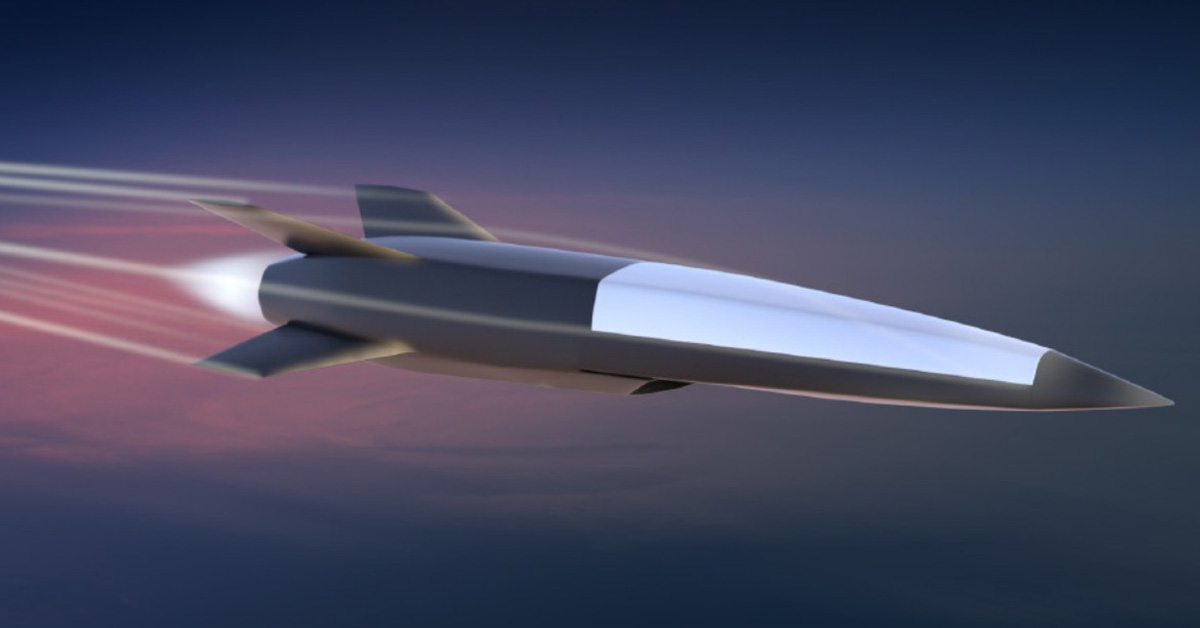
- Hypersonics. The $803 million requested for the Hypersonic Attack Cruise Missile prototyping would be a 72 percent increase over the $467 million provided in FY 2025. This hints that HACM is advancing toward fielding and not just experimentation, according to Defense One.
- Space-based ISR. The $1.1 billion request for the Ground Moving Target Indicator would be a whopping 330 percent increase from the $256 million enacted in FY 2025. This reflects the DOW’s priority of better leveraging space-based ISR assets for improved performance in contested environments, instead of using airborne assets such as the Northrop Grumman E-8 Joint Surveillance Target Attack Radar System aircraft.
- Electronic warfare and unmanned systems. A pair of Army budget lines have more than $500 million combined, suggesting a reprioritization toward improvisational effects commonly found in Ukraine, especially for counter-drone, loitering munitions and EW jamming.
What Is RDT&E?
Research, development, test and evaluation, or RDT&E, are program costs usually connected to R&D efforts, such as the development of a new or improved capability to where it can be used in the field. RDT&E is one of five core appropriations performed by the DOW. It finances RDT&E initiatives executed by both government and GovCons in the development of equipment, material or computer application software, according to the Defense Acquisition University.
The Pentagon’s RDT&E funding in not only its FY 2026 budget request, but also the One Big Beautiful Bill Act funding signed into law in mid-2025, represent a significant emphasis on accelerating the modernization of its capabilities, according to a leading GovCon executive. Gabe Camarillo, KBR senior vice president of defense technology solutions, 4×24 Leadership Series member and former Army under secretary, told ExecutiveGov in an exclusive interview that OBBBA funding provides the DOW with additional flexibility because it wasn’t put into “colors of money” like the budget request.
One example, Camarillo said, is with the Golden Dome homeland missile defense system. The roughly $150 billion provided for Golden Dome in the OBBBA will allow for the integration of the system’s components into its architecture. It will also help develop new systems to include everything from possibly space-based interceptors to new command-and-control systems enabled by AI.
Bolster your space partnership knowledge at the Potomac Officers Club’s 2026 Defense R&D Summit on Jan. 29! Hear directly from Stacie Williams, Space Force chief science officer, during her appearance on the Innovating for Advantage: Advancing Secure, Interoperable IT for Space Defense panel discussion. Don’t miss this extraordinary opportunity to grow your space portfolio revenues. Sign up now!
How Will Acquisition Reform Impact DOW R&D Efforts?
Camarillo said the Army Transformation Initiative is rooted in lessons learned from years of warfare in Ukraine, where unmanned systems are ubiquitous and the electromagnetic spectrum is highly contested. It is very difficult to avoid being seen on the battlefield in Ukraine. Additionally, the greater use of drones in Ukraine has been revolutionary.
“I think the ATI will actually be very good for R&D because I think it sends a strong signal of demand to the market that the DOW and the Army, in particular, are buying capabilities and developing them in a different way than they’ve done before,” Camarillo said.
Camarillo said these positive effects on RDT&E programs will especially kick in over the long term. This is because these acquisition reform efforts like the ATI specifically allow service leaders to identify the most promising emerging technologies and rapidly reprioritize funding within certain portfolios. Most importantly, he said, these acquisition reform initiatives use operational units to test these technologies and provide very rapid feedback, allowing service leaders to better understand which are working and which need more time to develop.
Which Services Will Benefit Most from the Pentagon RDT&E Increases?
The RDT&E budget request combined with the OBBBA funding represent a big increase in research and development funding across all Pentagon services and service-wide efforts. Camarillo said areas like Navy shipbuilding and Army drones, counter-drone, electronic warfare and autonomy stand to gain. Modernization of the nuclear triad—the air, land and sea-based legs of the DOW’s nuclear weapon infrastructure—also sets to benefit from this boost in RDT&E funding.
Industry is eagerly awaiting additional information from the DOW on Golden Dome’s architecture, which will specify which technologies the program will leverage. Camarillo said the first three things he’ll look for when Golden Dome’s architecture is announced will be:
- What will be developed for space-based interceptors. Camarillo said Golden Dome’s architecture specifications will likely include which type of space-based interceptors will be used as part of Golden Dome’s space-based layer. It will also likely define which architecture of sensors will provide missile warning and missile tracking capabilities.
- How the DOW will do C2, which is intended to be AI-enabled across a very diverse set of systems.
- How to tackle the challenge of interoperability of all these new and different components and have them successfully communicate and work and operate together seamlessly.
Camarillo said Golden Dome’s architecture announcement will also specify which elements of the different layers of its architecture will be met with existing systems such as the Patriot air defense system.