
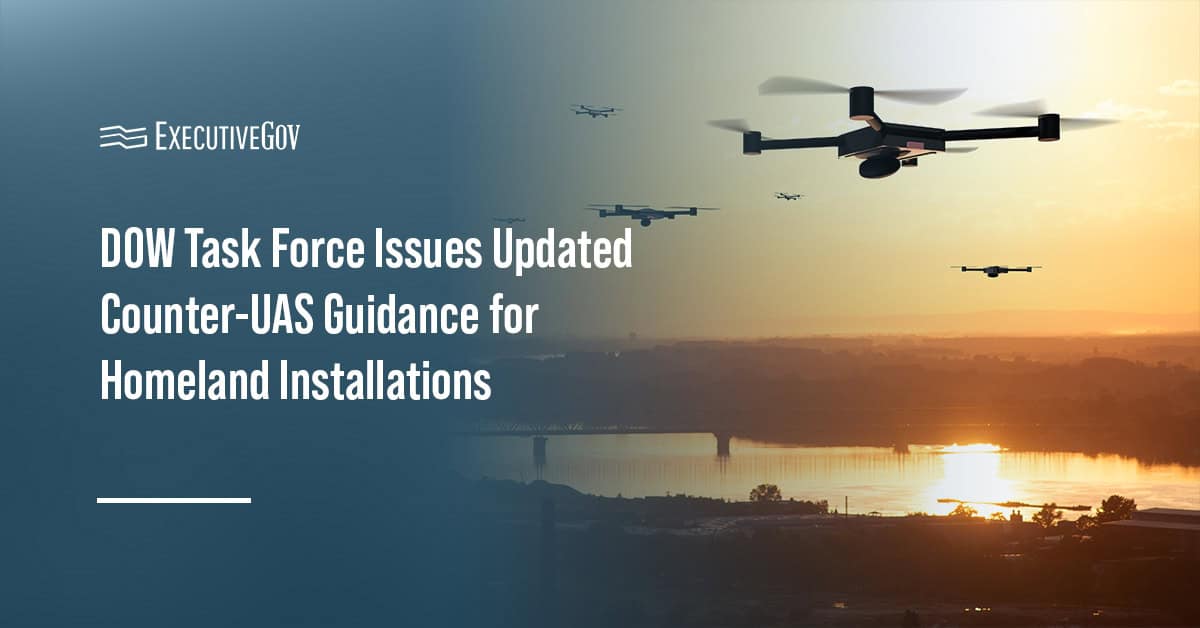
The Joint Inter-Agency Task Force 401, a specialized Department of War organization, has released updated guidance governing how military installation commanders detect, assess and respond to unmanned aerial system threats within the homeland, expanding authorities and clarifying procedures under existing law.
What Does the New JIATF 401 Guidance Change?
The guidance, signed Dec. 8, 2025, by Secretary of War and Wash100 awardee Pete Hegseth, consolidates and updates counter-UAS policy under Title 10 authorities, replacing earlier directives, the DOW said Monday. It removes previous limitations that tied defensive action strictly to installation boundaries, allowing commanders to act across a broader protective area when addressing unmanned aircraft threats.
“With this new guidance installation commanders are empowered to address threats as they develop, and the guidance makes clear that unauthorized drone flights are a surveillance threat even before they breach an installation perimeter,” said Brig. Gen. Matt Ross, JIATF-401 director.
What New Authorities Are Granted to Commanders and Services?
The guidance authorizes service secretaries to designate covered facilities or assets based on risk assessments and permits them to delegate that authority to service chiefs. It also directs installation commanders to issue local operating procedures within 60 days to align with the updated policy.
How Does the Guidance Address Interagency Coordination?
The policy incorporates provisions from the fiscal year 2026 National Defense Authorization Act that allow for expanded information-sharing among federal partners, including the Department of Homeland Security and the Department of Justice, regarding unmanned aircraft activity. It also permits the use of trained and certified contractor personnel to support counter-UAS operations.
JIATF-401 will support implementation of the guidance by providing training resources through the Joint Counter-Small UAS University and facilitating access to validated counter-UAS technologies.
The task force, led by the U.S. Army, was created in 2025 to consolidate counter-UAS authorities and accelerate development, acquisition and fielding of capabilities across the department.