

The National Geospatial-Intelligence Agency has issued a request for information to identify industry partners capable of sustaining and modernizing mission-critical analytic systems supporting geospatial intelligence operations.
According to a notice posted by NGA on SAM.gov on Thursday, the agency intends to award a contract, called Mercury, to support NGA’s analysis mission and the Analytic Services Production Environment for the NSG program of record through lifecycle management of software, applications and data environments used across the intelligence community and the Department of War. Mercury is planned as a follow-on to the Chinook contract with a similar scope.

The Potomac Officers Club’s 2026 Digital Transformation Summit, scheduled for April 22, will highlight how agencies like NGA are advancing modernization across mission-critical systems. Government and industry leaders will share insights on integrating AI, cloud and advanced analytics into operational environments, with discussions focused on sustaining legacy capabilities while accelerating the adoption of next-generation technologies. Register now.
Table of Contents
What Is NGA Asking Industry to Provide?
NGA is seeking contractors capable of maintaining existing analytic systems while rapidly integrating new and unanticipated capabilities as mission requirements evolve.
The agency is also requesting feedback on acquisition strategies that would support mission-responsive delivery, including contract structures that can accommodate changing requirements, emerging technologies and evolving mission priorities.
What Work Would the Mercury Contract Support?
According to a draft performance work statement, Mercury requires systems engineering and integration, software development, operations support, maintenance and cybersecurity, among other end-to-end lifecycle support services.
Work will support both existing and emerging systems, with an emphasis on transitioning new capabilities into operations, sustaining cross-project technologies and enabling continuous modernization across NGA’s analytic environment.
Mercury is expected to support a range of applications, including cloud-based data environments, computer vision tools and artificial intelligence-enabled analytic platforms used to process and analyze geospatial intelligence.
How Might NGA’s Mercury Contract Be Structured?
NGA is considering flexible acquisition approaches, including a potential indefinite-delivery/indefinite-quantity contract with one or multiple vendors to support varying levels of demand and specialized expertise.
The agency is evaluating a performance period of at least five years, with work expected to take place at NGA facilities and contractor locations. The effort may require personnel and facilities capable of operating at high classification levels, including top secret/sensitive compartmented information environments.
Related Articles
ODNI assigns Dave Mastro and James Cangialosi to coordinate election threat response efforts Officials brief Congress on foreign interference monitoring and election security coordination The 2026 Intel Summit on Sept. 24 will discuss AI, secure information-sharing and more The Office of the Director of National Intelligence has assigned two officials to coordinate intelligence community efforts aimed at monitoring and responding to foreign threats targeting the 2026 midterm elections, The Record reported Friday. As the IC increases coordination efforts ahead of the 2026 midterm elections, government and industry leaders are continuing discussions on the future of intelligence modernization and national security
Army develops Multi-Domain Command-Pacific following theater-level operational experiment MDC-PAC combines maneuver formations with cyber, space and multidomain capabilities The 2026 Army Summit on June 18 will cover the hyperconnected battlefield, AI and more The U.S. Army is developing Multi-Domain Command-Pacific, or MDC-PAC, a new theater-enabling command in the Indo-Pacific that combines maneuver forces with multidomain capabilities. The Army’s continued focus on multidomain operations and force modernization comes as government and industry leaders prepare to gather for the 2026 Army Summit on June 18. The event will bring together defense stakeholders to discuss hyperconnected battlefield, AI, reconfigurable air defense and other
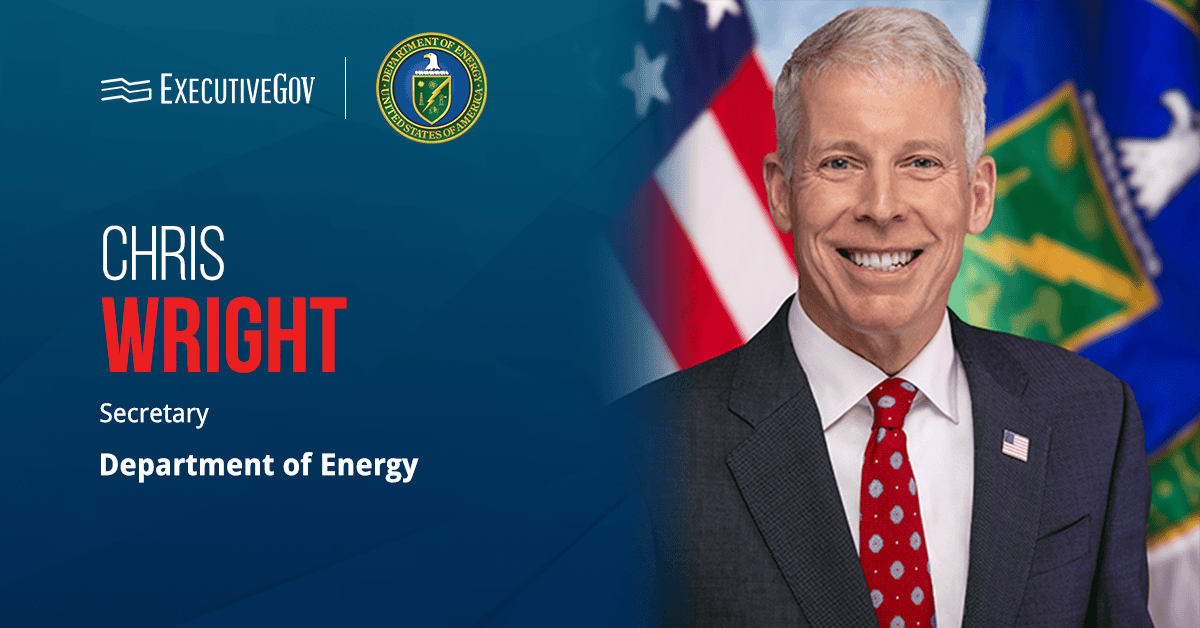
DOE expands support for advanced nuclear projects with $94 million in new awards Eight companies selected to strengthen the U.S. SMR supply chain and manufacturing base Funding targets reactor components, fuel production and factory upgrades across multiple states The Department of Energy has selected eight companies to receive more than $94 million in cost-shared funding to support the deployment of advanced light-water small modular reactors, or SMRs. What Will the Funding Support? DOE said Thursday projects funded through the program will focus on expanding manufacturing capacity and supporting production of reactor components and nuclear fuel. The agency said efforts include equipment