


The Strait of Hormuz has reopened to commercial traffic following a ceasefire agreement involving Lebanon, Iran and the United States, the New York Times reported Friday, easing immediate concerns over global energy supply disruptions. The move triggered a sharp drop in oil prices, according to the website Trading Economics, and raised cautious optimism among shipping companies, though uncertainty remains as U.S. naval enforcement measures and Iranian routing restrictions continue to complicate transit through the critical waterway.
Table of Contents
How Will the Strait’s Reopening Impact Energy Markets and Logistics?
The Strait of Hormuz is one of the world’s most vital maritime chokepoints, carrying 20 percent of global oil and significant liquefied natural gas volumes before recent hostilities disrupted traffic, IEA stated in a February report. The reopening has already influenced markets, with oil prices declining significantly following the announcement.
Despite the positive market reaction, operational challenges persist. Iran has indicated that vessels must follow a “coordinated route” near its coastline, while concerns remain over navigational safety. Industry analysts warn that shipping volumes may take weeks to normalize, as tanker operators await clearer security assurances and affordable insurance coverage.
For government contractors supporting energy, logistics and maritime security missions, the situation underscores the importance of resilient supply chain solutions, real-time maritime domain awareness and risk mitigation technologies.
What Are the Implications for Defense and Federal Contracting Priorities?
The reopening comes amid continued U.S. military activity in the region, including an ongoing blockade of Iranian-linked vessels, creating a complex operating environment for commercial and government stakeholders alike. U.S. Central Command has maintained tight control over vessel movements, highlighting the sustained demand for command-and-control systems, surveillance capabilities and maritime enforcement technologies.
For the GovCon community, the evolving situation presents opportunities tied to naval operations support, intelligence integration and secure communications systems. At the same time, agencies may shift towards prioritizing investments in autonomous maritime systems, AI-enabled threat detection and logistics resilience platforms to ensure continued access to strategic waterways.
As the ceasefire holds and conditions stabilize, contractors will be closely watching how federal agencies balance deterrence, security and commercial continuity in one of the world’s most strategically significant maritime corridors.
Related Articles
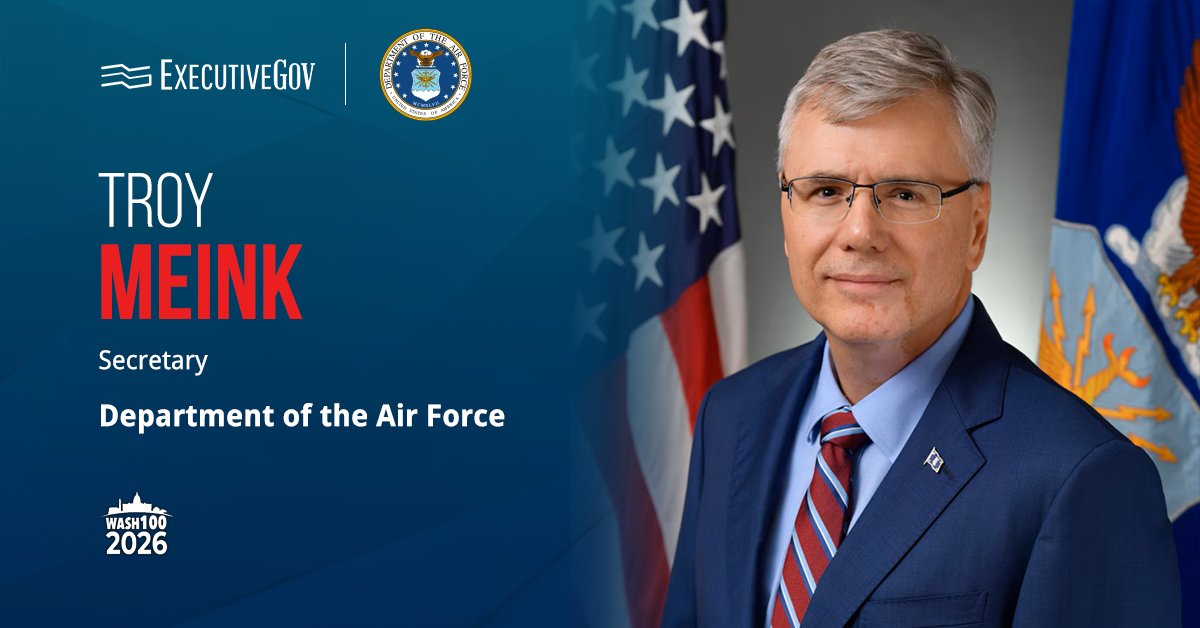
Secretary of the Air Force Troy Meink said acquisition reform will play a central role in strengthening the Department of the Air Force’s ability to compete and maintain dominance during a period of rapid technological change, the U.S. Space Force reported Thursday. As defense leaders continue to emphasize acquisition reform and workforce priorities, forums like the 2026 Air and Space Summit provide an opportunity to stay informed on evolving priorities across the sector. Sign up now for the July 30 event to hear experts discuss the capabilities and trends shaping national security innovation across two critical domains. How Is DAF’s
The National Science Foundation has started seeking proposals for national-scale data infrastructure projects as part of the Integrated Data Systems and Services, or IDSS, program. NSF’s new solicitation underscores continued federal focus on advancing cyberinfrastructure and research capabilities. As government and industry stakeholders track these developments, the 2026 Cyber Summit on May 21 will explore topics, such as artificial intelligence in cyber defense, zero trust, quantum computing and post-quantum cryptography. Register now! What Is the NSF IDSS Program? Launched in August 2025, the IDSS program supports national-scale operational cyberinfrastructure systems and services designed to enable open, data-intensive and AI-driven science
The U.S. Air Force has appointed Meghan Rosso, Marcus Green and Jennifer Robaina to functional roles within the Cyber and Networks Directorate, the Air Force Life Cycle Management Center said Thursday. The appointments align with efforts to integrate leadership across program management, contracting and human resources. “We are fortunate to have such a talented team stepping into these critical roles,” said Brig. Gen. Joshua Williams, program executive officer for the Cyber and Networks Directorate. “Their collective experience and leadership will strengthen how we deliver capabilities, support our workforce and execute our mission for the Department of the Air Force.” Who Is Meghan Rosso? Green