As artificial intelligence reshapes government and industry, one emerging concept is gaining significant attention among technology leaders: digital twinning. By combining AI with advanced modeling and real-time data, organizations can create virtual replicas of physical systems, from manufacturing lines to sensor networks, enabling faster innovation, smarter decision-making and improved operational performance.
 Learn more about how GovCons are using AI to supercharge digital twins at the upcoming 2026 Artificial Intelligence Summit on March 18. The event will bring together government and industry leaders to explore emerging AI capabilities, including how technologies such as digital twins can strengthen the U.S. defense industrial base. Seats are limited — reserve your spot today!
What Is Digital Twinning in AI?
A digital twin is a virtual model that mirrors a real-world asset, system or process. Using continuous data feeds, often from sensors, operational databases or connected devices, the digital twin updates in near-real time to reflect the state and performance of the physical counterpart.
When paired with artificial intelligence, these virtual models become more powerful. AI can analyze the incoming data, simulate different scenarios and predict future outcomes. For example, organizations can use AI-enabled digital twins to test changes to a production line before implementing them in the physical environment, identify potential equipment failures before they occur, or optimize logistics and supply chains.
The approach is increasingly valuable across the government contracting landscape, particularly in defense manufacturing and mission systems where testing physical equipment can be expensive and time-consuming.
In the defense industrial context, these models allow contractors and mission engineers to simulate complex systems, test designs and evaluate performance under operational scenarios without risking costly hardware or mission delays. Applications range from optimizing production lines and supply chains to modeling advanced weapon systems and critical infrastructure, providing a strategic edge in efficiency, readiness and innovation.
What Role Do Digital Twins & AI Play in the Defense Industrial Base?
Government and industry leaders are already exploring how AI-driven modeling and simulation tools can help modernize U.S. manufacturing and accelerate capability delivery.
During the most recent Potomac Officers Club Summit, CEOs discussed how emerging AI technologies—including digital-twin-like capabilities—are shaping their organizations’ operations.
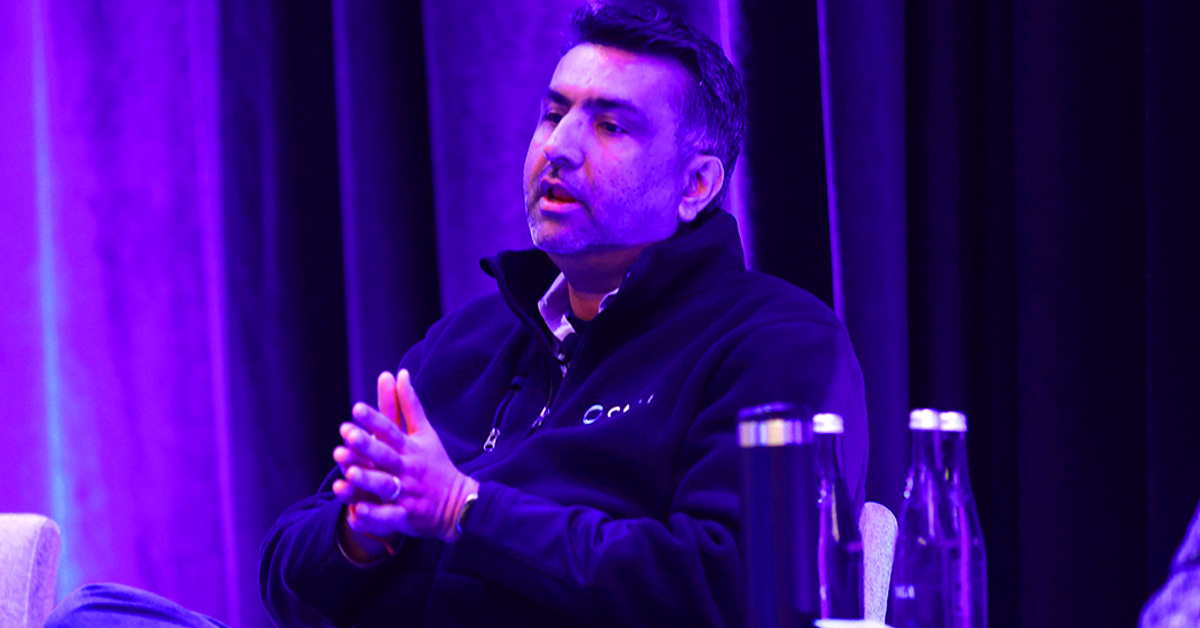
Responding to a question from an audience member about how companies are using AI and digital twinning to help reenergize manufacturing in the United States, Parag Thakker, CEO of OMNI Federal, emphasized the importance of focusing on real-world use cases rather than hype.
“There’s a lot of AI, it’s almost magic in how people talk about it,” Thakker said, explaining, however, that the real value comes from identifying specific use cases, applying the technology and demonstrating how it solves a problem.
He noted that the rapid advancement of large-scale AI models has moved the technology from experimentation to practical implementation, creating opportunities to apply AI-driven data analysis and interaction to engineering, cybersecurity and other operational challenges.
According to Thakker, organizations must also design systems that balance automation with human oversight. “The question is what level of human interaction is required,” he said, pointing to the need for thoughtful design patterns as AI becomes embedded in mission systems.
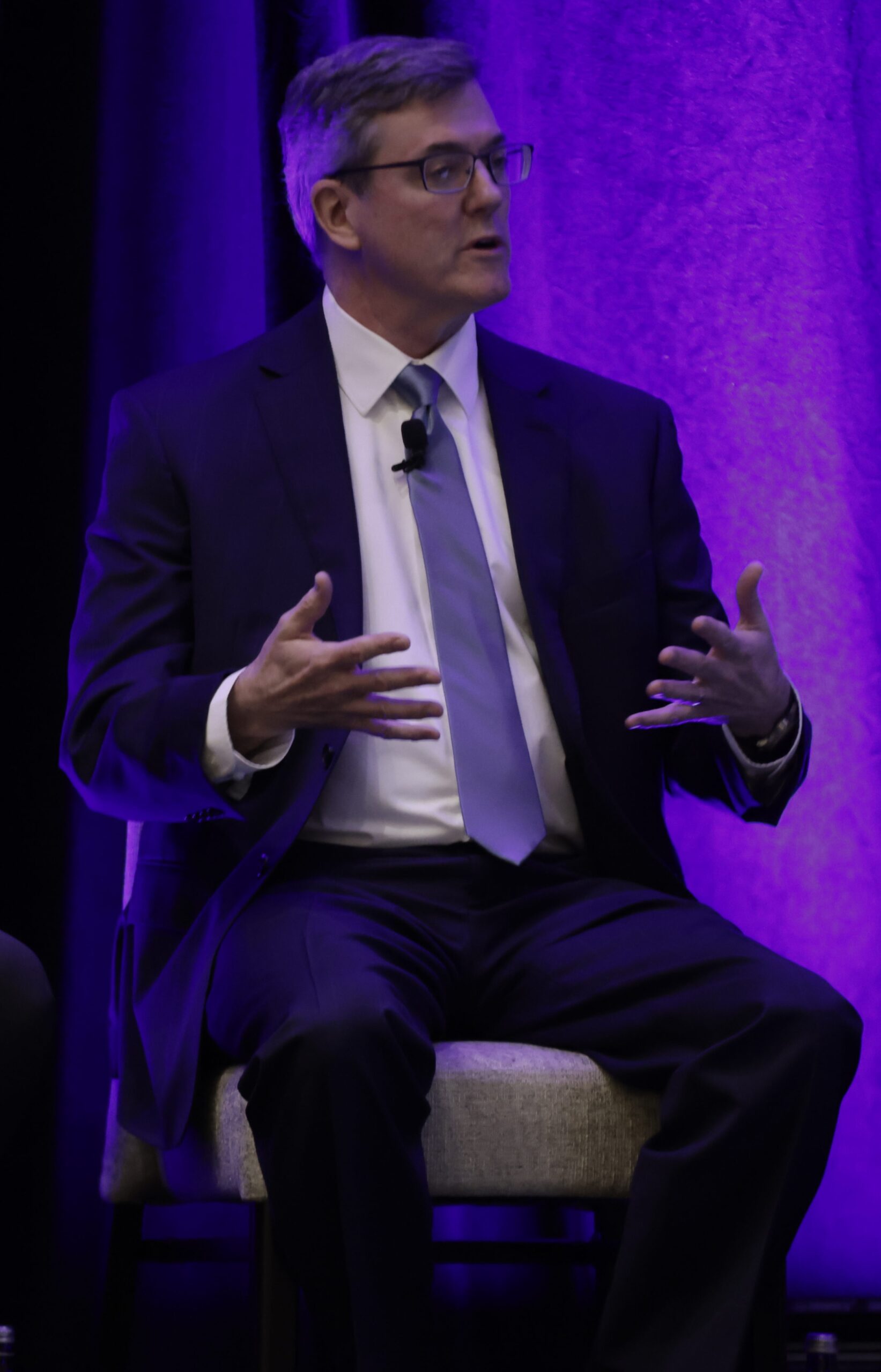
Michael LaRouche, CEO of Serco and a 2026 Wash100 Award winner, also highlighted the role of AI in improving industrial capabilities and demonstrating advanced solutions to customers.
“From the industrialization perspective, we’ve actually been using AI to enhance our capabilities with regard to delivery of any use in a sensor system specifically,” LaRouche said, noting its use in operational demonstrations. “We've also been able to use that technology to demonstrate to the customer … the enhanced capability.”
He added that AI is also being implemented internally to drive efficiency. “My push is to implement as many AI applications as we can to enhance our efficiency just from a back-office perspective,” LaRouche said.
While not every implementation involves a full digital twin, the underlying concept, using AI-powered modeling and data analysis to simulate and optimize complex systems, continues to gain traction across defense and government technology sectors.
Learn More at the 2026 AI Summit
As agencies and contractors look to harness technologies such as digital twins, collaboration and knowledge sharing will be critical. Potomac Officers Club’s 2026 Artificial Intelligence Summit will provide a forum for executives, policymakers and technologists to discuss the latest developments in AI and their implications for government missions.
With AI rapidly evolving, events like the March 18 summit offer an opportunity for leaders to explore how innovations in data, modeling and intelligent systems will shape the future of government and the defense industrial base. Reserve your spot at the 2026 AI Summit today!