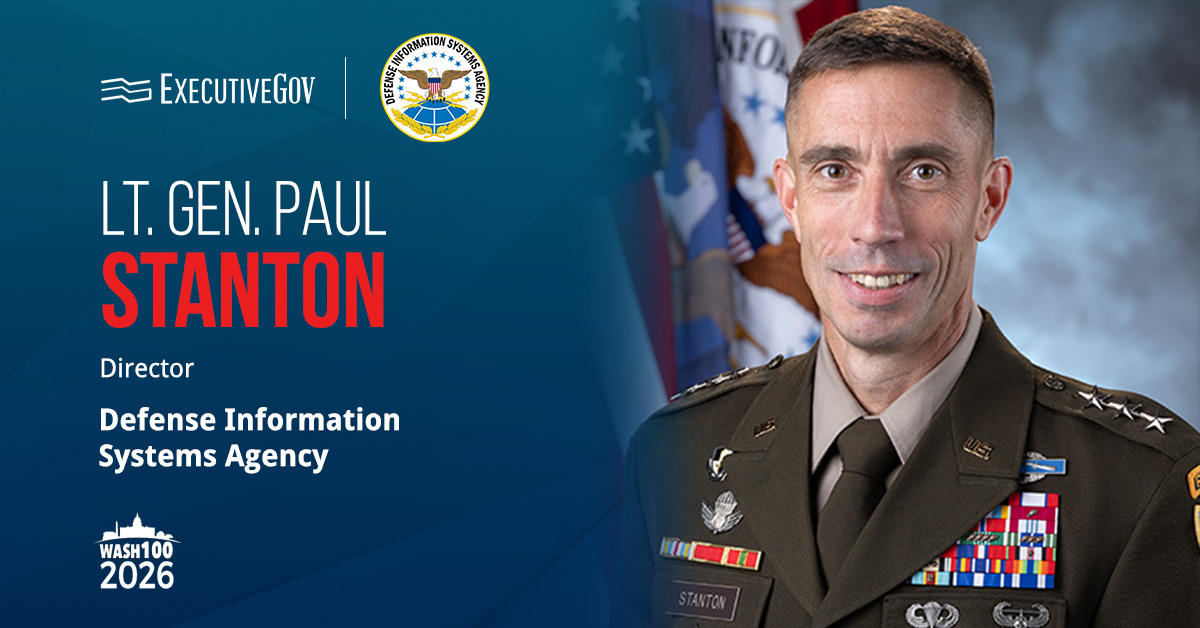
U.S. Army Lt. Gen. Paul Stanton, director of the Defense Information Systems Agency, told lawmakers that the network must be treated as a “critical weapons system” and that the joint force’s advantage in combat relies on timely and accurate information to support quicker, more effective decision-making than its adversaries.

Stanton’s testimony underscores the growing urgency around cyber operations and the evolving role of the military’s global information network. Attend the 2026 Cyber Summit in May to join government and industry leaders as they gather to discuss zero trust, proactive cyber initiatives and other cyber priorities. Save your spot now!
“In the face of determined and capable adversaries across the globe, the joint force’s success on the battlefield comes down to one core task: getting the right data to the right place at the right time to make a better and faster decision than the enemy,” Stanton, who also serves as commander of the Department of War’s Cyber Defense Command, or DCDC, said Tuesday in his testimony before the Senate Armed Services subcommittee on cybersecurity.
What Is the Role of Zero Trust in Network Modernization?
Stanton, a 2026 Wash100 awardee, said modernizing the network architecture centers on a zero trust model designed to strengthen defenses against cyberthreats. He described the approach as “never trust, always verify,” with continuous validation of every user and device connected to the network.
“This is the essential model that enables the agile, data-centric Mission Partner Environment, allowing us to move beyond the legacy approach of building isolated hardware-defined networks for each coalition,” he added.
How Is DOW Shifting to a Continuous, Proactive Cyber Campaign?
Stanton said the Pentagon is transitioning from “reactive network defense” toward a continuous, proactive operational approach against cyber adversaries. He noted that DCDC's elevation to a sub-unified command supports this transition.
“We are moving beyond chasing individual alerts to campaigning against systemic vulnerabilities and coordinated threat actors,” the DISA director told lawmakers.
What Is the Role of People in Cyber Defense?
Stanton said personnel readiness remains a top priority for both DISA and DCDC, noting that people are the foundation of cyber defense efforts.
“Technology provides the tools, but it is trained and accountable people who win battles, which is why readiness is a non-negotiable, number one priority of both the command and the agency,” he said.
He added that the department is focusing on recruiting talent, expanding training and reinforcing accountability to strengthen the cyber workforce.