

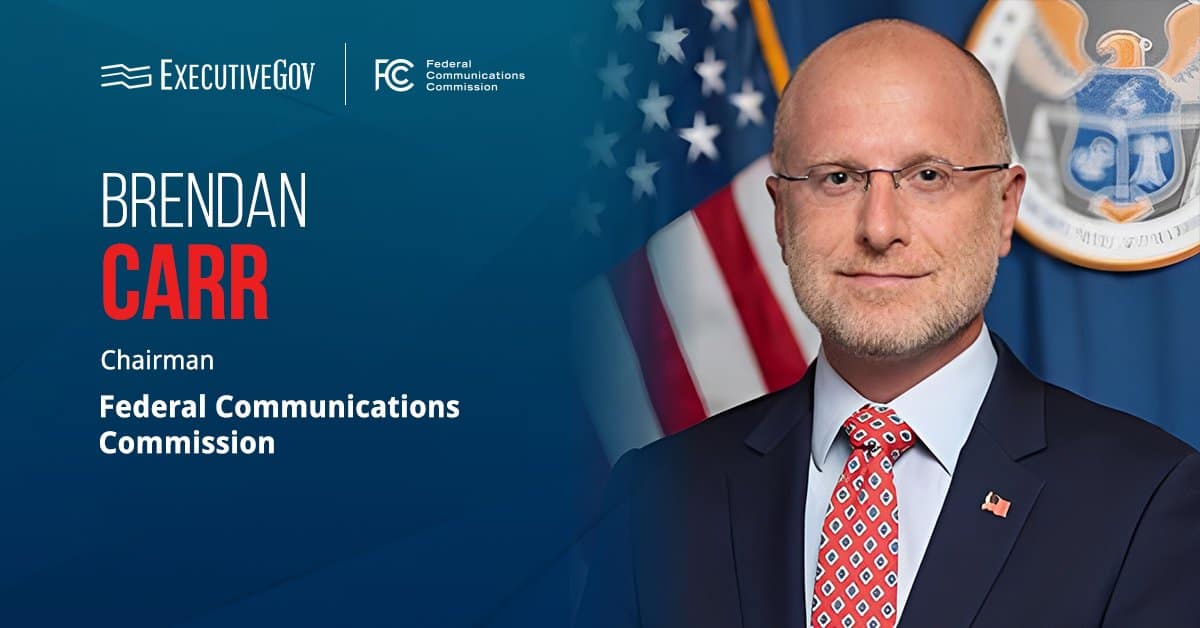
Brendan Carr, chairman of the Federal Communications Commission, has proposed a plan to provide spectrum access for emerging space technologies and operations.
Carr’s proposal, issued Thursday, aims to support what the commissioner described as “weird space stuff,” or emergent space ventures, such as orbital laboratories, private inhabitable spacecraft and in-space satellite repair.
Table of Contents
How Will the Proposed Rule Support Next-Generation Space Operations?
If adopted, the commission would start formal proceedings to explore regulatory updates and identify additional spectrum bands that could support telemetry, tracking and command functions required to operate spacecraft safely.
Telemetry, tracking and command capabilities allow operators to control spacecraft and monitor performance in orbit, making spectrum access a critical component of space operations.
“America’s leadership in space relies on predictable spectrum resources. Nowhere is this more clear than when it comes to the cutting-edge space operations that come right out of sci-fi and into our modern reality,” Carr stated.
“Whether we’re talking about repairing a satellite in orbit or creating pharmaceutical solutions to our health care challenges in a space lab, these very real ventures will require very real resources, including secure radio signals for control and basic operations. Today’s proposal is the first step toward the spectrum abundance needed to give America’s space activities the predictable spectrum environment they need to thrive,” the official added.
The effort aligns with the FCC’s broader push to achieve spectrum abundance in outer space.
Why Is the FCC Working to Release 20,000 Megahertz of Spectrum?
In May, the commission issued a notice of proposed rulemaking to seek input on unlocking more than 20,000 megahertz of spectrum to support high-speed internet delivered from space.
The initiative examines expanding satellite connectivity across several underutilized spectrum bands located near existing satellite frequencies. Freeing up the spectrum bands could help enable next-generation satellite broadband services while strengthening U.S. leadership in the global space economy, the FCC said.
Related Articles

The Department of the Treasury has named 19 individuals with experience across government and the private sector to senior positions spanning economic policy, legislative affairs, operations and public affairs. Secretary of the Treasury Scott Bessent made the announcement on Tuesday. Who Are the Appointed Senior Leaders for Treasury? Austin Browning, deputy chief of staff for operations Aynsley Moore, chief of operational strategy Brandon Mayhew, deputy executive secretary Charlie Bolton, deputy assistant secretary for macroeconomics Christina Skinner, deputy assistant secretary for the Financial Stability Oversight Council Don Snyder, deputy assistant secretary for energy, strategic initiatives and tax administration Elliott Yoshio Hulse,
The Department of War’s Office of the Chief Information Officer has launched the Cyber Registered Apprenticeship Program, or Cyber RAP, as part of efforts to strengthen its cybersecurity workforce and support national security missions. The latest DOW initiative underscores the growing demand for skilled cyber professionals across the federal landscape. Join the 2026 Cyber Summit on May 21 to hear defense officials and industry leaders discuss AI in cyber defense, post-quantum cryptography, cybersecurity compliance, zero trust and more. Register now! The DOW OCIO said Tuesday Cyber RAP, which will launch as a pilot in the summer of 2026, is designed
The Defense Logistics Agency Weapons Support has introduced the Rapid Sustainment Initiative, or RSI, a contracting approach designed to address gaps in sustainment planning for new weapon systems. DLA announced the initiative in a Friday post to their website. What Challenge Is the Rapid Sustainment Initiative Addressing? Sustainment planning often began at initial operating capability, or Milestone C, creating a reactive environment throughout the acquisition lifecycle that triggered delays and parts shortages. U.S. Army Brig. Gen. Beth Behn warned that insufficient sustainment planning can result in readiness issues years after fielding. How Does RSI Work? The initiative shifts DLA engagement to