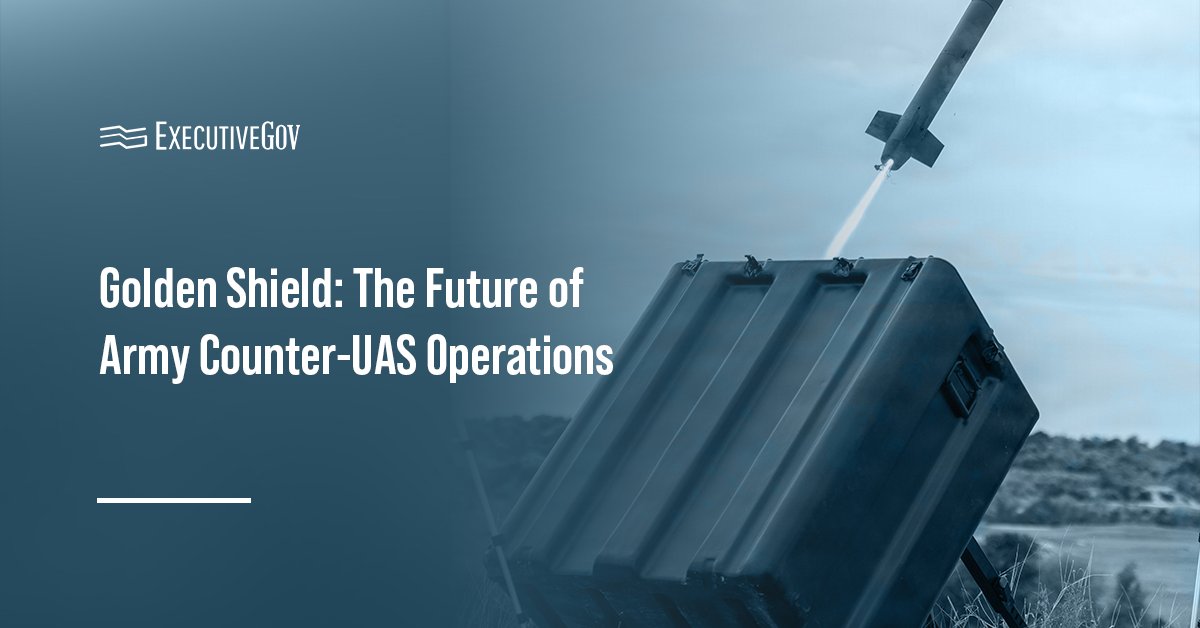
- The Department of War is betting that its Golden Shield autonomous counter-drone system will help it defeat advanced adversarial UAS operations.
- Golden Shield is a scalable, open architecture system with cutting-edge C2 capabilities and an automated detect, track and cue process to provide faster and more effective engagements.
- Get the latest Golden Shield and advanced C-UAS business opportunities at the 2026 Army Summit on June 18!
The Pentagon is betting autonomous counter unmanned aerial systems, or C-UAS, technologies will be critical to victory in future combat. Golden Shield is its strategy for C-UAS success.
The Army achieved a milestone with Golden Shield in early April. For the first time in a live setting, an autonomous sensor on one platform detected and classified an enemy UAS. It then transmitted data and an engagement order to an autonomous weapon system on another platform to defeat the adversary drone.
This demonstrated an essential seamless and accelerated kill chain necessary for autonomous C-UAS performance. Golden Shield is built upon a scalable open architecture, creating a powerful array of capabilities by layering next-generation command and control with various sensors and effectors.
By automating the detect, track and cue process, Golden Shield will provide faster, more effective engagements, while drastically reducing the mental load required of soldiers. The demonstration of Golden Shield autonomous C-UAS technologies in early April is a big step forward to ensuring Army soldiers have the most advanced technology for an overwhelming advantage in warfare.
Let’s dive into the five biggest technological advancements in Golden Shield:
Discover the latest C-UAS business opportunities at the Potomac Officers Club’s 2026 Army Summit on June 18! Get new insight on how the service is achieving its Army 2030 goals from Katie Thompson, deputy executive director for U.S. Army Contracting Command-Aberdeen Proving Ground, during her insightful keynote address. The 2026 Army Summit is shaping up to be one of the summer’s most anticipated events. Secure your seat today!
What Are Golden Shield’s Biggest Technological Advancements?
1. Demonstrated Autonomous Capability
Golden Shield’s live fire exercise featured the Army’s first start-to-finish engagement in which an autonomous sensor identified and targeted a UAV, before instantly cueing another weapon system on another platform to defeat it, according to Army Recognition.
“Some [of the systems] are more mature than others,” Grein said. “But … that’s part of why we do experiments—to determine what we think is ready to hand-off to soldiers in the field environment.”
2. Keeps Units Mobile Without Extra Work
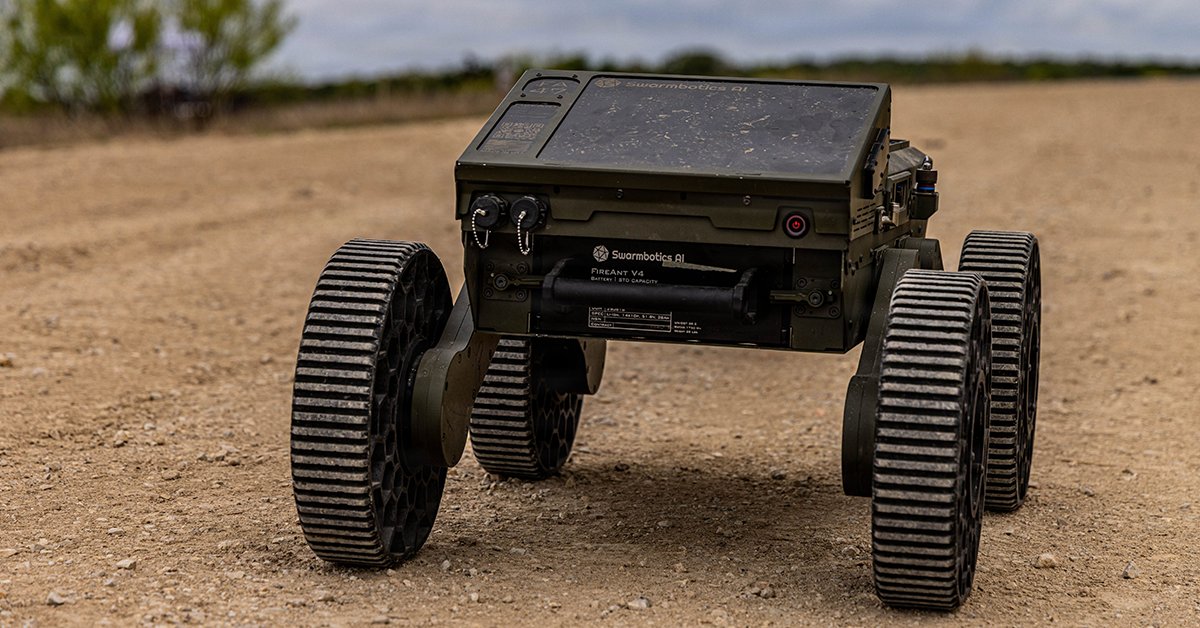
The complex mix of robotic platforms, sensors and interceptors demonstrated how armored units can keep moving under regular UAS surveillance and attack without overburdening crews. This is an essential step toward scalable and autonomous air defense in contested environments. By accelerating the kill chain and automating the detect, track and cue process, the system should allow more rapid and effective engagements while significantly reducing the cognitive load on soldiers.
3. Transformative System-of-Systems Approach
Golden Shield isn’t a single radar or launcher. Instead, it is a system-of-systems leveraging advanced sensors, and kinetic and non-kinetic weapons. It also features an innovative Vehicle Protection System Base Kit, or VPSBK. This is a survivability controller designed with a modular, open-systems architecture that serves as the foundation for future hard-kill and soft-kill active protection integration.
This VPSBK demonstrates how Golden Shield is designed to be a digital spine onto which new defeat options can be added without having to rebuild a vehicle’s entire protection system.
Are you a GovCon technology executive who wants to win more contracts in 2026? Then you cannot afford to miss the Potomac Officers Club’s 2026 Army Summit on June 18! Dig into advanced C2 systems and technologies during the What’s Still Needed to Enable a Hyperconnected Battlefield panel discussion. It features an all-star lineup of leading Army officials, including:
- Robert Monto, program manager for robotic control and integration and capability program executive for mission autonomy
- Christopher Manning, deputy assistant secretary for research and technology (pending confirmation)
- Daniel Duvak, senior science and technology manager and assistant director of network and communications
4. Data-Centric Command and Control
Golden Shield contributes to the Army’s goal of better leveraging data-centric architectures, fast software development, open standards, and artificial intelligence and machine learning to accelerate decision-making. This is critical in counter-UAS missions because machine speed processing can prioritize shooters, slash duplicative engagements and create a common air picture, even when armored forces are moving or hiding behind terrain.
5. Preserves Expensive, Specialized Munitions
Cost calculations are foundational to success in combat. Friendly forces face an overwhelming hurdle if they’re using $1 million missiles to defeat $1,000 drones. The success of Golden Shield could bend that cost equation in favor of allied militaries.
Munitions like the nascent XM1228 Badger 25mm round, a proximity-fuzed aerial defeat munition, would enable greater lethality from platforms like the Bradley Fighting Vehicle with Golden Shield. The Badger, under Golden Shield, would allow Bradleys to contribute to the anti-drone kill web while preserving more specialized, and expensive, missiles for higher-priority threats.
What makes the Badger unique is how it uses a miniature radar to identify a target during flight before detonating in close proximity without requiring a major vehicle modification or a new weapon system. For Bradley and tank crews, the Badger, with Golden Shield, would make mobile air defense even more effective during combat.