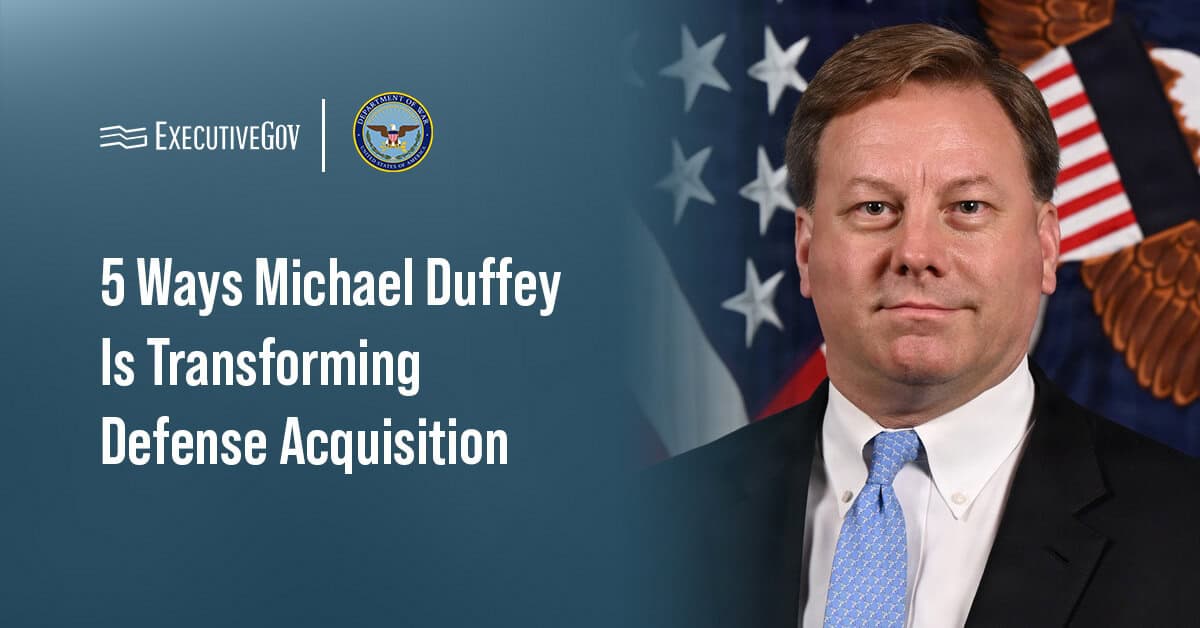
- Duffey is shepherding DOW efforts to improve how it acquires critical technologies
- He is prioritizing new contracting vehicles, working with non-traditional contractors and slashing bureaucracy
- Get your pressing questions answered by Duffey at the 2026 Defense R&D Summit on Jan. 29!
The Pentagon can’t wait any longer. It wants critical emerging defense technologies in warfighters’ hands faster than ever before, and Michael Duffey is leading the effort to make it happen.
Duffey, the Department of War under secretary for acquisition and sustainment, has five core pillars to better procuring defense technologies. He’s using new acquisition strategies and contracting vehicles to better harness the capabilities of innovative, non-traditional contractors.
He’s reducing bureaucracy and enabling key Pentagon officials to have direct access to Deputy Secretary Steve Feinberg. Duffey is also leveraging new analytics to better evaluate which programs are working, which are not, and how to best fix them. He also plans to reevaluate how GovCons can keep up with new cybersecurity standards for DOW contracts while implementing strategies to attract talented individuals to serve as acquisition professionals.
Let’s dig into five ways Duffey is transforming defense acquisition.
Learn of the latest business opportunities directly from Duffey during his opening keynote at the Potomac Officers Club’s 2026 Defense R&D Summit on Jan. 29! Hear the latest business opportunities. Get your pressing questions answered by Duffey himself following his keynote. Sign up today for this essential GovCon event!
Who Is Michael Duffey?
Duffey serves as the principal adviser to War secretary and Wash100 Award winner Pete Hegseth on all issues related to contracting, materiel readiness, acquisition, logistics and the defense industrial base. He was previously a partner at Equinox Global Solutions.
Duffey has also served in a variety of federal positions in his career. He was associate director for national security in the Office of Management and Budget during the first Trump administration. Duffey has also served as chief of staff to the under secretary of war for research and engineering and deputy chief of staff to the war secretary.
How Is Michael Duffey Transforming Defense Acquisition?
1. Encouraging New Contracting Strategies
The Pentagon wants to do more business with smaller, non-traditional firms to accelerate competition and innovation. Duffey, during his July confirmation hearing, said this includes leveraging fast and adaptable contracting authorities and using multi-year awards for technologies including energy-releasing materials like propellants.
Acquisition reform, he said, also includes prioritizing industry engagement earlier in the acquisition process and improving the speed from requirement to contract.
Duffey plans to use Defense Production Act Title III provisions and the Defense Industrial Base Analysis and Sustainment Program to bolster technologies including microelectronics, rare earths and energetics. DPA Title III authorities allow the DOW to create, expand or preserve U.S. industrial manufacturing capacity for technologies, industrial resources and materials crucial to national security.
Duffey wasted no time using DPA Title III authorities to accelerate acquisition. The DOW in September awarded $33 million in contracts to Systima Technologies and R.E. Darling Co. to broaden the solid rocket motor industrial base.
2. Slashing Bureaucracy
Duffey is leading an effort to reduce layers of bureaucracy between program managers and top Pentagon officials for top priority weapon systems including the Golden Dome homeland missile defense system. Duffey said these new “program czars” that report to Deputy Secretary Feinberg will improve acquisition of these systems because they will have a “direct” line to Feinberg and below to the program executive officer or program manager, according to Breaking Defense.
In the case of the Air Force’s new F-47 fighter aircraft, Lt. Gen. Dale White, USAF military deputy, assistant secretary for acquisition, technology and logistics; will report to Feinberg on an everyday basis. He’ll also collaborate with USAF officials in charge of the program and a “governance board” that includes Duffey and USAF Secretary Troy Meink.
“This is … working across all levels of the [DOW] to ensure that we get the right ideas injected and we provide the kind of guidance, training and support to the workforce to ensure they know how to move forward,” Duffey said.
Are you a technology executive? Then you cannot miss the Potomac Officers Club’s 2026 Defense R&D Summit on Jan. 29. It’s curated specifically for you! Engage with top Pentagon officials like Duffey. Spark collaborations with other GovCon titans and score that big contract. Take advantage of DOW efforts to contract faster with companies. Buy your ticket now!

3. Better Acquisition Analytics
Duffey plans to prioritize the DOW using better data collection, analytics and measurements to align with corporate best practices. He said in his advanced policy questions before his Senate confirmation hearing in March that these are essential to aligning an enterprise the size of the DOW with the goals of getting critical technologies into operators’ hands faster.
The prioritization of data-driven oversight and decision-making, he said, will allow better knowledge of system performance in providing the results and effectiveness of acquisition reforms. It will also provide better results in program affordability and cost growth and industrial base health and competitiveness.
4. Evaluating CMMC
The Pentagon’s Cybersecurity Maturity Model Certification, or CMMC, effort has been one of the hottest topics among government contractors. CMMC, which began its phased rollout in November, has mandatory cybersecurity standards for contractors to do business with the DOW.
Duffey is evaluating CMMC for how industry can best comply with the program. He said in his advanced policy questions that he would review CMMC and examine options to bolster the requirements and implementation so industry can affordably maintain pace with cybersecurity best practices.
He also vowed to review current and future compliance mechanisms, including third-party assessment firms. Managing and assessing cybersecurity compliance, Duffey said, are crucial roles to make sure the defense industrial base is applying the best cybersecurity practices to protect sensitive information.
While CMMC is rolling out in phases over the next 36 months, DOW contracting officials can now start inserting any CMMC level requirements in any contract. A CMMC expert said in November that GovCons can’t take these requirements lightly.
“There’s been this overall feeling of ‘Oh, we’ve got time, this [is a] phased rollout,” said Michael Greenman, Deltek senior manager for cloud solutions. “No, this is not a get-out-of-jail free card. This is not a ‘wait until then’ kind of thing.”
5. Improving the Acquisition Workforce
Duffey is using the DOW’s defense acquisition reforms to attract talented people to serve as acquisition officials.
“We’re certainly always looking for good people to come in and help,” Duffey said in November, as reported by DefenseScoop. “We do have some need for additional personnel, at least in my office, and I suspect across the acquisition workforce.”
He expressed optimism that acquisition workforce initiatives such as portfolio scorecards will help acquisition professionals achieve a better enterprise view and management of programs. This should help the program acquisition executives “manage their own workforce effectively and help them grow through the career ladder.”
Some of the key initiatives of the DOW’s acquisition reform effort include replacing program executive officers with program acquisition executives featuring broader authority, adjusting the acquisition culture to a more imperative footing and revamping the foreign military sales process.