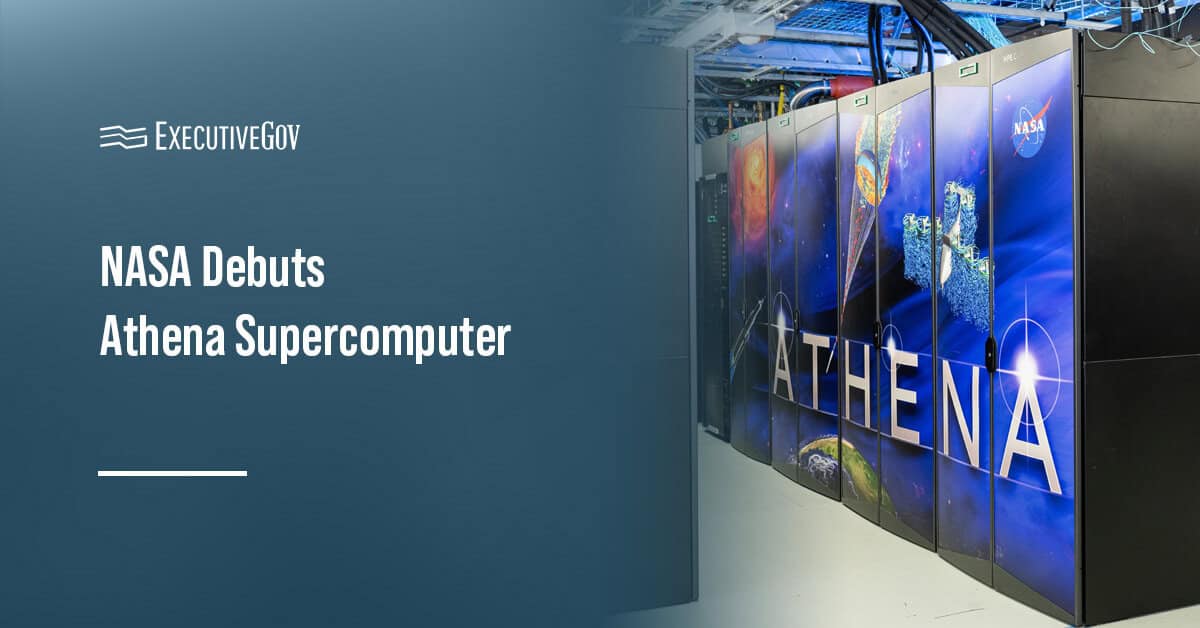
NASA has brought online Athena, a new supercomputer designed to expand the agency’s high-end computing resources for mission-critical research across space exploration, aeronautics and scientific discovery.
The space agency said Tuesday that the system, now available to users following a beta testing period, has more computing power than other NASA supercomputers. Athena also offers improvements in energy efficiency, lowering operational costs.
What Is Athena Designed to Support?
NASA said Athena will help scientists and engineers address complex challenges by enabling advanced simulations, large-scale data analysis and artificial intelligence model development.
Supercomputing systems are used across the agency to support efforts such as rocket launch modeling and next-generation aircraft design.
“Exploration has always driven NASA to the edge of what’s computationally possible,” said Kevin Murphy, chief science data officer and lead for NASA’s High-End Computing Capability portfolio.
“Now with Athena, NASA will expand its efforts to provide tailored computing resources that meet the evolving needs of its missions,” Murphy continued.
Where Is NASA’s New Supercomputer Located?
Athena is housed at NASA’s Modular Supercomputing Facility within the agency’s Ames Research Center in California’s Silicon Valley.
NASA said the system surpasses earlier platforms such as Aitken and Pleiades in both computing capacity and efficiency, delivering more than 20 petaflops of peak performance.
Who Can Access the Athena System?
The agency said Athena is available not only to NASA researchers but also to external scientists and engineers supporting NASA programs. They may apply for computing time through the agency’s high-end computing allocation process.
Athena operates under NASA’s High-End Computing Capability, or HECC, portfolio, managed by the Office of the Chief Science Data Officer.
Why Was the Supercomputer Named Athena?
The name was selected in an internal contest among the HECC workforce in 2025.
NASA said the system was named after the Greek goddess of wisdom and warfare, noting her connection as the half-sister of Artemis, the agency’s lunar exploration program.
As NASA continues to invest in advanced computing infrastructure, the agency said systems like Athena will play a central role in supporting increasingly complex missions and accelerating the next era of discovery.