The Department of the Navy has initiated a departmentwide organizational assessment that could lead to adjustments in how its civilian workforce is structured and staffed, Federal News Network reported Friday.
A Navy official said the review is intended to align the department’s structure with National Defense Strategy priorities and improve support to warfighters. The effort follows War Secretary and 2026 Wash100 awardee Pete Hegseth’s Workforce Acceleration and Recapitalization Initiative, which directed military departments to assess their organizational frameworks and identify opportunities for reform.

The Potomac Officers Club’s 2026 Navy Summit on Aug. 27 gathers senior Navy leaders and industry executives to discuss the technologies and strategies shaping the future fleet. The event provides contractors with direct access to decision-makers and insight into evolving naval priorities. Register now.
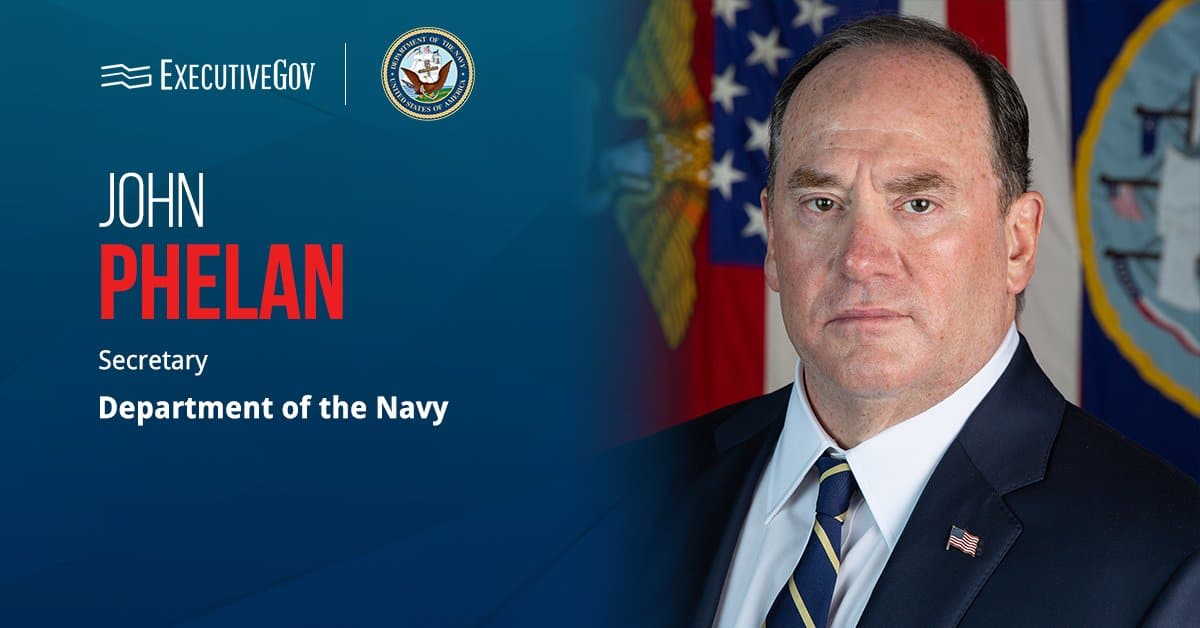
According to a Feb. 17 memo from Navy Secretary John Phelan, a fellow Wash100 awardee, the review builds on earlier consolidation efforts and may inform future workforce shaping decisions in fiscal year 2026.
Navy leaders have been instructed to analyze potential staffing reduction scenarios ranging from 10 percent to 20 percent in certain areas, particularly within the Navy Secretariat and Budget Submitting Organizations across multiple echelons.
An initial status report is due in March, with a planned implementation timeline of Sept. 30, 2026.
How Could Workforce Data Challenges Affect the Review?
The review comes as the Navy continues to face data accuracy challenges in tracking portions of its civilian workforce — particularly in cyber roles.
A 2024 Government Accountability Office audit found that Navy civilian cyber workforce data are stored in two separate systems with inconsistent information, leading to inaccurate vacancy rates and unreliable workforce visibility. GAO noted that reconciling those systems is essential for effective workforce planning and staffing of critical technical roles.
Navy officials told GAO they are working to reconcile the data and address accuracy gaps. The watchdog has also reiterated a prior recommendation that the Department of War fully review cyber work roles and position descriptions for accuracy.
Reliable workforce data will likely be central to any decisions emerging from the organizational review.
Phelan said he “directed the establishment, consolidation and streamlining of DON organizations, including the Offices of the Chief of Naval Intelligence, Chief of Naval Policy, Director of Administration, and Chief of Information. Further efforts are underway within the Secretariat, Navy and Marine Corps to redefine existing organizational structures and optimize the civilian workforce.”
What Broader Workforce Reforms Are Under Consideration?
The review also unfolds amid wider discussions across the War Department about modernizing civilian hiring practices.
Defense leaders previously advocated for skills-based hiring approaches to speed recruitment and better align talent with mission needs.
Jane Rathbun, the Navy chief information officer at the time, called for reducing lengthy hiring timelines, which currently average roughly 80 days to fill civilian vacancies.