The U.S. Space Force has accelerated the employment of the Deep Space Advanced Radar Capability, or DARC, to address growing risks from manmade objects and potential adversary activity in orbit.

Attend the 2026 Air and Space Summit on July 30 to hear military leaders and industry executives as they explore topics such as commercial space capabilities, cross-domain operations, secure data integration, and the pace of military technology advancement. Book your spot now!
The service said Monday it approved DARC for early use in September, enabling U.S. Space Command to begin operational activities ahead of full system acceptance.
What Is DARC?
DARC, designated ST-25, is a global network of three ground-based space sensors that supports space domain awareness by tracking objects in geosynchronous orbit. The system enables multiple space control kill chains and tactical timelines. It operates under a 2023 memorandum of understanding signed by the U.S., Australia and the U.K.
According to the Space Force, DARC is designed to support space traffic management and improve accountability for foreign actors operating in an increasingly congested domain by enabling continuous tracking, identification and characterization of objects in space.
In August 2025, Northrop Grumman and the U.S. Space Force demonstrated DARC's ability to integrate multiple ground-based antennas into a single system to track and characterize multiple satellites during a test at Site 1 in Western Australia.
What Does Early Use Mean for DARC?
The early use designation allows the Space Force to streamline test and evaluation processes while employing the capability in support of joint and combined operations.
The 20th Space Surveillance Squadron, or 20 SPSS, is conducting early use activities from the Integrated Radar Operations Center at Eglin Air Force Base in Florida.
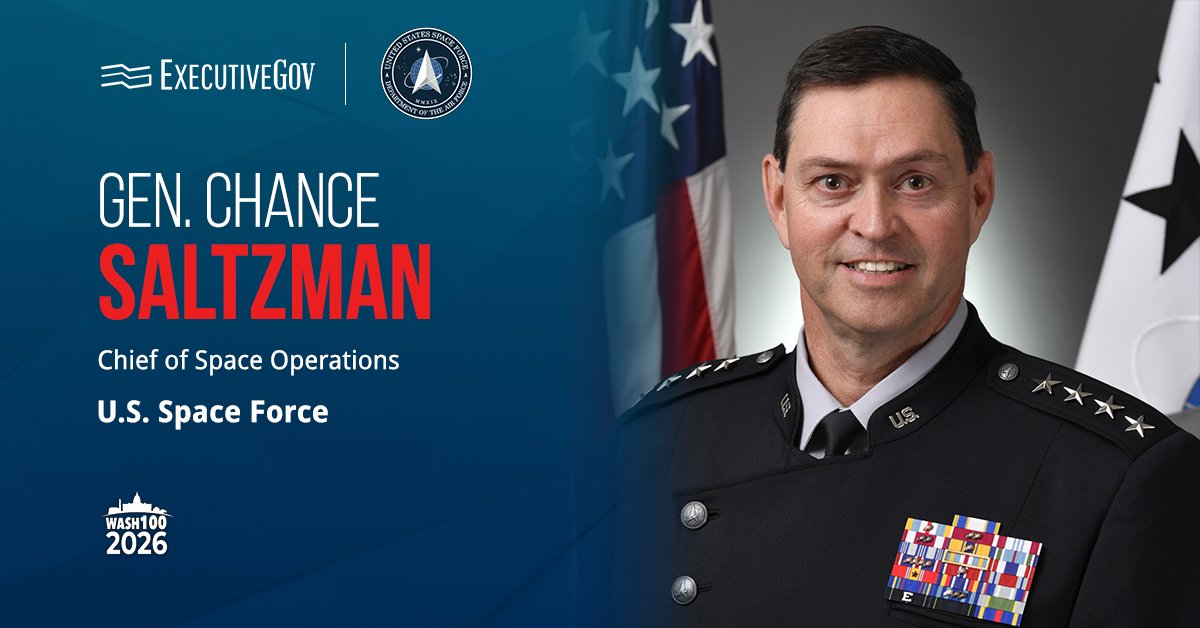
“The Space Force is all-in on delivering capabilities as soon as they provide a warfighting advantage and then upgrading them as we learn from real-world operations,” said Gen. Chance Saltzman, chief of space operations.
Saltzman, a 2026 Wash100 awardee, added that the work 20 SPSS and Mission Delta 2 are doing with ST-25 is a key example of these principles in action.
“Getting this capability into the hands of our Guardians sooner rather than later is a significant win,” said Col. Barry Croker, commander of Mission Delta 2 – Space Domain Awareness. “The Early Use phase has already provided invaluable opportunity for system familiarization, development of initial training requirements, and early identification of potential operational gaps, all of which ultimately accelerate our readiness.”
Lt. Col. Derek Haun, commander of 20 SPSS, said operating ST-25 enhances the unit's ability to monitor the deep space domain in support of global operations and allied space domain awareness efforts.
The early use approach allows the program to deliver preliminary operational capability while continuing contractor development as it progresses toward full operational acceptance.