The U.S. Space Force is seeking companies interested in joining a pool of qualified vendors capable of designing and building its fleet of neighborhood watch satellites in geosynchronous orbit called the Geosynchronous Reconnaissance & Surveillance Constellation, or RG-XX, Breaking Defense reported.
How Will the Space Force Acquire the RG-XX Satellites?
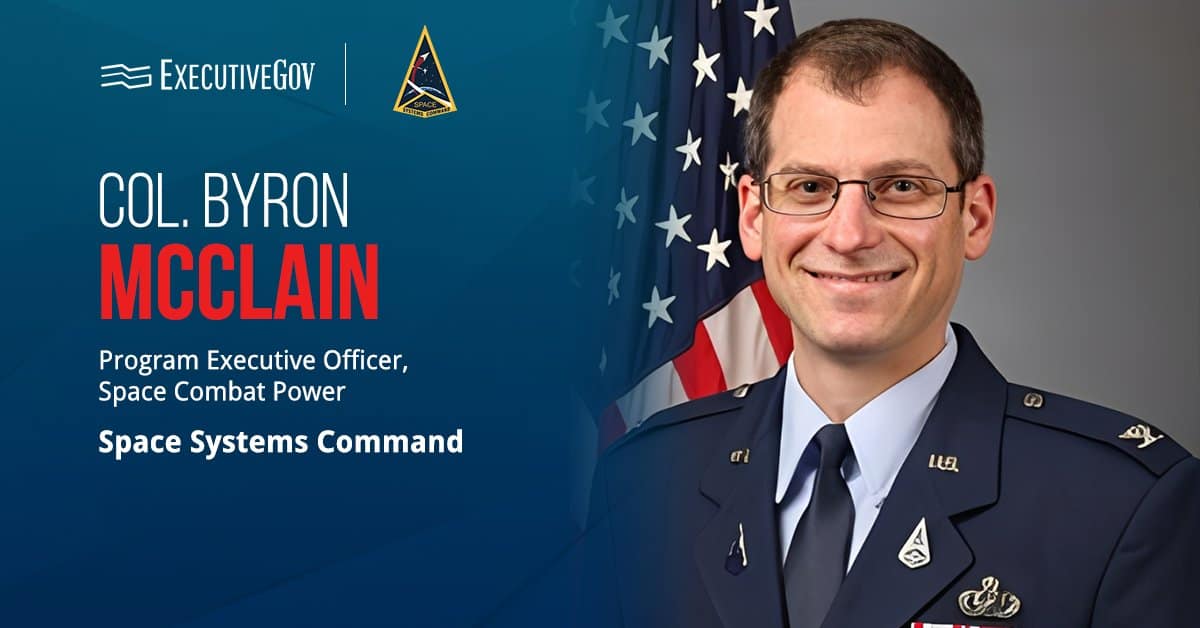
Col. Byron McClain, program executive officer for Space Combat Power at Space Systems Command, told reporters that the Space Force will set up an indefinite-delivery/indefinite-quantity contract that will enable the service to procure capabilities every year based on available funding.

Explore the new technologies and initiatives that ensure U.S. superiority in the space domain at the Potomac Officers Club’s 2026 Air and Space Summit on July 30. Space Force leaders will be present at the event to meet industry partners and to participate in insightful discussions about the capabilities guardians need to stay ahead of adversaries. Get your tickets here.
He added that a flexible acquisition approach is necessary because the Space Force has not determined how many satellites will be needed to create RG-XX.
“The quantity will be based off of a couple of factors,” revealed McClain, “the cost of the individual systems that we get, [but also] available funds and the mission need.”
SSC posted in early January a request for competitive proposals for the IDIQ, nicknamed Andromeda. According to the solicitation notice, the command wants companies that provide technologies and space-based systems that enable space domain awareness.
Proposals are due on Feb. 12. Defense Daily reported that SSC may begin awarding contracts by March.
What Is the Space Force’s Plan for the RG-XX Satellite Constellation?
RG-XX is the planned successor of the Geosynchronous Space Situational Awareness Program, or GSSAP, a satellite constellation that collects for tracking and characterizing man-made objects in orbit. The GSSAP satellites lifted off from Cape Canaveral Air Force Station in Florida in July 2014 and became fully operational in September 2027.
Compared to GSSAP, RG-XX satellites will be more maneuverable and will be capable of refueling in orbit, McClain shared.