

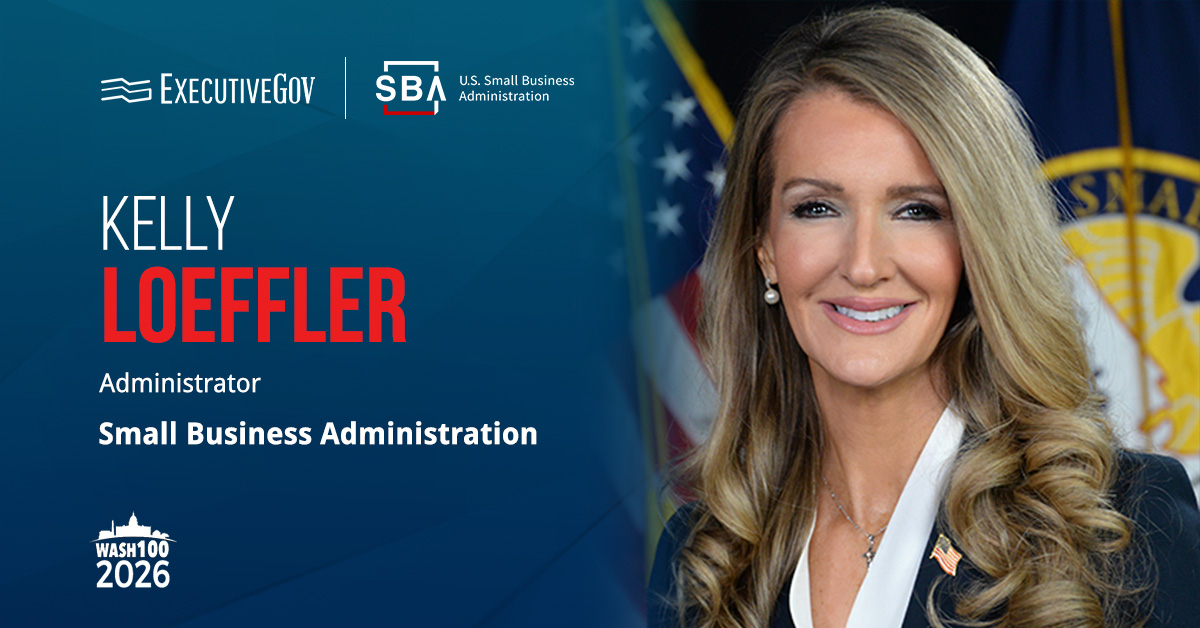
President Donald Trump on Monday signed into law a bill that seeks to reauthorize the Small Business Innovation Research and Small Business Technology Transfer programs through fiscal year 2031.

Federal agencies continue to play a key role in advancing innovation and supporting small business participation across government programs. Sign up now for the 2026 FedCiv Summit, where experts will discuss federal priorities, including AI adoption, cloud and compute infrastructure, and mission-driven investments.
Table of Contents
What Did SBA Director Kelly Loeffler Say About the SBIR-STTR Reauthorization Bill?
In a statement published Monday, Kelly Loeffler, administrator of the Small Business Administration, said the Small Business Innovation and Economic Security Act will sustain support for startups developing advanced technologies and contributing to the U.S. industrial base.
“Driven by innovative startups, the United States leads the world in scientific breakthroughs and transformative technology – and thanks to this law, SBIR and STTR will continue to power entrepreneurs who are building the industrial base of the future,” said Loeffler, a 2026 Wash100 awardee.
“Amid intense global competition and America’s reindustrialization, this law reinforces the Administration’s commitment to accelerating American ingenuity. I applaud lawmakers for advancing this critical measure and am grateful to President Trump for signing it into law to unleash the potential of the next generation of innovators,” she added.
What Are the Provisions of the Small Business Innovation & Economic Security Act?
The measure reauthorizes the SBIR and STTR programs through Sept. 30, 2031, and includes provisions to strengthen program integrity and safeguard research from foreign adversaries.
The law also expands access for new entrants, enhances oversight and modernizes program operations to ensure measurable outcomes from federal investments.
According to congressional records, the Small Business Innovation and Economic Security Act will expand requirements for federal agencies to evaluate national security risks posed by small business applicants. If an agency denies an application on security grounds, it must provide the applicant with the basis for that determination.
It also requires agencies to set a maximum number of proposals a small business may submit per fiscal year in response to Phase I and Phase II solicitations.
In addition, the legislation expands training requirements for contracting officers and the acquisition workforce related to Phase III awards, which focus on the commercialization of SBIR and STTR-supported technologies.
The law also establishes strategic breakthrough allocations for critical technology areas, providing additional Phase II awards to small businesses that demonstrate effective technologies and secure matching funds.
Sen. Joni Ernst, R-Iowa, chair of the Senate Small Business and Entrepreneurship Committee, sponsored the measure, which was carried in the House by Rep. Roger Williams, R-Texas, chairman of the House Small Business Committee.
What Are the SBIR & STTR Programs?
According to SBA, the SBIR and STTR programs, known collectively as America’s Seed Fund, have provided more than $81 billion in funding to over 34,000 small businesses since 1982. The programs operate across multiple federal agencies, including the Department of War, Department of Energy, Department of Health and Human Services, Department of Agriculture, NASA and the Environmental Protection Agency.
Companies such as Anduril, Biogen, Qualcomm, Illumina and iRobot received early-stage support through the SBIR program.
Related Articles
The U.S. Space Force Front Door has partnered with U.S. Space Command to serve as an entry point for industry to share technologies and ideas that could help advance national space capabilities and accelerate technology delivery to warfighters. As collaboration between government and industry continues to accelerate across the national security space ecosystem, leaders are placing greater emphasis on innovation and partnership. Secure your seat at the 2026 Air and Space Summit and join leaders and experts as they examine advanced technologies and strategies shaping the future fight across two critical domains. What Is Space Force Front Door? Space Force
NASA has awarded Development Seed a potential $76 million contract to provide data engineering, informatics and artificial intelligence support services to the agency’s Office of Data Science and Informatics, or ODSI, at Marshall Space Flight Center. The performance-based, indefinite-delivery/indefinite-quantity contract includes a phase-in period beginning May 15, a two-year base ordering period and three one-year option periods that could extend work through June 2031, NASA said Monday. What Will Development Seed Support? Under the contract, Development Seed will deliver research and development services across ODSI initiatives, including system architecture, operations and maintenance of agency-developed tools and platforms, and structured approaches
Federal agencies are expanding their use of artificial intelligence, but a new Government Accountability Office report identified key challenges in buying and deploying the technology. Leaders from GAO, the Pentagon and other agencies will explore the challenges in deploying AI in federal and mission-critical systems at the Potomac Officers Club’s 2026 Digital Transformation Summit on April 22. The event is dedicating multiple panels to AI, reflecting the technology’s growing adoption in the public sector to support operations and decision-making. You can still get your tickets here. What Challenges Do Agencies Face in AI Procurement? Officials interviewed for the report, issued