Processing....

Executive Gov

Digital News Coverage of Government Contracting and Federal Policy Landscape
Sticky Logo
  • Home
  • Acquisition & Procurement
  • Agencies
    • DoD
    • Intelligence
    • DHS
    • Civilian
    • Space
  • Cybersecurity
  • Technology
  • Executives
    • Profiles
    • Announcements
    • Awards
  • News
  • Articles
  • About
  • Wash100
  • Contact Us
    • Advertising
    • Submit your news
    • Jobs
Logo
Acquisition & Procurement/News
Federal CIO Wants to Meet With Firms That Offer Solutions, Not Just Define Problems
by Kristen Smith
Published on June 9, 2025
Gregory Barbaccia, federal CIO, is laying down the law against consultants who identify problems and don't solve them.

Federal Chief Information Officer Greg Barbaccia, a 2025 Wash100 Award winner, said he will no longer meet with firms that “define problems,” such as research, advisory and strategy consulting companies. 

In an internal email, the official said he will instead speak with organizations that offer solutions. 

“This is about focus,” he wrote in the email obtained by Federal News Network. “Every hour we spend in meetings must move us closer to implementation, not ideation. We are not here to admire a problem — we’re here to solve it.” 

No More Consulting Contracts

Barbaccia also advised government CIOs to cancel meetings with strategy firms or ask for a summary of solutions or deliverables they offer. 

“If there’s an edge case you believe deserves discussion, seek an exception from me or your director,” he added. 

The move follows decisions across federal agencies to reexamine consultant contracts. 

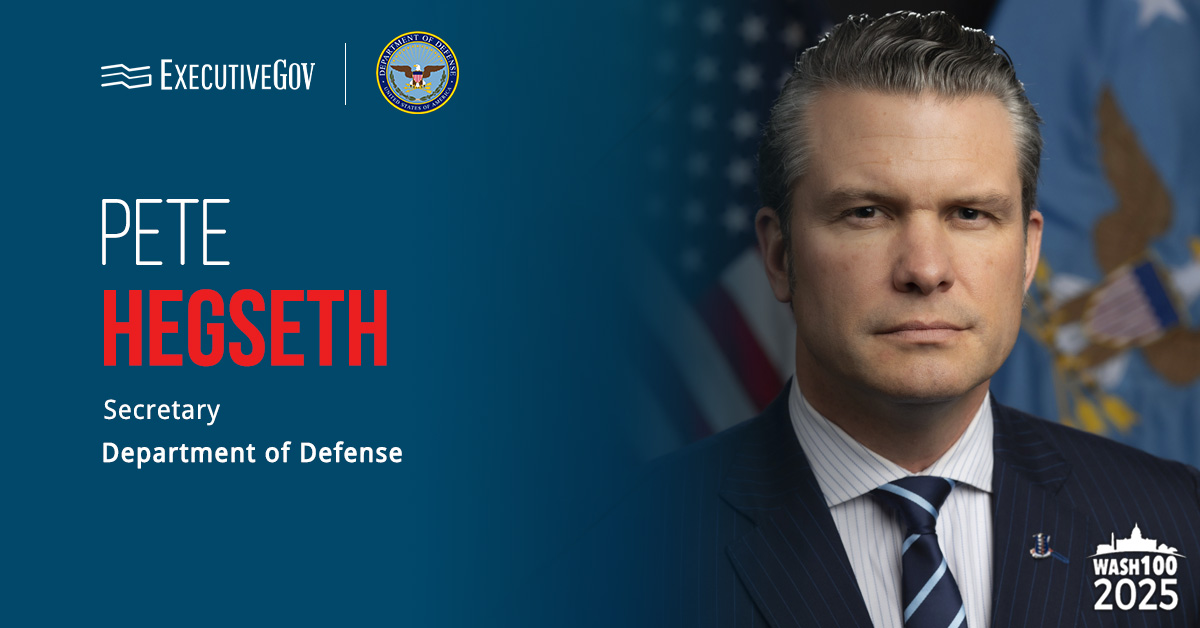
In March, Defense Secretary Pete Hegseth, a fellow Wash100 winner, terminated over $30 million in contracts with external consulting firms. Hegseth also told defense leaders in a memo circulated in May to look in-house for IT expertise to drive financial and operational efficiency. 

The Department of Veterans Affairs also cancelled 585 non-mission-critical and duplicative contracts, including for leadership coaching and staff mentoring, in early 2025.

Civilian/News
NIST Unveils Cryptographic Accordion Development Plan
by Miles Jamison
Published on June 9, 2025
NIST has a trio of general-purpose cryptographic accordions—Acc128, Acc256 and BBBAcc—in the works.

The National Institute of Standards and Technology has revealed plans to develop three general-purpose cryptographic accordions.

The agency said Friday it specifically aims to develop variants of the Hash-Encrypt-Hash, or HCTR2, technique for the following accordions: 

  • Acc128 to support typical usage or birthday bounds with the Advanced Encryption Standard, or AES
  • Acc256 to support typical usage with a 256-bit block cipher, possibly Rijndael-256
  • BBBAcc to support extended usage or beyond-birthday-bound with AES

What Is a Cryptographic Accordion?

A cryptographic accordion is a tweakable, variable-input-length strong pseudorandom permutation, or VIL-SPRIP, derived from an underlying block cipher. It functions as both a mode of the underlying block cipher and a tweakable block cipher for various input lengths.

A derived function serves as an input encoding that enables particular functionalities within an accordion, including authenticated encryption with associated data, or AEAD, tweakable encryption for storage applications, or deterministic authenticated encryption for key wrapping. These efficient accordions support enhanced security beyond existing approved modes.

NIST established a standardized series of block cipher modes of operation within the Special Publication 800-38 series and NIST Internal Report 8459 details their limitations. 

The agency hosted two workshops to determine potential enhancements and establish a consensus on developing one or more cryptographic accordions. Through the workshops, NIST identified the need for a cryptographic accordion. It proposed using the HCTR2 technique as the basis for the accordion, citing its maturity and widespread deployment.

NIST requested public comments on the initiative and will receive responses until August 6.

Artificial Intelligence/Government Technology/News
AIA Report Highlights Automation & AI’s Role in Addressing Aerospace, Defense Challenges
by Kristen Smith
Published on June 9, 2025
A new report from AIA and Accenture explores how automation and AI could help tackle aerospace and defense challenges.

The Aerospace Industries Association, in collaboration with Accenture, has developed and published a report offering an in-depth analysis of industry expert insights on how automation and artificial intelligence can help tackle aerospace and defense industry challenges, including limited capital availability, aging information technology infrastructure and a rapidly evolving workforce.

“AIA’s new report provides a clear roadmap to help our industry harness AI’s full potential and turn today’s challenges into tomorrow’s breakthroughs,” said Tim White, AIA’s vice president of engineering and technology, noting that the A&D industry is at a defining crossroads, where AI is no longer optional but essential.

Table of Contents

  • Post-Pandemic Production Challenges
  • Generative AI Adoption

Post-Pandemic Production Challenges

The A&D industry is facing significant capacity challenges hindering its ability to meet soaring demand. Both commercial aviation and defense contractors are trying to ramp up production; however, even major manufacturers are struggling to meet demand amid a post-pandemic surge, the report stated.

The document recommended actionable strategies to navigate the complex A&D industry, including building a strong digital foundation, embedding AI into operational processes at scale and establishing an AI-ready workforce. AIA and Accenture highlighted the high costs associated with hiring and training new talent, noting that AI offers a path forward to augment human capabilities and preserve critical expertise amid decreasing employee tenure and increasing job complexity.

Generative AI Adoption

According to John Schmidt, global A&D lead at Accenture, A&D organizations need to modernize to stay competitive. “By using AI in their core operations, companies can reinvent the nature of work while also driving innovation and efficiency,” Schmidt said. “This strategic change is crucial for the industry to maintain its leadership in global security and economic growth.” 

Generative AI is gaining momentum within the industry, with 87 percent of surveyed industry executives planning to increase investment in the technology in 2025. Nearly 75 percent of the executives also said they expect AI-driven automation to significantly
improve operations in the next few years.

DoD/News
Defense Secretary Hegseth Announces Key Military Nominations
by Miles Jamison
Published on June 7, 2025
Headshot of Defense Secretary Pete Hegseth

Secretary of Defense Pete Hegseth announced that President Donald Trump nominated four military leaders for key positions. 

According to statements released by the Department of Defense, Navy Vice Adm. Frank Bradley, Navy Vice Adm. Charles Cooper II, Air Force Lt. Gen. Dagvin Anderson and Air Force Lt. Gen. Alexus Grynkewich received nominations.

Table of Contents

  • Frank Bradley
  • Charles Bradford Cooper
  • Dagvin Anderson
  • Alexus Grynkewich

Frank Bradley

Bradley is nominated for appointment to the grade of admiral. If confirmed, he will be assigned as commander of the Special Operations Command, or USSOCOM, at the MacDill Air Force Base in Florida. He is currently the Joint Special Operations Command, or JSOC, commander at Fort Bragg, North Carolina. The Navy SEAL officer previously served as commander of the Special Operations Command Central and the Naval Special Warfare Development Group. He was also part of SEAL Team Four and the SEAL Delivery Vehicle Team TWO. He also served with the Italian Incursori as an international exchange officer.

Charles Bradford Cooper

Cooper was also nominated for appointment to the grade of admiral, with the assignment of commander of the Central Command at MacDill Air Force Base. He is currently the deputy commander of the Central Command. The career surface warfare officer previously served as commander of the Naval Forces Central Command, the Naval Surface Force Atlantic, the Expeditionary Strike Group 7 and the Naval Forces Korea. He was the Navy chief of legislative affairs and director of surface warfare officer assignments.

Dagvin Anderson

Anderson is nominated to the grade of general and will be the designated commander of the Africa Command in Stuttgart, Germany. He serves as director of Joint Force Development, or J7, Joint Staff at the Pentagon. His former assignments include vice director for operations at the Joint Staff, commander of Special Operations Command-Africa and deputy director for operations of the Indo-Pacific Command.

Alexus Grynkewich

Grynkewich, currently the director of operations, J-3, Joint Staff at the Pentagon. He is nominated for appointment to the grade of general. If confirmed, he will be assigned as the supreme Allied commander of Europe, an appointment the North Atlantic Treaty Organization, or NATO, agreed with. In addition, Grynkewich will serve as commander of the European Command. He previously served as commander of the 9th Air Force and the Combined Forces Air Component of the Central Command.

Cybersecurity/News
NIST Researchers Develop Methodology for Assessing Hardware Threats
by Kristen Smith
Published on June 7, 2025
The Metrics and Methodology for Hardware Security Constructs is NIST's new methodology for assessing hardware threats.

The National Institute of Standards and Technology has issued a new white paper assessing threats to hardware. 

Titled the Metrics and Methodology for Hardware Security Constructs, the 16-page document explores common hardware weaknesses and the attack patterns that malicious actors use to exploit them and recommends a systematic approach to analyzing risks. 

The white paper is authored by researchers from NIST and the University of Maryland. 

How to Assess Threats to Hardware

The agency’s proposed hardware threat analysis methodology involves linking hardware weaknesses with meta-level attack patterns. The white paper utilizes data from the Common Attack Pattern Enumeration and Classification, or CAPEC, a list of 559 known attack patterns compiled by the Department of Homeland Security and MITRE. 

The methodology offers two key metrics: one that quantifies the number of weaknesses an attacker can exploit and another that looks at the number of attacks distinct attacks that an attacker can use to exploit specific weaknesses. 

According to the researchers, their proposed threat analysis methodology is open to modifications to accommodate new weaknesses and attack strategies. Although it is designed for use on hardware, it may also be applied to all identified and emerging vulnerabilities, the researchers added.

Artificial Intelligence/DoD/Intelligence/News
NGA Adopts Standardized Disclosure for AI-Generated Intel
by Miles Jamison
Published on June 7, 2025
NGA Director Frank Whitworth has said his agency has started disclosing up front when its geospatial intel is produced by AI.

The National Geospatial-Intelligence Agency has implemented a standardized disclosure for artificial intelligence-generated intelligence products, Breaking Defense reported Thursday.

According to NGA Director Frank Whitworth, a four-time Wash100 Award winner, the agency is now routinely using AI to generate geospatial intelligence products. The career naval intelligence officer said NGA has adopted a “living, breathing template” for every “machine-generated GEOINT” product that “has not been touched by human hands.”

Standardizing Disclosure Labels for Transparency

Whitworth, speaking at the third annual Ash Carter Exchange and AI+ Expo on Tuesday, stressed that it is necessary for the president, the secretary of defense and combat commanders to understand the new labeling system, which ensures transparency when assessing AI-generated intel. He also noted that the NGA is the first agency in the U.S. intelligence community to routinely use the warning label.

NGA Adopts Standardized Disclosure for AI-Generated Intel

Get insights from intelligence community leaders on emerging threats and how intelligence plays a vital role in safeguarding the nation at the Potomac Officers Club’s 2025 Intel Summit on October 2.

The agency does not use a simple stamp but a detailed disclosure system that provides the type of AI used for data exploitation or dissemination. This auto-generated information enables customers to understand the machines’ involvement in the intelligence products.

NGA’s adoption of AI is the result of a decade-long need to manage large data volumes dating back to the Global War on Terror and compounded by the growing sophistication of military intelligence.

DoD/News/Space
Senate Bill to Boost Quad Alliance’s Space Cooperation to Maintain Indo-Pacific Stability
by Kristen Smith
Published on June 7, 2025
The U.S. is looking to shore up its partnerships internationally for competition with China and Russia in Indo-Pacific.

A bipartisan Senate bill is seeking to strengthen space cooperation among the Quad nations, namely the United States, Japan, India and Australia, amid China and Russia’s increasing use of space capabilities to expand their interests. 

Introduced by U.S. Senators Kevin Cramer, R-N.D., co-chair of the Senate Space Force Caucus and chair of the Senate Armed Services Airland Subcommittee, and Michael Bennet, D-Colo., the Quad Space Act of 2025 would require the defense secretary to initiate discussions with Quad countries to identify mutual areas of interest concerning the formulation of best practices in space, cooperation on space situational awareness and space industrial policy, according to a press release published Thursday. 

The defense secretary would also submit a report to the House and Senate Armed Services Committees, detailing potential areas of mutual Quad interests and steps the secretary intends to take to formalize cooperation among Quad members. 

The Quad Alliance 

The Quadrilateral Security Dialogue, known as the Quad, is an informal strategic forum established to promote a free and open Indo-Pacific and address regional geopolitical challenges.

“Maintaining space dominance is vital to protecting the stability and prosperity of the Indo-Pacific region,” said Cramer. “The Quad’s alignment addresses shared security challenges between our countries, and we recognize the importance of space as a strategic domain.”

Mirroring Cramer’s statement, Bennet said bolstering cooperation with Quad partners will ensure a free and open Indo-Pacific, where China and Russia are actively expanding their interest. “The Quad Space Act will enhance our collective capacity to address shared challenges by better ensuring safe and secure space missions, tracking objects and activities in space, and fostering shared innovation,” he added.

DoD/Government Technology/News
USAF Exhibits Enhanced Lethality of New Anti-Ship Weapon Version
by Kristen Smith
Published on June 7, 2025
A new QUICKSINK maritime weapon is positioned to enhance the Air Force’s operational flexibility.

The U.S. Air Force has showcased the enhanced lethality of a new 500-lb QUICKSINK maritime weapon, a variant of the service’s air-delivered munition for neutralizing surface vessels.

During a recent live-fire test at the Eglin Air Force Base in Florida, a B-2 Spirit stealth bomber delivered the anti-ship weapon, exhibiting the aircraft’s increased targeting range, the USAF said Wednesday.

Learn more about the strategic importance of air and space defense at the Potomac Officers Club’s 2025 Air and Space Defense Summit on July 31. Book a spot now!

USAF Exhibits Enhanced Lethality of New Anti-Ship Weapon Version

Table of Contents

  • Enhancing USAF’s Operational Flexibility
  • Enabling the US to Project Maritime Power

Enhancing USAF’s Operational Flexibility

Col. Dan Lehoski, commander of the Air Force’s 53rd Wing, described the weapon as a “game-changing solution to rapidly and efficiently sink maritime targets.” He added that the new Air Force Research Laboratory version “adds options for the warfighter and enhances operational flexibility.”

Enabling the US to Project Maritime Power

QUICKSINK is designed to provide combatant commanders with expanded warfighting capabilities. It reportedly strengthens the USAF’s counter-maritime deterrence and operations, allowing the service to rapidly address maritime threats worldwide. The weapon also advances efforts by the United States to project maritime power and maintain freedom of navigation in critical waterways.

The QUICKSINK live-fire tests were conducted in coordination with the Air Force Materiel Command’s AFRL and Air Force Test Center and Air Combat Command’s 53rd Wing.

DoD/News
GAO: Army Should Apply Iterative Development Approach to Long-Range Fires Systems
by Jane Edwards
Published on June 7, 2025
The Army should incorporate iterative product development practices to its long-range fires programs, according to GSA.

The Government Accountability Office has called on the secretary of the Army to ensure the application of leading practices for iterative product development to rapidly develop and field self-propelled howitzer and other long-range fires capabilities against near-peer adversaries.

In a report published Thursday, GAO recommended the move after finding that the U.S. Army did not consistently apply practices for iterative product development to its long-range fires programs.

For instance, the military branch did not maintain a sound business case for its Extended Range Cannon Artillery effort by reassessing its technical feasibility, which resulted in its discontinuation.

GAO: Army Should Apply Iterative Development Approach to Long-Range Fires Systems

Gain insights into the service branch’s modernization imperatives, force structure optimization, national security missions and more at the Potomac Officers Club’s 2025 Army Summit on June 18.

Use of Digital Twins & Other Digital Engineering Tools

The congressional watchdog also recommended that the Army ensure that the Precision Strike Missile program and Mid-Range Capability, or MRC, missile system assess the benefits, practicality and affordability of implementing digital twins and other digital engineering techniques as part of the adoption of an iterative product development approach.

With the MRC program, GAO found that the Army demonstrated several attributes of an iterative product development approach by establishing a business case with flexible requirements. However, the MRC effort does not intend to create a digital twin to help develop and improve the minimum viable product.

According to the report, implementing digital engineering and other iterative development approaches could help accelerate the development of future increments.

“Additionally, digital tools can help reduce time and cost by improving the ability to anticipate potential design flaws and optimizing manufacturing,” GAO wrote in the report.

Executive Moves/News
Jim O’Neill Confirmed as HHS Deputy Secretary
by Jane Edwards
Published on June 7, 2025
Headshot of Jim O’Neill, deputy secretary at the Department of Health and Human Services

The Senate on Thursday confirmed Jim O’Neill, co-founder of the Thiel Fellowship, as deputy secretary of the Department of Health and Human Services in a 52-43 vote.

In November, Politico reported the selection of O’Neill by then-President-elect Donald Trump for the deputy secretary role at HHS.

“He will oversee all operations and improve Management, Transparency, and Accountability to, Make America Healthy Again,” Trump said in a statement.

Jim O’Neill’s Career Background

O’Neill co-founded the Thiel Fellowship in 2010 and served as CEO of SENS Research Foundation.

According to his LinkedIn profile, he sits on the board of Advantage Therapeutics and is an adviser at FounderPool.

The Yale University graduate was managing director at Mithril Capital Management and Clarium Capital Management.

O’Neill also held leadership roles at HHS during President George W. Bush’s administration, including principal associate deputy secretary, member of the steering committee for the Biomedical Advanced Research and Development Authority and associate deputy secretary.

Previous 1 … 135 136 137 138 139 … 2,698 Next
News Briefing
I'm Interested In:
Wash100 Vote Now
Recent Posts
  • Pentagon DIB Cybersecurity Chief Stacy Bostjanick to Retire
  • US, Japan Announce 2nd Tranche of Investments, Unveil Defense & Tech Initiatives
  • DLA’s Adarryl Roberts Discusses AI/ML in Agency’s Digital Transformation
  • FedRAMP Seeks Input on Updated Continuous Monitoring Requirements
About

ExecutiveGov, published by Executive Mosaic, is a site dedicated to the news and headlines in the federal government. ExecutiveGov serves as a news source for the hot topics and issues facing federal government departments and agencies such as Gov 2.0, cybersecurity policy, health IT, green IT and national security. We also aim to spotlight various federal government employees and interview key government executives whose impact resonates beyond their agency.

Read More >>

RSS ExecutiveBiz
  • Seekr, GDIT Partner to Deliver Agentic AI Capabilities for Federal Missions
  • Lockheed Demonstrates 5G-Enabled NetSense Drone Detection Prototype
  • Guidehouse, IP3, Cybernetic Intelligence Form Nuclear-Enabled Compute Infrastructure Collaboration
  • GCS Geospatial Enhances NGA’s 3D Analytics Capabilities Under BIG-R Program
  • Knox Systems Raises $25M in Funding to Accelerate Federal AI, SaaS Adoption
  • LMI Unveils SHEPRD Threat Management Platform for Military Asset Protection
RSS GovConWire
  • Redhawk Announces Twenty8 Technology Acquisition
  • Neumo Names Matt Coury CEO as Paul Colangelo Moves to Board Role
  • Palo Alto Networks Taps Danielle Gonzalez to Lead Talent Strategy as Chief People Officer
  • DHS Plans $100M Databricks BPA to Support Enterprise Data Platform Expansion
  • Kratos Lands $447M Space Force OTA for MEO Missile Warning Program
  • War Dept Shifting From AI Strategic Enablement to Delivery Focus, Says CDAO
Executive Gov

Copyright © 2025
Executive Mosaic
All Rights Reserved

  • Executive Mosaic
  • GovCon Wire
  • ExecutiveBiz
  • GovCon Exec Magazine
  • POC
  • Home
  • Acquisition & Procurement
  • Agencies
    • DoD
    • Intelligence
    • DHS
    • Civilian
    • Space
  • Cybersecurity
  • Technology
  • Executives
    • Profiles
    • Announcements
    • Awards
  • News
  • Articles
  • About
  • Wash100
  • Contact Us
    • Advertising
    • Submit your news
    • Jobs
Go toTop