Processing....

Executive Gov

Digital News Coverage of Government Contracting and Federal Policy Landscape
Sticky Logo
  • Home
  • Acquisition & Procurement
  • Agencies
    • DoD
    • Intelligence
    • DHS
    • Civilian
    • Space
  • Cybersecurity
  • Technology
  • Executives
    • Profiles
    • Announcements
    • Awards
  • News
  • Articles
  • About
  • Wash100
  • Contact Us
    • Advertising
    • Submit your news
    • Jobs
Logo
Government Technology/News
OPM Seeks to Enhance Customer Experience via IT Pilot; Catherine Manfre Quoted
by Jane Edwards
Published on July 29, 2024
OPM Seeks to Enhance Customer Experience via IT Pilot; Catherine Manfre Quoted

The Office of Personnel Management has initiated an information technology pilot program with some federal agencies to help improve the customer experience for its retirement systems, Federal News Network reported Friday.

“The initial focus of the pilot is really on the front end of the experience, allowing future annuitants to go through a digital application process,” Catherine Manfre, chief transformation officer at OPM, told FNN’s Federal Monthly Insights in an interview.

“We really want to make sure that we’re thinking about all the people involved. Our customers are a primary input to understanding both their pain points and how the pain points can be solved. But we are also asking how any of our technology changes, whether they’re about our retirement systems or in other places, impact our workforce,” she noted.

According to the report, OPM has been collecting quantitative and qualitative data to gather insights on how to improve the systems and will continue to perform data gathering efforts through the end of 2024.

Manfre stated that the agency is working to gather high-quality data using external dashboards. She also cited the importance of high-quality data when it comes to artificial intelligence.

News/Space
Burst Test Calibrates Orbital Reef Space Station’s Inflatable Habitat
by Kristen Smith
Published on July 29, 2024
Burst Test Calibrates Orbital Reef Space Station’s Inflatable Habitat

A full-scale burst pressure test has been completed on the inflatable habitat that Sierra Space is developing as part of the NASA-funded commercial space station of Blue Origin, Orbital Reef.

The structure, the Large Integrated Flexible Environment—a.k.a. LIFE—is made of high-strength, flexible materials that could be launched as payload in a single rocket and designed to be inflated later into a solid habitat once in its low Earth orbit destination.

The pressurization-to-burst test on the LIFE structure for Blue Origin’s Orbital Reef was conducted at NASA’s Marshall Space Flight Center in Huntsville, Alabama.

The burst test demonstrated LIFE’s capabilities and provided the Blue Origin and Sierra Space with vital data to support NASA’s inflatable softgoods certification standards, the agency said.

Angela Hart, manager of NASA’s Commercial Low Earth Orbit Development Program, described the test as an exciting milestone for the planned low Earth orbit station.

“Every successful development milestone by our partners is one more step to achieving our goal of enabling commercial low Earth orbit destinations and expanding the low Earth orbit marketplace,” she said.

A previous full-scale burst pressure test has been conducted on the LIFE habitat at Marshall in December 2023 after subscale tests also at the NASA Huntsville facility and at the Johnson Space Center in Houston.

Artificial Intelligence/News
NIST Advances AI Executive Order Implementation With New Guidance Documents, Software Package
by Jane Edwards
Published on July 29, 2024
NIST Advances AI Executive Order Implementation With New Guidance Documents, Software Package

The Department of Commerce’s National Institute of Standards and Technology has issued three final guidance documents and a software package in line with its implementation of the October 2023 executive order on artificial intelligence.

The department said Friday NIST’s U.S. AI Safety Institute has released initial draft guidance that provides seven key approaches to mitigating misuse risks for dual-use foundation models.

Public comments on the draft document are due Sept. 9.

Of the three final guidance documents, two are designed to help developers manage the risks of generative AI and serve as companion resources to NIST’s Secure Software Development Framework and AI Risk Management Framework.

The third guidance document presents a plan for stakeholders worldwide to work together to develop and implement AI standards.

The software package seeks to help AI developers measure how adversarial attacks can impact an AI system’s performance.

“AI is the defining technology of our generation, so we are running fast to keep pace and help ensure the safe development and deployment of AI. Today’s announcements demonstrate our commitment to giving AI developers, deployers, and users the tools they need to safely harness the potential of AI, while minimizing its associated risks,” said Commerce Secretary Gina Raimondo.

USPTO’s AI Subject Matter Eligibility Guidance

In mid-July, the U.S. Patent and Trademark Office unveiled updated guidance to help USPTO staff and stakeholders determine patent subject matter eligibility for AI-related inventions and other innovations in critical and emerging technologies.

USPTO is soliciting public input on the guidance update through Sept. 16.

Executive Moves/News
Aaron Allen Named Army Reserve Command CIO
by Jane Edwards
Published on July 29, 2024
Aaron Allen Named Army Reserve Command CIO

U.S. Army Reserve Command has appointed Aaron Allen, an information technology leader, as chief information officer.

Allen announced his appointment in a LinkedIn post published Sunday.

He will bring to the position his experience in IT strategy, network administration, data analysis, IT infrastructure management, business process improvement and technical support, among other areas.

The newly appointed CIO most recently served as battalion commander within the Army Reserve Careers Group.

His military career includes time serving as acting commander for the Army Pacific Command Support Unit-FWD Japan within the U.S. Army Pacific, Brigade Operations S-3 officer in charge within the service’s 505th Signal Brigade and deputy CIO for the 311th Expeditionary Sustainment Command.

Acquisition & Procurement/News/Space
Aerospace Corporation Study Cautions Against Exporting SDA Rapid Acquisition Model to Other Agencies
by Jerry Petersen
Published on July 29, 2024
Aerospace Corporation Study Cautions Against Exporting SDA Rapid Acquisition Model to Other Agencies

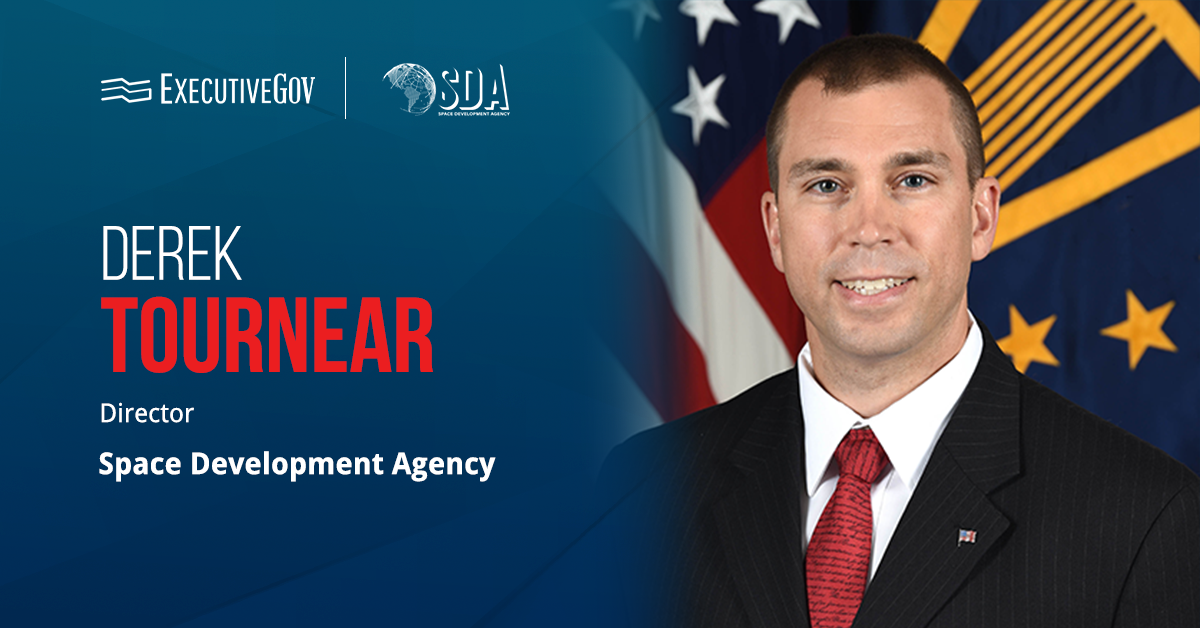
The Aerospace Corporation has released a new study that praises the speed at which the Space Development Agency has launched satellites or payloads since its establishment in 2019 using an acquisition model based on proliferation, or the creation and maintenance of a space architecture made up of many satellites that are periodically replaced, Breaking Defense reported Thursday.

The same study, titled “The Space Development Agency and the Future of Defense Space Acquisitions,” nevertheless also seeks to temper the enthusiasm expressed by some within the contracting world that has called for the broader adoption of the SDA’s rapid acquisition approach across the Department of Defense.

The study, authored by Center for Space Policy and Strategy Senior Policy Analyst Andrew Berglund, says that the SDA’s acquisition approach has not been sufficiently studied to determine whether it can be exported to other agencies, for whom a proliferation-based methodology might not be appropriate to begin with.

Also, the SDA has enjoyed legal exemptions from having to comply with select regulations governing government acquisitions, a benefit many other organizations have not received.

Equally important is the fact that the outcomes of the SDA’s acquisition model have not yet been proven. The study notes that the satellites SDA has launched have yet to demonstrate their capabilities.

The study also raises questions about the model’s ability to sustain the delivery of new satellite capabilities — every two years — as well as the model’s ability to sustain competition over time, especially as “the advantages of incumbency” becomes pronounced.

Government Technology/News
Biden-Harris Administration Publishes Implementation Roadmap for Emerging Technology National Standards Strategy
by Kristen Smith
Published on July 29, 2024
Biden-Harris Administration Publishes Implementation Roadmap for Emerging Technology National Standards Strategy

The Biden-Harris administration has laid out steps toward an industry-led development of standardization of critical and emerging technologies, or CETs, to protect and support national and economic security.

The White House said Friday that foreign adversaries see the strategic value of CETs and are working toward influencing international standards to their advantage and curtail American innovation.

The U.S. Government’s National Standards Strategy for Critical and Emerging Technology implementation roadmap is based on feedback collected by the National Institute of Standards and Technology on a draft issued in June.

The document identifies short- and long-term objectives to engage with the private sector in creating an inclusive, research-backed standards system. According to the document, the Departments of Commerce and State and the Office of the U.S. Trade Representative will continue to work with private organizations such as the American National Standards Institute to engage with international partners on the standards.

The government will also evaluate current CET standards education grants and programs to remove barriers and encourage greater participation.

In the long term, the United States plans to offer sustained funding for CET research and development, and coordinate with the private sector and academia about standardization efforts.

“Standards are essential to commerce and to the safe, reliable, and interoperable functioning of a broad array of essential products and services,” the White House said in a press release. “Standards provide industries and innovators with a common language that facilitates trade, simplifies transactions, accelerates innovation, and enables people to work across disciplines and borders toward common goals.”

The USG NSSCET was published in 2023 establishes four guiding principles for standards development efforts.

Artificial Intelligence/Government Technology/News
VA Seeking Vendors to Improve Trustworthiness of Government AI Solutions
by Kristen Smith
Published on July 29, 2024
VA Seeking Vendors to Improve Trustworthiness of Government AI Solutions

The Department of Veterans Affairs is looking for qualified contractors to provide expertise and operational support for an agency project to develop advanced artificial intelligence capabilities.

The VA needs help from companies that can enable AI operations and enhance the trustworthiness of AI solutions, which will be used to ensure veterans’ health and welfare, according to a notice published on the System for Award Management website.

Specifically, the potential contractor will help the National Artificial Intelligence Institute optimize the implementation of VA’s AI programs.

The selected company is also expected to support the NAII’s goal of achieving excellence in AI operational healthcare and implementation.

The required services under the NAII program include program management, communications services, strategic planning, data management, studies and analyses, training development and supply chain optimization.

The government plans to award a contract with a one-year base performance period, which could be extended depending on the quality of responses and agency requirements.

Interested businesses are encouraged to submit their capability statements no later than Aug. 7.

Executive Moves/News
Navy Establishing PM Organization Focused on Shipbuilding Investments, Maritime Industrial Base; Frederick Stefany to Lead
by Jerry Petersen
Published on July 29, 2024
Navy Establishing PM Organization Focused on Shipbuilding Investments, Maritime Industrial Base; Frederick Stefany to Lead

The U.S. Navy will establish a direct reporting program manager for maritime industrial base next month, with Frederick Stefany having been appointed to the role.

As the very first DRPM-MIB, Stefany will be responsible for standing up his organization, which will be responsible for overseeing investments in ship and submarine shipbuilding, with a focus on ensuring the health of the maritime industrial base, the U.S. Navy said Friday.

The DRPM-MIB organization is also expected to help realize the vision of Secretary of the Navy and 2024 Wash100 winner Carlos Del Toro of rebuilding the comprehensive maritime power of the U.S. and positioning industry and the sea service in establishing a fleet that meets the requirements of the National Defense Strategy.

Stefany currently serves as principal civilian deputy to the assistant secretary of the Navy for research, development and acquisition. When he transitions to his new role, he will be succeeded by Brett Seidle.

Regarding the selection of the inaugural DRPM-MIB, Assistant Secretary of the Navy for Research, Development and Acquisition and previous Wash100 winner Nickolas Guertin said, “Jay Stefany has been at the forefront of developing the strategy and securing over $40B in industrial base investment to meet our submarine and ship building imperatives.”

“He is exactly the right person to expand on those great efforts for the largest shipbuilding industry mobilization in the Department of Defense since World War II,” added Guertin, who will speak at the Potomac Officers Club’s 2024 Navy Summit.

Navy Establishing PM Organization Focused on Shipbuilding Investments, Maritime Industrial Base; Frederick Stefany to Lead

Naval leaders, experts and innovators from government and industry will discuss how they’re enhancing maritime security, driving technological advancements and fostering strategic cooperation during the Potomac Officers Club’s 2024 Navy Summit, which will take place on Aug. 15. Register now to attend this important event!

DoD/News
Secretary Frank Kendall Leads Establishment of DAF Integrated Capabilities Office
by Miles Jamison
Published on July 29, 2024
Secretary Frank Kendall Leads Establishment of DAF Integrated Capabilities Office

Frank Kendall, secretary of the Department of the Air Force, established the Integrated Capabilities Office, or ICO, in line with efforts to enhance DAF capabilities through modernization.

The Air Force said Thursday the ICO was officially launched on July 19 mainly to modernize the service and preserve its advantages over other countries. The ICO will support the Air Force’s objective of remaining competitive in terms of power projection capabilities in response to the great power competition.

Kendall, a 2024 Wash100 Award winner, stressed the importance of the ICO in the face of rampant military modernization of China and other countries. “The Integrated Capabilities Office will directly support the Department of the Air Force senior leadership team as we develop our integrated modernization plans for the Air Force and Space Force.”

The Air Force identified seven critical areas that needed a boost:

  • Resilient space order of battle and architectures
  • Joint All-Domain Command and Control
  • Moving target engagement at scale
  • Next generation air dominance
  • Resilient forward basing
  • B-21 long-range strike family of systems
  • Readiness for wartime posture

The ICO will build on the Operational Imperatives by codifying its achievements. The secretariat-level office will facilitate the Integrated Development Campaign Teams, composed of operational experts from the Space Force Space Futures Command and Air Force Integrated Capabilities Command.

Working on imperative problem sets, the teams are responsible for coming up with data-driven products and services as well as recommendations. The ICO will then add these recommendations to its modernization priority list and work with other organizations on their integration into budgeting process.

Government Technology/News
USAID Introduces New Digital Policy
by Kristen Smith
Published on July 26, 2024
USAID Introduces New Digital Policy

The U.S. Agency for International Development has released a new Digital Policy that promotes the secure adoption of digital and emerging technologies to accelerate development progress and humanitarian response.

New funding worth $14.6 million is expected to be awarded to support policy goals, including enhancing development and humanitarian outcomes through infrastructure investments; improving digital knowledge, skills, policies and technology; and promoting privacy, security, transparency, equity and human rights in USAID programming and across digital ecosystems, USAID said Thursday.

With the funding, the agency aims to achieve responsible AI adoption, build partner countries’ cybersecurity capacity and strengthen foundational digital connectivity infrastructure and financial services.

USAID Administrator Samantha Power announced the new Digital Policy during a keynote speech at the Carnegie Endowment for International Peace, where she highlighted the role of technology in improving people’s lives.

In support of a vision to harness technology’s potential to advance development and humanitarian efforts, Power also announced the establishment of the DigitalDevelopment.org knowledge hub, which gives external stakeholders access to digital development resources from various countries to simplify how they support digital transformation efforts worldwide.

Previous 1 … 332 333 334 335 336 … 2,706 Next
News Briefing
I'm Interested In:
Wash100 Vote Now
Recent Posts
  • Space Force Sends Experimental Payloads Into Orbit Via STP-S29A Mission
  • NTIA Launches Portal to Streamline Spectrum Reviews for Space Launches
  • Pentagon Issues Golden Dome CSO to Accelerate Next-Gen Missile Defense
  • MITRE Calls for Reform of OT Rules to Accelerate Pentagon’s Acquisition of Commercial Capabilities
About

ExecutiveGov, published by Executive Mosaic, is a site dedicated to the news and headlines in the federal government. ExecutiveGov serves as a news source for the hot topics and issues facing federal government departments and agencies such as Gov 2.0, cybersecurity policy, health IT, green IT and national security. We also aim to spotlight various federal government employees and interview key government executives whose impact resonates beyond their agency.

Read More >>

RSS ExecutiveBiz
  • Hermeus Reaches $1B Valuation After Raising $350M Series C Funding Round
  • Exiger Cyber Earns Awardable Status on Platform One Marketplace
  • Lockheed Martin Secures $105M Task Order for GPS IIIF Launch Support
  • LeoLabs Launches AI-Powered Delta System for Space Threat Detection
  • Parsons Consolidates Aviation Units Under North American Organization
  • Tharros to Provide Cybersecurity Support to Navy OPTEVFOR Under SeaPort-NxG Award
RSS GovConWire
  • GreyNoise Launches C2 Detection to Expand Visibility Into Edge Network Threats
  • Chris Jackson Elevated to VP of Growth at SBG Technology Solutions
  • DHA Seeks Bids for $300M Health IT Deployment IDIQ Supporting Global Military Medical Systems
  • BigBear.ai Names Jo Ann Bjornson, Alex Thompson to Senior Executive Posts
  • Air Force Awards $1.8B Andromeda IDIQ to Lockheed Martin, 13 Other Companies
  • Abnormal AI’s John Sourk: AI Tools Could Help Agencies Strengthen Email Security
Executive Gov

Copyright © 2025
Executive Mosaic
All Rights Reserved

  • Executive Mosaic
  • GovCon Wire
  • ExecutiveBiz
  • GovCon Exec Magazine
  • POC
  • Home
  • Acquisition & Procurement
  • Agencies
    • DoD
    • Intelligence
    • DHS
    • Civilian
    • Space
  • Cybersecurity
  • Technology
  • Executives
    • Profiles
    • Announcements
    • Awards
  • News
  • Articles
  • About
  • Wash100
  • Contact Us
    • Advertising
    • Submit your news
    • Jobs
Go toTop