Processing....

Executive Gov

Digital News Coverage of Government Contracting and Federal Policy Landscape
Sticky Logo
  • Home
  • Acquisition & Procurement
  • Agencies
    • DoD
    • Intelligence
    • DHS
    • Civilian
    • Space
  • Cybersecurity
  • Technology
  • Executives
    • Profiles
    • Announcements
    • Awards
  • News
  • Articles
  • About
  • Wash100
  • Contact Us
    • Advertising
    • Submit your news
    • Jobs
Logo
Artificial Intelligence/News
DHS Launches Artificial Intelligence Roadmap; Alejandro Mayorkas Quoted
by Jane Edwards
Published on March 19, 2024
DHS Launches Artificial Intelligence Roadmap; Alejandro Mayorkas Quoted

The Department of Homeland Security has unveiled a roadmap detailing DHS’ three lines of effort to ensure the safe, trustworthy and secure development and use of artificial intelligence.

The lines of effort outlined in the Artificial Intelligence Roadmap are responsibly leveraging AI to advance homeland security missions, promoting nationwide AI safety and security and continuing to lead in AI through strong cohesive partnerships.

Each line of effort comes with specific workstreams. For the first line of effort, workstreams include piloting and implementing AI technologies in DHS mission areas, building technological infrastructure to accelerate AI adoption throughout the department and establishing rigorous development, testing and evaluation practices for AI systems.

Apart from the roadmap, DHS unveiled three pilot projects to advance AI deployment.

Homeland Security Investigations seeks to transform security investigative data processes using a large language model-based system.

The Federal Emergency Management Agency will launch a generative AI pilot to help communities develop hazard mitigation plans to reduce risk and build resilience.

The U.S. Citizenship and Immigration Services intends to improve immigration officer training through the use of generative AI.

“The DHS AI roadmap and pilots will guide our efforts this year to strengthen our national security, improve our operations, and provide more efficient services to the American people, while upholding our commitment to protect civil rights, civil liberties, and privacy,” said Alejandro Mayorkas, secretary of DHS and a previous Wash100 winner.

“What we learn from the pilot projects will be beneficial in shaping how the Department can effectively and responsibly use AI across the homeland security enterprise moving forward,” Mayorkas added.

POC - 5th Annual Artificial Intelligence Summit

Register here to attend the Potomac Officers Club’s 5th Annual Artificial Intelligence Summit on March 21 and hear federal leaders and industry experts discuss the latest developments in the field.

Financial Reports/News
GovCon Index Experienced Losses Last Week
by Ireland Degges
Published on March 18, 2024
GovCon Index Experienced Losses Last Week

Executive Mosaic’s GovCon Index fell by 1.18% last week, closing at $4,880.45.

GovCon Index is an aggregate index that tracks real-time data from 30 notable government contracting companies. This information provides users with a look into the performance of each enterprise and the broad trends characterizing today’s GovCon market. With these insights, users are able to assess the overall state of the industry.

Many individual contractors demonstrated growth last week despite GovCon Index’s overall decline. BAE Systems experienced the highest increase, rising by 2.24%, and RTX (+2.21%) came in second. Fluor Corporation (+1.96%) and Jacobs (+1.37) filled the third and fourth slots, and General Dynamics secured the fifth spot in the ranks with a 1.05% increase.

Though the GovCon Index rose slightly on Tuesday and Wednesday, Monday’s decline and losses on Thursday and Friday shaped last week’s downward trend.

For more information on GovCon Index performance, check out last week’s market reports. To view the full list of tracked companies, click here.

Government Technology/News
ACT-IAC’s David Wennergren on Accelerating AI Adoption Across Government
by Jane Edwards
Published on March 18, 2024
ACT-IAC’s David Wennergren on Accelerating AI Adoption Across Government

David Wennergren, CEO of the American Council for Technology and Industry Advisory Council, said government agencies should identify the opportunities of advancing the adoption of artificial intelligence while addressing a number of challenges, such as having a trained workforce and ensuring the ethical implementation of AI tools.

“Effective AI adoption presents a powerful opportunity to accelerate decision making, improve evidence-based policymaking, allow research to find new answers and cures and improve customer experience,” Wennergren, a two-time Wash100 awardee, wrote in a commentary published Friday in Nextgov/FCW.

The chief executive of ACT-IAC noted that despite the release of the latest edition of the Federal Information Technology Acquisition Reform Act scorecard, additional changes are still needed with a focus on tech modernization initiatives that measure progress in transitioning to the cloud.

The FITARA scorecard should incorporate cybersecurity measures and new approaches like zero trust, integrate customer experience improvement activities, advance the shift to digital platforms and make AI adoption a federal priority, according to Wennergren.

“As we ride the wave of enthusiasm for the adoption of AI tools, we have a corresponding moment of opportunity to move away from the current climate of ‘gotcha’ oversight that focuses on highlighting what has gone wrong, and instead focus on outcomes and measuring the progress of our plans,” Wennergren stated.

POC - 5th Annual Artificial Intelligence Summit

Register here to attend the Potomac Officers Club’s 5th Annual Artificial Intelligence Summit on March 21 and hear federal leaders and industry experts discuss the latest developments in the field.

Cybersecurity/News
FCC Approves Voluntary Cybersecurity Labeling Program for Wireless IoT Devices
by Naomi Cooper
Published on March 18, 2024
FCC Approves Voluntary Cybersecurity Labeling Program for Wireless IoT Devices

The Federal Communications Commission will establish a voluntary cybersecurity labeling program for wireless consumer internet of things products to help consumers consider security standards when purchasing smart devices.

The FCC said Thursday it will introduce a new label called the “U.S Cyber Trust Mark” to appear on certified devices that comply with cybersecurity standards and requirements to enable the public to determine the security features of wireless IoT products.

The label will be accompanied by a QR code for easy access to detailed information such as software patches and security updates.

Under the program, the FCC will provide oversight and approve third-party label administrators to evaluate product applications, authorize the use of the label and educate consumers on the new mark.

The FCC is requesting industry input on potential disclosure requirements, including whether a product’s software or firmware is manufactured in a country of national security concern.

POC - 2024 Cyber Summit

The Potomac Officers Club will host the 2024 Cyber Summit on June 6 to hear from government and industry experts about the dynamic and ever-evolving role of cyber in the public sector. Register here!

Government Technology/News
Inspector General Flags Organization & Management Issues in NASA High-End Computing Capabilities
by Jerry Petersen
Published on March 18, 2024
Inspector General Flags Organization & Management Issues in NASA High-End Computing Capabilities

The NASA Office of Inspector General recently called out the space agency the for the “disjointed” way it has organized and managed its high-end computing, or HEC, capabilities.

Unless “key changes” are implemented, NASA’s HEC resources will likely hinder rather than enable future mission priorities, the OIG said in an audit report released Thursday.

The audit found that NASA’s HEC capabilities are overseen by a single scientist within the Earth Science Research Program at the Science Mission Directorate. This scientist is responsible for HEC capabilities at two separate facilities — the Goddard Space Flight Center and the Ames Research Center — while concurrently handling Earth science duties.

The Office of the Chief Information Officer is not directly involved in governing HEC resources.

The OIG says that due, in part, to this mode of organization, NASA is unable to keep up with technological developments and computing requirements, resulting in its existing HEC resources being overburdened. Consequently, various teams across the agency have expressed hesitation to use the HEC resources at all, while others have opted to acquire and manage their own HEC tools, an approach that has cybersecurity repercussions.

To resolve these problems, the OIG recommended that NASA appoint a leader who will “determine the appropriate definition, scope, ownership, organizational placement, and structure” of the agency’s HEC capabilities. The inspector general also called for, among other things, the identification of technology gaps, the development of a strategy for HEC resource allocation and an inventory of HEC assets across the agency.

Inspector General Flags Organization & Management Issues in NASA High-End Computing Capabilities

Cyber experts, government leaders and industry visionaries will speak about the dynamic and evolving role of cyber in the public sector at the Potomac Officers Club’s 2024 Cyber Summit, which will take place in June. Register now to attend this important event!

Executive Moves/News
David Cattler Appointed Director of Defense Counterintelligence and Security Agency
by Naomi Cooper
Published on March 18, 2024
David Cattler Appointed Director of Defense Counterintelligence and Security Agency

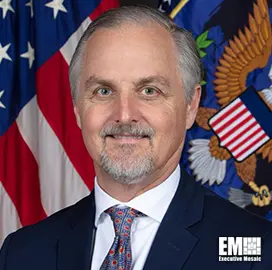
David Cattler, a 20-year national security and intelligence industry veteran, has been named director of the Defense Counterintelligence and Security Agency, succeeding Daniel Lecce, acting director of DCSA who will remain as the agency’s deputy director.

He will assume his new post on March 24 and provide oversight of counterintelligence, personnel security, industrial security and security training, DCSA said Friday.

Cattler most recently served as assistant secretary general for intelligence and security at NATO, a role he held for four years after serving as assistant director of national intelligence and chairman of the National Intelligence Management Council within the Office of the Director of National Intelligence.

His government service includes time as director of the Defense Combating Terrorism Center at the Defense Intelligence Agency, deputy director for intelligence at the Office of the Chairman of the Joint Chiefs of Staff and principal deputy national intelligence officer for military issues at ODNI.

News
GAO Urges DOD to Implement Better Monitoring of Procurement Administrative Lead Time Data
by Naomi Cooper
Published on March 18, 2024
GAO Urges DOD to Implement Better Monitoring of Procurement Administrative Lead Time Data

The Government Accountability Office revealed in a new report that the Department of Defense made progress in acquisition processes since it started collecting data for measuring procurement administrative lead time, a.k.a. PALT, in 2018 but there are gaps in data collection and monitoring of PALT on a department-wide basis.

GAO said Thursday that while there are some contracting efficiencies, award lead times vary by several factors such as total contract value, contract type, contracting approach, the extent of competition and the type of service and product procured.

DOD’s award lead times generally decreased from fiscal year 2019 through fiscal year 2022 for contracts and orders valued above $250,000 but lead times increased for contracts valued over $50 million.

To improve the management of award lead times across the Pentagon, GAO recommended that DOD assess how existing procurement data can be used to monitor PALT throughout the department and determine if the PALT Tracker is necessary to supplement existing procurement data to monitor high-dollar-value procurement efforts.

Acquisition & Procurement/News
FedRAMP Soliciting Quotations for AI-Powered GRC Platform to Enhance Authorization Review
by Jerry Petersen
Published on March 18, 2024
FedRAMP Soliciting Quotations for AI-Powered GRC Platform to Enhance Authorization Review

The Federal Risk and Authorization Management Program and the General Services Administration have issued a request for quotation for a governance, risk and compliance platform for use in the FedRAMP authorization review process.

The GRC platform is expected to feature data analytics, integration, workflow processing and artificial intelligence and machine learning capabilities, FedRAMP said Friday.

The platform’s expected benefits to the GSA, cloud service providers and third-party stakeholders include a faster and more transparent authorization process, continuous monitoring and the automated validation of deliverables.

The platform is part of a modernization effort at FedRAMP, with an initial focus on system integration, support for the onboarding of various partners and a shift toward machine readable, OSCAL-based data.

Interested parties have until March 21 to respond to the RFQ.

Government Technology/News
GSA Releases Guidance on Payment for Software Licenses Accessed via SaaS
by Jane Edwards
Published on March 18, 2024
GSA Releases Guidance on Payment for Software Licenses Accessed via SaaS

The General Services Administration has issued an acquisition letter providing contracting officers guidance on payment for software licenses delivered through software-as-a-service.

The letter signed Friday by Jeffrey Koses, senior procurement executive at GSA’s Office of Acquisition Policy states that an upfront payment for licenses accessed or delivered through SaaS should not be considered an advance payment.

An upfront payment is not considered advance payment if it meets certain conditions: access to software is granted contemporaneously with payment; the license is procured on a fixed-price or fixed-price with economic price adjustment basis; and the license’s billing or pricing model allows for no utilization or consumption metric other than quantity.

GSA said the acquisition letter is effective immediately.

Government Technology/News
OSTP Unveils National Strategy on Microelectronics Research; Stephen Welby Quoted
by Jane Edwards
Published on March 18, 2024
OSTP Unveils National Strategy on Microelectronics Research; Stephen Welby Quoted

The White House Office of Science and Technology Policy has issued a new strategy outlining the goals, needs and actions required in the next five years to strengthen the microelectronics research and development infrastructure in accordance with the CHIPS for America Act.

The National Strategy on Microelectronics Research calls for the White House, federal agencies, academia, industry and international partners to work together to pursue four interconnected goals, the White House said Friday.

The four goals are enabling and accelerating research advances for future generations of microelectronics; supporting, building and bridging microelectronics infrastructure from research to manufacturing; growing and sustaining the technical workforce for the microelectronics R&D to manufacturing ecosystem; and creating a vibrant microelectronics innovation ecosystem to accelerate the transition of R&D to U.S. industry.

Each of the four goals comes with specific objectives.

For the first goal, objectives include accelerating R&D of materials that provide new capabilities; increasing the capabilities of circuit design, simulation and emulation tools; developing a diverse array of robust processing architectures and associated hardware needed for future systems; and prioritizing hardware integrity and security as an element in co-design strategies across the stack.

“This whole-of-government strategy encourages the microelectronics R&D community to bring their diverse expertise, entrepreneurial spirit, and drive to focus on a common purpose—to ensure that America remains a global leader in this important field,” said Stephen Welby, deputy director for national security at OSTP.

“We now turn to the implementation of this strategy, leveraging the once-in-generation investments by government and the private sector—fueled by President Biden’s CHIPS and Science Act and the urgency to energize U.S. semiconductor innovation for the future,” Welby added.

Previous 1 … 416 417 418 419 420 … 2,698 Next
News Briefing
I'm Interested In:
Wash100 Vote Now
Recent Posts
  • Pentagon DIB Cybersecurity Chief Stacy Bostjanick to Retire
  • US, Japan Announce 2nd Tranche of Investments, Unveil Defense & Tech Initiatives
  • DLA’s Adarryl Roberts Discusses AI/ML in Agency’s Digital Transformation
  • FedRAMP Seeks Input on Updated Continuous Monitoring Requirements
About

ExecutiveGov, published by Executive Mosaic, is a site dedicated to the news and headlines in the federal government. ExecutiveGov serves as a news source for the hot topics and issues facing federal government departments and agencies such as Gov 2.0, cybersecurity policy, health IT, green IT and national security. We also aim to spotlight various federal government employees and interview key government executives whose impact resonates beyond their agency.

Read More >>

RSS ExecutiveBiz
  • Seekr, GDIT Partner to Deliver Agentic AI Capabilities for Federal Missions
  • Lockheed Demonstrates 5G-Enabled NetSense Drone Detection Prototype
  • Guidehouse, IP3, Cybernetic Intelligence Form Nuclear-Enabled Compute Infrastructure Collaboration
  • GCS Geospatial Enhances NGA’s 3D Analytics Capabilities Under BIG-R Program
  • Knox Systems Raises $25M in Funding to Accelerate Federal AI, SaaS Adoption
  • LMI Unveils SHEPRD Threat Management Platform for Military Asset Protection
RSS GovConWire
  • Redhawk Announces Twenty8 Technology Acquisition
  • Neumo Names Matt Coury CEO as Paul Colangelo Moves to Board Role
  • Palo Alto Networks Taps Danielle Gonzalez to Lead Talent Strategy as Chief People Officer
  • DHS Plans $100M Databricks BPA to Support Enterprise Data Platform Expansion
  • Kratos Lands $447M Space Force OTA for MEO Missile Warning Program
  • War Dept Shifting From AI Strategic Enablement to Delivery Focus, Says CDAO
Executive Gov

Copyright © 2025
Executive Mosaic
All Rights Reserved

  • Executive Mosaic
  • GovCon Wire
  • ExecutiveBiz
  • GovCon Exec Magazine
  • POC
  • Home
  • Acquisition & Procurement
  • Agencies
    • DoD
    • Intelligence
    • DHS
    • Civilian
    • Space
  • Cybersecurity
  • Technology
  • Executives
    • Profiles
    • Announcements
    • Awards
  • News
  • Articles
  • About
  • Wash100
  • Contact Us
    • Advertising
    • Submit your news
    • Jobs
Go toTop