
Processing....

Executive Gov

Digital News Coverage of Government Contracting and Federal Policy Landscape
Sticky Logo
  • Home
  • Acquisition & Procurement
  • Agencies
    • DoD
    • Intelligence
    • DHS
    • Civilian
    • Space
  • Cybersecurity
  • Technology
  • Executives
    • Profiles
    • Announcements
    • Awards
  • News
  • Articles
  • About
  • Wash100
  • Contact Us
    • Advertising
    • Submit your news
    • Jobs
Logo
Articles
Don Widener: CTO from Intelligence Solutions, BAE Systems, Joins the POC’s 5th Annual AI Summit
by Skyler Bernards
Published on February 15, 2024
Don Widener: CTO from Intelligence Solutions, BAE Systems, Joins the POC’s 5th Annual AI Summit

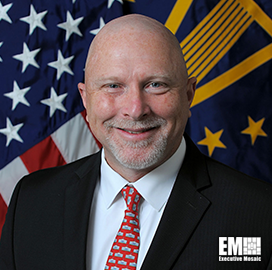
Dr. Don Widener is the Chief Technology Officer for BAE Systems’ Intelligence Solutions business. He drives artificial intelligence, machine learning, and automation strategies, supporting over 3,000 engineers and analysts in the Intelligence Community. He also spearheads key supply chain, threat intelligence, and cloud services programs of the Intelligence & Security (I&S) Advanced Analytics Laboratory.


Dr. Don Widener is one of the panelists for the 5th Annual AI Summit hosted by the Potomac Officers Club. Get to know more about his professional background and contributions.


Table of Contents

  • Who is Don Widener?
  • Catch Don Widener at the Potomac Officers Club’s 5th Annual Artificial Intelligence Summit
  • BAE Systems’ Contributions to the Federal Government’s AI Efforts

Who is Don Widener?


Don Widener is passionate about boosting the productivity of intelligence analysts through improving tradecraft and leveraging technology. He has a solid intelligence analysis background to bridge the gap between data collection and decision-making. Before he became the Chief Technology Officer, he spent seven years as the Technical Director for Intelligence, Surveillance & Reconnaissance (ISR) analysis at BAE Systems. 


Starting in 2002, he’s had various key roles in the U.S. Department of Defense, from being the Branch Chief of ISR Assessments for U.S. Forces-Iraq to working on counterterrorism operations for the U.S. Air Force. Don Widener’s experience also extends to supporting sensors and systems development at the U.S. Army’s Night Vision Laboratory.


Don Widener earned a Doctor of Philosophy in Systems Engineering from The George Washington University.


Catch Don Widener at the Potomac Officers Club’s 5th Annual Artificial Intelligence Summit


Banner of the 5th Annual Artificial Intelligence Summit


The Potomac Officers Club is hosting the 5th Annual Artificial Intelligence Summit on March 21, 2024. Dive into the latest AI breakthroughs, have exciting conversations, and build important connections with key partners at this yearly gathering of AI experts. The CIA, DARPA, CDAO, OUSD (R&E), DHS, and NGA will lead the AI event.


Dr. Don Widener is one of the panelists for “Leveraging Collaboration to Accelerate AI Adoption in the Department of Defense.” Other speakers for the panel include Dr. Matthew Johnson and Dr. Jane Pinelis, with Holly Levanto joining as the moderator.


Register now to meet, learn from, and network with the leaders of tomorrow in AI.


BAE Systems’ Contributions to the Federal Government’s AI Efforts


BAE Systems helps the federal government with AI through its support to the U.S. Department of Defense and various governmental bodies. 


By rolling out AI solutions on Amazon Web Services (AWS) GovCloud (US), the company makes it easier for government analysts to navigate extensive data, signals, and imagery. This is part of BAE Systems’ overarching drive to offer top-tier AI, ML, and data science services to federal entities and enhance their capacities for data-informed decision-making.


BAE Systems has also unveiled data labeling as a service (DLaaS) on the AWS Marketplace for GovCloud (US). It caters to government clients by facilitating data preparation and labeling for training AI/ML algorithms. This service addresses the distinct data labeling needs of government missions.


Furthermore, BAE Systems’ AI Labs is the technology and research division of the Digital Intelligence business. It collaborates with government departments, defense agencies, and other stakeholders to pioneer and deploy state-of-the-art AI technologies. These endeavors cover various applications, such as cybersecurity, data analytics, communication systems, and prototype design.

News
CommonWell Health Alliance, Kno2 Join TEFCA Network to Support Health Data Exchange
by Naomi Cooper
Published on February 14, 2024
CommonWell Health Alliance, Kno2 Join TEFCA Network to Support Health Data Exchange

CommonWell Health Alliance and Kno2 have been designated as Qualified Health Information Networks, a.k.a. QHINs, tasked with facilitating nationwide data exchange governed by the Trusted Exchange Framework and Common Agreement, or TEFCA.

The Department of Health and Human Services’ Office of the National Coordinator for Health Information Technology implemented TEFCA in December to conduct secure network-to-network sharing of electronic health information, HHS said Monday.

“These additional QHINs expand TEFCA’s reach and provide additional connectivity choices for patients, health care providers, hospitals, public health agencies, health insurers, and other authorized health care professionals,” said Micky Tripathi, national coordinator for health information technology.

“The designation of these two QHINs, which brings the total number of QHINs to seven, highlights the rapid expansion of TEFCA exchange and the support of more and more leaders around TEFCA exchange,” said Mariann Yeager, CEO of The Sequoia Project, which served as the recognized coordinating entity for TEFCA.

CommonWell Health Alliance and Kno2 will join eHealth Exchange, Epic Nexus, Health Gorilla, KONZA and MedAllies in supporting the health data exchange under the TEFCA Common Agreement’s policies and technical requirements.

Artificial Intelligence/News
Adm. Lisa Franchetti: Navy Looking to AI, 3D Printing, Robotics to Ensure Mission Success
by Jerry Petersen
Published on February 14, 2024
Adm. Lisa Franchetti: Navy Looking to AI, 3D Printing, Robotics to Ensure Mission Success

The U.S. Navy is using additive manufacturing aboard aircraft carriers and amphibious landing ships as part of broader efforts to deliver or maintain platforms “more quickly, cheaply, and effectively,” according to the sea service’s top officer.

Chief of Naval Operations Adm. Lisa Franchetti shared this news on Feb. 13 at the WEST 2024 conference, where she underscored the “outsized and dominant role” the Navy plays in ensuring that U.S. national security objectives are achieved.

Franchetti said that, to be able to carry out its mission, the Navy is looking into “disruptive and emerging technologies” to be able “to adapt to the changing character of war.”

Apart from 3D printing, these new technologies also include artificial intelligence and machine learning, which is being used to support conditions-based maintenance, Franchetti explained. She also cited the use of robotics in order to determine the condition of seagoing platforms “quickly, accurately, and more cost-effectively.”

However, this “really only scratches the surface on how we’re using technology, artificial intelligence and machine learning to better support the fleet in lifecycle maintenance,” the Navy official noted, also emphasizing that such technologies must be understood and put to use with urgency.

Cloud/News
New NIST Special Publication Shines Light on Security of Cloud Software Supply Chains
by Jamie Bennet
Published on February 14, 2024
New NIST Special Publication Shines Light on Security of Cloud Software Supply Chains

The National Institute of Standards and Technology issued a special publication on integrating the security of software development life cycles into continuous integration/continuous delivery pipelines of organizations’ cloud-native applications.

SP 800-204D aims to support DevSecOps and defend organizations’ software supply chain against cyber attacks and defects resulting from due diligence gaps, NIST said Monday.

The special publication is based on a roadmap combining different expert input and policies including Executive Order 14028 and NIST’s Secure Software Development Framework.

The new document, which was authored by representatives from NIST, Purdue University and cybersecurity firm TestifySec, was prompted by recent attacks affecting the software development life cycle.

Artificial Intelligence/News
Charles River Analytics to Develop AI Coach for Enhancing Collaboration at DARPA
by Naomi Cooper
Published on February 14, 2024
Charles River Analytics to Develop AI Coach for Enhancing Collaboration at DARPA

Charles River Analytics has secured a Small Business Innovation Research sequential Phase II contract to build cross-domain collaboration software and an artificial intelligence coach for the Defense Advanced Research Projects Agency.

The Artificial Social Intelligence for Group Learning and Optimization of Collaborative Workflows, or AGLOW, aims to enhance group collaboration across DARPA teams by automatically tracking problem-solving activities and generating coaching suggestions, the company said Tuesday.

“The tool could let you know what the other people on your team are trying to accomplish without the need for continuous, disruptive status meetings,” said Leonard Eusebi, senior scientist at Charles River Analytics and principal investigator on the AGLOW effort.

AGLOW will use a Microsoft Word Add-in for highlighting key questions, answers and insights about a task; a web interface for collecting tasks and summarizing behavior; a cognitive architecture for interpreting behaviors’ relation to goals; and an AI coach for suggesting actions to improve collaboration.

The SBIR Phase II contract is valued at approximately $1.5 million.

POC - 5th Annual Artificial Intelligence Summit

Join the Potomac Officers Club’s 5th Annual Artificial Intelligence Summit on March 21 to hear more about cutting-edge AI innovations from government and industry experts. Register here.

Artificial Intelligence/News
DOD’s Chief Digital & AI Office Eyes Use of Data Patterns; William Streilein Quoted
by Jane Edwards
Published on February 14, 2024
DOD’s Chief Digital & AI Office Eyes Use of Data Patterns; William Streilein Quoted

The Department of Defense’s Chief Digital and Artificial Intelligence Office, or CDAO, intends to advance the use of data patterns and develop common practices for structuring and organizing data as it works to leverage AI, Federal News Network reported Tuesday.

“I hesitate saying standards because those sound a little bit draconian or a little bit top-down. But we want to use good patterns so people know what it means to share data,” Bill Streilein, chief technology officer at CDAO, said Monday at a conference.

Streilein stated that CDAO had introduced executive-level courses at MIT, Johns Hopkins University and the Naval Postgraduate School to help professionals improve their understanding of AI and data analytics as well as their implications for daily operations.

He also highlighted the importance of experimentation with AI technologies and the adoption of a product-oriented approach to data.

POC - 5th Annual Artificial Intelligence Summit

CDAO CTO William Streilein will deliver the opening keynote at the Potomac Officers Club’s 5th Annual Artificial Intelligence Summit on March 21. Register here to hear Streilein and other federal leaders and industry experts discuss the latest developments in the field.

Artificial Intelligence/News
USPTO Issues Inventorship Guidance for AI-Assisted Inventions
by Naomi Cooper
Published on February 14, 2024
USPTO Issues Inventorship Guidance for AI-Assisted Inventions

The U.S. Patent and Trademark Office within the Department of Commerce has released guidance on determining the patentability of an invention created with the assistance of artificial intelligence systems.

Kathi Vidal, undersecretary of commerce for intellectual property and director of the USPTO, said in a blog post published Monday that an AI-assisted invention is not categorically unpatentable but noted that a human must have a significant contribution to the invention for it to qualify for patent protection.

“Instead of considering whether or not the contributions of the AI system to an invention would rise to the same level of inventorship if those contributions were made by a human, the key question this guidance helps address is whether the human named on a patent made a significant enough contribution to be a named as an inventor,” Vidal explained.

“To secure patent protection, there must be at least one named human inventor who meets that requirement” she added.

The Inventorship Guidance for AI-Assisted Inventions took effect Tuesday and will serve as a guide for USPTO stakeholders and personnel on how the agency will analyze inventorship issues related to AI.

The guidance is the first in the USPTO directives outlined in President Biden’s executive order on the safe, secure, and trustworthy development and use of AI.

Under the EO, the USPTO will provide additional guidance to patent examiners and applicants on AI innovation’s patent eligibility and issue recommendations on potential executive actions relating to copyright and AI.

News
DOE Seeks Information From Vendors Interested in Managing Thomas Jefferson National Accelerator Facility
by Jamie Bennet
Published on February 14, 2024
DOE Seeks Information From Vendors Interested in Managing Thomas Jefferson National Accelerator Facility

The Department of Energy is seeking information from vendors interested in operating the Thomas Jefferson National Accelerator Facility.

The agency on Tuesday issued a request for information and launched a website to provide details of the upcoming contract competition to manage the nuclear physics laboratory.

TJNAF, which is based in Newport News, Virginia, is a federally funded research and development center that specializes in superconducting radiofrequency, or SRF, technology. R&D activities at the site also involve accelerator science and technology and large-scale user facilities and advanced instrumentation.

DOE plans to turn the accelerator into a multi-purpose laboratory that will house the Office of Science’s Advanced Scientific Computing Research center.

Interested parties may submit their RFI responses to the agency until March 6.

Cybersecurity/News
USCYBERCOM Designated as Federal Laboratory
by Jane Edwards
Published on February 14, 2024
USCYBERCOM Designated as Federal Laboratory

U.S. Cyber Command has achieved the federal laboratory designation, marking a key step in advancing cyber research and development initiatives.

USCYBERCOM disclosed the milestone in a LinkedIn post published Tuesday.

As a federal lab, the combatant command could improve its capacity to promote innovation, advance collaboration with industry and academia and contribute to the development of cybersecurity technologies.

“We extend our sincere appreciation to our dedicated team, esteemed partners, and supporters whose collective efforts have played an integral role in attaining this noteworthy milestone. Together, we are charting a course towards the future of stronger cyber solutions, fortified by innovation and resilience,” the command said in the post.

In addition to the designation, USCYBERCOM noted that it has created the Office of Research and Technology Application, which will help implement cooperative R&D agreements, educational partnership agreements and partnership intermediary agreements, among others.

POC - 2024 Cyber Summit

Join the Potomac Officers Club’s 2024 Cyber Summit on June 6 and hear cyber experts, government and industry leaders discuss the latest trends and the dynamic role of cyber in the public sector. Register here.

News/Space
NASA to Conduct Ultraviolet Survey, Study Stellar Explosions With UVEX Telescope
by Jane Edwards
Published on February 14, 2024
NASA to Conduct Ultraviolet Survey, Study Stellar Explosions With UVEX Telescope

A space telescope is set to lift off in 2030 as part of a two-year NASA mission aimed at surveying ultraviolet light to gain more information on how stars and galaxies evolve.

The UltraViolet EXplorer telescope, a.k.a. the UVEX, will be equipped with an ultraviolet spectrograph to study massive stars and stellar explosions and is expected to support data from other missions, including NASA’s Nancy Grace Roman Space Telescope and the Euclid mission led by the European Space Agency, NASA said Tuesday.

“NASA’s UVEX will help us better understand the nature of both nearby and distant galaxies, as well as follow up on dynamic events in our changing universe,” said Nicola Fox, associate administrator of the Science Mission Directorate at NASA Headquarters in Washington.

“This mission will bring key capabilities in near-and far-ultraviolet light to our fleet of space telescopes, delivering a wealth of survey data that will open new avenues in exploring the secrets of the cosmos,” added Fox.

UVEX is NASA’s next Astrophysics Medium-Class Explorer mission and is expected to cost about $300 million.

Fiona Harrison of Caltech serves as the UVEX mission’s principal investigator. Northrop Grumman, Space Dynamics Laboratory and the University of California, Berkeley, are also involved in the mission.

POC - 2024 Space Summit

Hear government leaders, space experts and industry executives discuss the latest space technologies, commercial investments and urgent issues facing the space domain at the Potomac Officers Club’s 2024 Space Summit on March 5. Register here.

Previous 1 … 441 442 443 444 445 … 2,698 Next
News Briefing
I'm Interested In:
Wash100 Vote Now
Recent Posts
  • Space Force Reassigns GPS III Launch to SpaceX’s Falcon 9 Amid ULA Vulcan Review
  • NSF Teams With Irish Organizations to Accelerate Lab-to-Market Transition of Emerging Technologies
  • DARPA Transfers Autonomous Black Hawk System to Army for Operational Testing
  • Trump Administration Issues National AI Policy Framework
About

ExecutiveGov, published by Executive Mosaic, is a site dedicated to the news and headlines in the federal government. ExecutiveGov serves as a news source for the hot topics and issues facing federal government departments and agencies such as Gov 2.0, cybersecurity policy, health IT, green IT and national security. We also aim to spotlight various federal government employees and interview key government executives whose impact resonates beyond their agency.

Read More >>

RSS ExecutiveBiz
  • Valiantys Federal Announces DISA IL5 Hosting Readiness
  • Edge AI Critical for Real-Time Mission Decisions, Says Leidos’ Roopa Vasan
  • Carahsoft, Tilores Partner to Bring Entity Resolution Platform to Public Sector
  • War Department Grants Zscaler’s ZIA, ZDX IL5 Authorization for Zero Trust Capabilities
  • Chenega Subsidiary Lands DOE Contract for Lawrence Berkeley Lab Security Services
  • Seekr, GDIT Partner to Deliver Agentic AI Capabilities for Federal Missions
RSS GovConWire
  • Pentagon to Designate Palantir Maven AI as Program of Record
  • USCIS Launches Market Research for $100M SOAR IT, Security Operations Program
  • Precise Systems Appoints Summer Raley as Business Development VP for NAVAIR Market
  • Virtualitics Appoints Retired Maj. Gen. Jeffrey Kramer to Advisory Board
  • Executive Mosaic Seeking Director of Operations to Support Growth Strategy, CEO Office
  • Redhawk Announces Twenty8 Technology Acquisition
Executive Gov

Copyright © 2025
Executive Mosaic
All Rights Reserved

  • Executive Mosaic
  • GovCon Wire
  • ExecutiveBiz
  • GovCon Exec Magazine
  • POC
  • Home
  • Acquisition & Procurement
  • Agencies
    • DoD
    • Intelligence
    • DHS
    • Civilian
    • Space
  • Cybersecurity
  • Technology
  • Executives
    • Profiles
    • Announcements
    • Awards
  • News
  • Articles
  • About
  • Wash100
  • Contact Us
    • Advertising
    • Submit your news
    • Jobs
Go toTop