Processing....

Executive Gov

Digital News Coverage of Government Contracting and Federal Policy Landscape
Sticky Logo
  • Home
  • Acquisition & Procurement
  • Agencies
    • DoD
    • Intelligence
    • DHS
    • Civilian
    • Space
  • Cybersecurity
  • Technology
  • Executives
    • Profiles
    • Announcements
    • Awards
  • News
  • Articles
  • About
  • Wash100
  • Contact Us
    • Advertising
    • Submit your news
    • Jobs
Logo
Civilian/News
Energy Secretary Proposes Rules to Accelerate Interconnection, Hydropower Permits
by Jane Edwards
Published on October 24, 2025
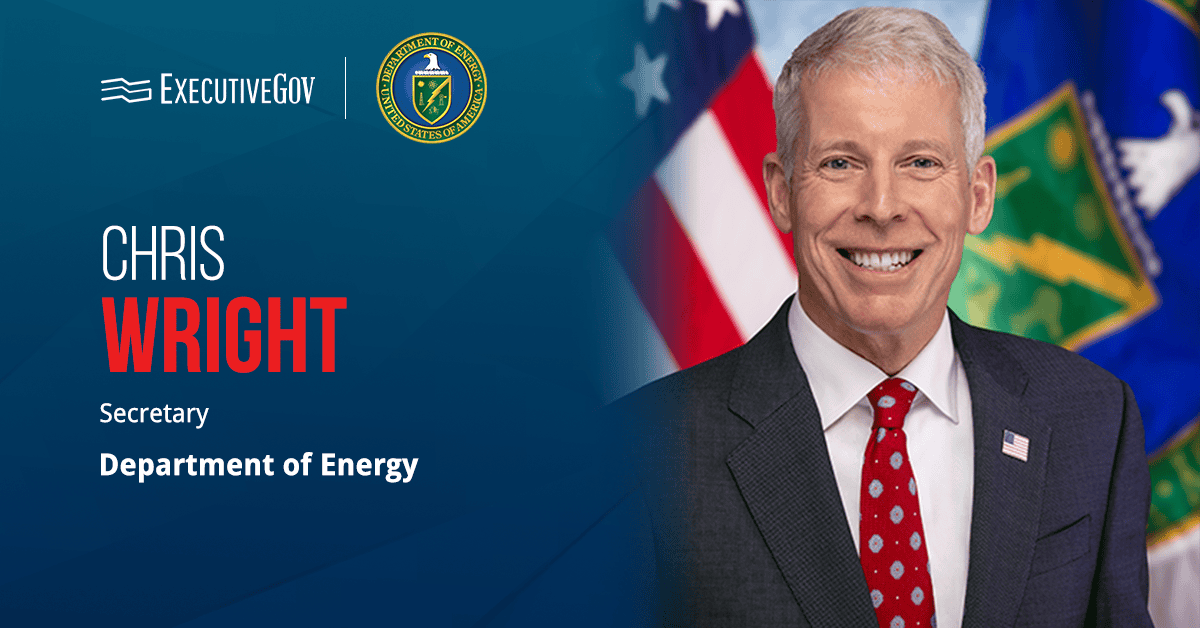
Chris Wright. The DOE secretary proposes FERC rules to speed interconnection and streamline preliminary hydropower permits.

Energy Secretary Chris Wright has proposed rules aimed at introducing reforms at the Federal Energy Regulatory Commission, or FERC, to help speed up the interconnection of large loads and streamline preliminary hydroelectric power permits.

The Department of Energy said Friday the initiatives are part of broader efforts to drive U.S. leadership in AI innovation, revitalize domestic manufacturing and ensure access to reliable energy infrastructure.

Table of Contents

  • Accelerating Interconnection for Data Centers
  • Streamlining Hydroelectric Power Permits

Accelerating Interconnection for Data Centers

Wright has directed FERC to initiate rulemaking procedures aimed at expediting the interconnection process for large energy consumers, including AI data centers.

The proposed rule would allow customers to file joint, co-located load and generation interconnection requests, significantly reducing grid upgrade costs and study times.

“My proposal today sets forth a series of principles that are intended to ensure efficient, timely, and non-discriminatory load interconnections. It is my hope that you and the commission’s dedicated staff will build upon these principles and work expeditiously to initiate a rulemaking proceeding and ultimately issue a final rule,” Wright wrote in his letter to FERC.

The DOE secretary said he expects FERC to take final action no later than April 30.

Streamlining Hydroelectric Power Permits

In a separate move, Wright directed FERC to propose a rule clarifying that third parties do not have veto rights over the issuance of preliminary permits for hydroelectric power.

This clarification aims to eliminate unnecessary burdens for such permits.

“As the president explained, the United States is experiencing an unprecedented surge in electricity demand and [its] ability to remain at the forefront of technological innovation depends on a reliable supply of energy from non-intermittent dispatchable generation sources,” he wrote in a separate letter to FERC.

Wright said he looks forward to the commission’s final action no later than Dec. 18.

Industry News/News
AIA-Kearney Report Outlines Roadmap to Build Resilient Aerospace & Defense Supply Chains
by Jane Edwards
Published on October 24, 2025
Eric Fanning. The AIA CEO commented on a joint report with Kearney on strengthening U.S. aerospace and defense supply chains.

A joint report by the Aerospace Industries Association and Kearney outlines how U.S. aerospace and defense companies are reshaping their manufacturing strategies to establish resilient and secure supply chains.

According to the report titled “Strategic Localization: Balancing Risk, Value, and Technology Sovereignty in Aerospace and Defense Supply Chains,” nearly 60 percent of A&D companies are exploring opportunities to return production to the U.S., with 15 percent already taking steps to broaden domestic manufacturing.

“The backbone of American aerospace and defense is our supply chain. When disruptions strike, the impact is immediate,” AIA President and CEO Eric Fanning said in a statement published Thursday.

“AIA’s new report with Kearney makes clear that expanding domestic manufacturing is essential to reducing risk, accelerating innovation and ensuring we can respond rapidly in times of crisis. By investing in resilient, high-tech production at home, we not only protect our national security, but also maintain America’s leadership in the global aerospace marketplace,” added Fanning, a previous Wash100 awardee.

What Are the AIA-Kearney Report’s Policy Recommendations?

The report outlines several industry and policy recommendations to achieve a more resilient A&D supply chain. These include investing in training, reskilling programs and apprenticeships to build and maintain a pipeline of American talent. It also includes establishing transparent criteria for research, development and manufacturing support while reducing uncertainty linked to export control and procurement rules; and streamlining Small Business Administration tools and contracting processes to help smaller suppliers scale and compete. 

Other recommendations include investing in AI, automation and additive manufacturing; ensuring access to rare earths and other critical minerals through domestic refining, allied sourcing and recycling; using tax incentives and multiyear contracts to reduce volatility and encourage investment and aligning on cybersecurity standards, strategic stockpiles and dual-use technology pilots.

DoD/News
DARPA Seeks Info on Advanced Medical Technologies for Battlefield Care
by Arthur McMiler
Published on October 24, 2025
DARPA. The agency seeks information on advanced medical technologies for battlefield casualty care

The Defense Advanced Research Projects Agency’s Biological Technologies Office is conducting market research on advanced medical and computational systems for battlefield medicine, especially in austere and contested environments. 

According a request for information posted on SAM.gov Thursday, BTO is seeking detailed information on technologies that can improve combat casualty care through faster diagnosis, predictive modeling and autonomous medical intervention.

Learn more about advanced defense programs like DARPA’s BTO at the 2026 Defense R&D Summit on Jan. 26!

BTO’s Technology Areas of Interest

The technology areas that the RFI covers the following:

  • Advanced medical sensing and imaging for rapid detection of life-threatening injuries
  • AI and computational models, including digital twins simulating casualty outcomes to guide decision-making
  • Robotics and automated actuation systems for airway management, bleeding control and hemodynamic stabilization
  • Biomarker discovery and monitoring, such as real-time blood chemistry sensors and early biochemical trauma indicators 
  • Systems integration and autonomy, including human-machine teaming for medics, augmented or virtual reality-based training and autonomous resuscitation systems

BTO is encouraging responders to provide data on technology maturity, performance metrics, military relevance and potential transition paths for field deployment. 

Interest parties must submit responses by email in pdf format by email. The deadline is Oct. 31. DARPA emphasized that the request is for information-gathering only and not a contract proposals solicitation.

Government Technology/M&A Activity/News
US Government Eyes Equity Stakes in Quantum Computing Companies
by Jane Edwards
Published on October 23, 2025
Quantum computing. Trump administration is in talks with quantum computing firms on giving Commerce Department equity stakes.

The Trump administration is in discussions with several quantum computing companies about granting the Department of Commerce equity stakes in exchange for federal funding, The Wall Street Journal reported Wednesday.

According to people familiar with the matter, companies such as IonQ, D-Wave Quantum and Rigetti Computing are in talks to give the government ownership shares as part of funding agreements. Quantum Computing Inc. and Atom Computing are considering similar deals.

Table of Contents

  • What Is the Commerce Department Proposing?
  • How Are Quantum Firms Responding to Federal Investment Talks?
  • US Government to Acquire 9.9 Percent Stake in Intel

What Is the Commerce Department Proposing?

The discussions involve potential minimum awards of $10 million per company drawn from resources managed by the CHIPS Research and Development Office. Commerce Secretary Howard Lutnick reorganized the office as part of an overhaul of the 2022 Chips Act funding structure.

According to sources, Deputy Commerce Secretary Paul Dabbar, a former quantum computing executive, is leading the talks. A Commerce Department official said Bohr Quantum Technology, a company co-founded by Dabbar, is not eligible to receive funding.

In addition to equity stakes, a Commerce document indicates that final agreements could include warrants, royalties, revenue sharing or licenses to intellectual property.

How Are Quantum Firms Responding to Federal Investment Talks?

Executives in the quantum computing industry have expressed optimism about the government’s interest.

Quantum Computing Inc. CEO Yuping Huang described the government’s potential equity stakes in companies as exciting. A spokeswoman for Rigetti confirmed that the company is in talks with the government on funding opportunities.

Allison Schwartz, D-Wave’s head of government relations, stated that the company aims to offer systems that could help the U.S. government address complex computational challenges.

US Government to Acquire 9.9 Percent Stake in Intel

In August, the U.S. government agreed to acquire a 9.9 percent stake in Intel through an $8.9 billion investment in the technology company’s common stock to help achieve U.S. technology leadership and expand the domestic semiconductor industry.

In that same month, Lutnick said in an interview on CNBC’s Squawk Box that top Pentagon officials were “thinking about” whether the U.S. should acquire equity stakes in top defense contractors.

Executive Moves/News
Health Tech Expert Alicia Jackson to Lead ARPA-H
by Arthur McMiler
Published on October 23, 2025
Alicia Jackson. White House appointee as Advanced Research Projects Agency for Health director

The Trump administration has appointed health technology entrepreneur Alicia Jackson as director of the Advanced Research Projects Agency for Health. 

Jackson, who had a previous stint at the Department of Defense, will lead an agency tasked with accelerating research and development of cutting-edge health projects, Bloomberg reported Tuesday. She founded and most recently served as CEO of Evernow, a telehealth firm specializing in women’s healthcare, according to her LinkedIn profile. 

Health Tech Expert Alicia Jackson to Lead ARPA-H

Learn more about tech advances at federal health agencies at the Potomac Officers Club’s 2025 Healthcare Summit on Dec. 4. Secure your seat now for this highly anticipated GovCon event featuring industry discussions and networking sessions.

Jackson was also co-founder and chief technology officer of Drawbridge Health, which offers home-based blood-sampling devices. She additionally served as chief technology adviser at women’s healthcare company Oova and board member of ImmuneBridge, a company focused on cancer therapies.

What Did Jackson Do at DARPA?

Before working in the private sector, Jackson served for over one year as deputy director of the biotechnology office at DOD’s Defense Advanced Research Projects Agency. She previously held for more than three years the role of program manager for the agency’s $200 million portfolio of projects—that she established—in synthetic biology and unconventional electronic devices.

Jackson holds a PhD on materials science and engineering, nanotechnology, from the Massachusetts Institute of Technology.

She was sworn in as ARPA-H chief Monday, replacing Jason Roos, who was named acting director after the agency’s former head, Renee Wegrzyn, was removed in February following the U.S. government’s transition to the second Trump administration, according to The Well News.

News/Space
Catalyst Campus Selects 3 Firms for SDA TAP Lab Mini Accelerator’s 3rd Cohort
by Jane Edwards
Published on October 23, 2025
Catalyst Accelerator logo. Three small businesses were selected for the SDA TAP Lab Catalyst Campus Mini Accelerator program.

Catalyst Campus has named three small businesses selected for the third cohort of its two-month mini accelerator program designed to help nontraditional companies and startups accelerate the development of technologies that enhance space domain awareness for national defense.

The nonprofit said Wednesday the companies for Cohort 3 of the SDA Tools, Applications and Processes, or TAP, Lab Mini Accelerator program were selected based on their proposed capabilities’ alignment with the program’s problem sets.

Table of Contents

  • Which Companies Were Selected for SDA TAP Lab Mini Accelerator Cohort 3?
  • What Will the 3rd Cohort Experience During the Program?

Which Companies Were Selected for SDA TAP Lab Mini Accelerator Cohort 3?

The selected firms for Cohort 3 are DeployHub, Soresu and UtopiaCompression.

DeployHub develops tools designed to speed up the remediation of vulnerabilities at every stage of the software supply chain.

Soresu leverages artificial intelligence to orchestrate ground, space and air sensors to enable autonomous detection of events even in degraded environments.

UtopiaCompression offers capabilities designed to improve situational awareness and speed up decision-making across defense and commercial domains.

In July, Catalyst Campus selected three companies for the second cohort of the SDA TAP Lab Mini Accelerator program.

What Will the 3rd Cohort Experience During the Program?

Over the two-month hybrid cycle, participants will engage in one-on-one mentorship, expert-led sessions and collaborative workshops to improve technical readiness and drive business development. The program will culminate with integration into Project Apollo Cohort 9, providing opportunities to apply technologies in operational settings and connect with government, industry and academic stakeholders.

Cohort 3 will begin virtual sessions on Oct. 28, followed by in-person programming in Colorado Springs, Colorado, from Nov. 4 through Nov. 14.

DoD/Government Technology/News
Army May Begin 3D Printing Parts as IP Access Limits Repair Capabilities
by Kristen Smith
Published on October 23, 2025
3D printing. The Army is turning to 3D printing to accelerate maintenance and reduce costs.

The U.S. Army is considering expanding its use of 3D printing to produce more of its own replacement parts as it continues to face challenges accessing vendor-owned technical data, Breaking Defense reported.

According to Lt. Gen. Christopher Mohan, acting commander of Army Materiel Command, the service’s dependence on contractor intellectual property has slowed the repair and maintenance of key systems and platforms, prompting the service to look for ways to independently manufacture components when critical parts are unavailable.

“Don’t be surprised if you just see us doing things because we can’t wait,” Mohan said during last week’s Association of the U.S. Army conference in Washington, D.C. “I acknowledge that their intellectual property is their intellectual property. It is a shame on us for not buying it up front.”

Table of Contents

  • Why the Army Is Turning to Additive Manufacturing
  • How Is the Army Enabling Field-Level 3D Printing?
  • Leadership Endorses In-House Manufacturing
  • How Is the Army Changing Its Repair Authorization Policy?

Why the Army Is Turning to Additive Manufacturing

Mohan described a recent case where one of the Army’s vehicles became inoperable due to a faulty valve in a tire. When the service sought technical data to reproduce the part, it discovered that the information was held by a subcontractor several tiers below the prime contractor, delaying repairs even further.

“We can’t live like that,” he said, noting that the Army is exploring models to purchase rights only for the parts it needs to print. “There’s got to be some kind of model that says, ‘Hey, we can buy the rights for just the part we need to print. We don’t have to buy the entire vehicle system or whatever.’”

The Army has been testing additive manufacturing capabilities to accelerate production and reduce supply chain bottlenecks. As part of one ongoing effort, the service is attempting to 3D print 60 components in 60 days, a pace that would significantly cut production times compared to traditional methods.

How Is the Army Enabling Field-Level 3D Printing?

To support rapid repairs in deployed environments, the Army has also built a digital repository of parts that soldiers can access and print directly in the field. Mohan said the repository contains basic, non-sensitive items such as fan grates and door handles, which can be produced through tactical networks using containerized printing setups.

“[Soldiers] were able to go through tactical networks all the way, tunnel up to the digital repository, download the part and print it out in the field, so we know it works,” he said, adding that the system still needs refinement but has proven effective in early use.

Leadership Endorses In-House Manufacturing

Army Secretary Dan Driscoll underscored the importance of the effort, highlighting a 3D-printed fin for a Black Hawk external fuel tank developed without vendor data.

“This may sound trivial, but simply being able to make or repair our own parts can save millions of dollars and save lives,” Driscoll said during his AUSA keynote.

According to Driscoll, the vendor’s replacement part cost about $14,000, while the Army reproduced it for just over $3,000. The in-house version was also “300 percent stronger and 78 percent cheaper.”

How Is the Army Changing Its Repair Authorization Policy?

Driscoll recently issued guidance giving soldiers greater authority to perform repairs in the field based on a risk-based framework. Under the policy, low-risk fixes can be authorized immediately, while medium- and high-risk repairs require further review.

Mohan said the policy marks a shift from the Army’s previous “one size fits all” approach, which often prevented even minor fixes without higher approval.

“I’ve been around the Army for a long time. I’ve never seen anybody get in trouble for fixing something,” he continued. “We’ve got to change the way we think.”

Artificial Intelligence/News
Commerce Department Launches American AI Exports Program to Advance Global AI Tech
by Miles Jamison
Published on October 23, 2025
DOC seal. The Department of Commerce’s International Trade Administration has launched the American AI Exports Program.

The Department of Commerce’s International Trade Administration has launched the American AI Exports Program to implement President Donald Trump’s July 23 executive order on Promoting the Export of the American AI Technology Stack.

What Is the Purpose of the American AI Exports Program?

The ITA said Tuesday the initiative aims to expand the global reach of U.S. artificial intelligence technologies. The full-stack AI export promotion program will identify industry-led export packages comprising AI hardware, software, models and applications across various sectors for promotion to markets worldwide.

The program will begin with industry outreach through a request for information, inviting feedback from domestic and international technology firms to guide program development and policy alignment. The Commerce Department plans to launch AIexports.gov and create an American AI export team to link U.S. companies with trusted international buyers. The ITA and the Department of State will support the program through their global networks of commercial and foreign service officers.

Based on feedback received through the RFI, the program will invite industry-led groups to submit proposals for exporting full-stack AI technologies. These proposals will be reviewed with key federal agencies, and selected packages will receive support from the Economic Diplomacy Action Group to pursue export opportunities.

Proposals will be reviewed with the secretaries of state, defense, and energy, and the director of the Office of Science and Technology Policy. Approved AI packages will receive support from the interagency Economic Diplomacy Action Group to pursue qualified export opportunities.

Civilian/Government Technology/News
GSA Seeks Industry Input on SaaS Platforms for PBS Real Estate Business Processes
by Arthur McMiler
Published on October 23, 2025
GSA logo. Agency RFI on technology platforms streamlining real estate business processes

The General Services Administration is undertaking a market research on real estate technology to streamline the business processes of its Public Buildings Service, or PBS, unit. 

The agency is seeking vendor information on cloud-based, modular and interoperable software-as-a-service platforms improving workflow efficiency, data visibility and user experience, according to a GSA post on SAM.gov Wednesday.

Table of Contents

  • Business Processes the SaaS Needs to Address
  • GSA Input for AI-Based Platforms

Business Processes the SaaS Needs to Address

The agency’s request for information is focused on SaaS platforms supporting PBS processes in lease and contract management, space planning, capital project delivery, asset operations, portfolio performance and property disposal. 

The RFI also outlines key requirements for any potential PBS contract, such as workflow automation, data-sharing and analytics capabilities, and work integration driven by application programming interfaces.

GSA Input for AI-Based Platforms

The GSA additionally wants industry input on artificial intelligence tools that enhance forecasting and decision-making. The platforms should also meet government standards, such as FISMA and FedRAMP. 

Responding vendors are encouraged to demonstrate how their platforms could integrate, enhance or replace existing PBS systems, including IBM’s Maximo and Tririga, Kahua, Appian, Databricks, BidHom and ArcGIS.

Interested parties can submit their responses via email until Nov. 3.

Cybersecurity/News
New CSC Report Details Reversal in US Cybersecurity Progress
by Miles Jamison
Published on October 23, 2025
CSC 2.0 logo. The U.S. Cyberspace Solarium Commission has released the 2025 Annual Report on Implementation.

The U.S. Cyberspace Solarium Commission has released the 2025 Annual Report on Implementation, a new assessment that reviews progress on the commission’s cybersecurity recommendations.

Federal efforts to defend against cyberthreats are faltering, with key reforms losing ground, CSC 2.0 reported Wednesday. Analysts highlighted a decline in implementation, noting that approximately 35 percent of the initial 82 recommendations have been fully implemented, down from 48 percent in 2024. An additional 34 percent are nearing implementation and 17 percent remain on track.

Table of Contents

  • What Factors Are Slowing Federal Cybersecurity Progress?
  • What Did the CSC Advise for Improving National Cyber Defense?

What Factors Are Slowing Federal Cybersecurity Progress?

The report points to personnel turnover, policy changes between presidents, underinvestment and bureaucratic delays as key factors slowing federal cybersecurity initiatives. Cuts to cyber diplomacy and science programs, and the absence of stable leadership at the Cybersecurity and Infrastructure Agency, Department of State and Department of Commerce, have further reduced momentum in securing emerging technologies.

What Did the CSC Advise for Improving National Cyber Defense?

The CSC report provided recommendations to strengthen cybersecurity that the current administration and Congress can prioritize. These include:

  • Giving the Office of the National Cyber Director the authority over cyber policy coordination, budgets, regulations and incident response.
  • Restoring CISA workforce and funding to strengthen national incident response, resilience programs and infrastructure security.
  • Reinvesting in the Cyber Diplomacy Program to support allies, counter adversaries’ digital influence and maintain global cyber capacity-building programs.
  • Maintaining and restoring support for public-private collaboration by reinstating the Critical Infrastructure Partnership Advisory Council.
  • Expanding and retaining the federal cyber workforce through skills-based programs and training.
Previous 1 … 88 89 90 91 92 … 2,719 Next
News Briefing
I'm Interested In:
Recent Posts
  • Leonel Garciga Steps Down as Army CIO
  • CAISI Signs Frontier AI Testing Agreements With 3 Companies
  • New ARPA-H Program Aims to Accelerate Biomedical Research With AI
  • Army, Defense Firms Launch ‘Right to Integrate’ Hackathon Initiative
About

ExecutiveGov, published by Executive Mosaic, is a site dedicated to the news and headlines in the federal government. ExecutiveGov serves as a news source for the hot topics and issues facing federal government departments and agencies such as Gov 2.0, cybersecurity policy, health IT, green IT and national security. We also aim to spotlight various federal government employees and interview key government executives whose impact resonates beyond their agency.

Read More >>

RSS ExecutiveBiz
  • Arcfield Subsidiary STC Lands Subcontract for DOW Maritime Program
  • Lockheed Martin, Seagate Space, Firefly Partner to Advance Sea-Based Launch Capability
  • Former NASA Administrator Jim Bridenstine Takes CEO Role at Quantum Space
  • Carahsoft to Serve as Public Sector Distributor of Willow’s Operational AI
  • Army Awards Eight Spots on NCODE Cybersecurity Support Contract
  • C Speed Secures CMMC Level 2 Certification
RSS GovConWire
  • Air Force Awards $866M NASIC Advisory Services IDIQ to 4 Companies
  • CBP CIO Sonny Bhagowalia Accepts 2026 Wash100 Award From Jim Garrettson
  • NextPoint Acquires UScontracting to Enhance Cyber, Data Analysis Services
  • Scale AI’s Pentagon CDAO Production OTA Ceiling Rises to $500M
  • Lockheed Selects OJ Sanchez to Lead Aeronautics Business Following Greg Ulmer’s Retirement
  • HII Reports $3.1B Revenue, Growth Across Shipbuilding & Mission Technologies Segments in Q1 FY26
Executive Gov

Copyright © 2025
Executive Mosaic
All Rights Reserved

  • Executive Mosaic
  • GovCon Wire
  • ExecutiveBiz
  • GovCon Exec Magazine
  • POC
  • Home
  • Acquisition & Procurement
  • Agencies
    • DoD
    • Intelligence
    • DHS
    • Civilian
    • Space
  • Cybersecurity
  • Technology
  • Executives
    • Profiles
    • Announcements
    • Awards
  • News
  • Articles
  • About
  • Wash100
  • Contact Us
    • Advertising
    • Submit your news
    • Jobs
Go toTop