

The Aerospace Industries Association, or AIA, has unveiled its 2026 Space Priorities, outlining policy recommendations affecting the civil, commercial and national security space sectors.

The Potomac Officers Club’s 2026 Air and Space Summit will be held on July 30. Sign up now to hear from senior leaders and industry executives discuss advanced technologies and strategies shaping the future of air and space operations.
What Is the Purpose of AIA’s 2026 Space Priorities?
AIA said Thursday the policy road map responds to a period of transition in U.S. space operations, including the planned Artemis II launch, the eventual retirement of the International Space Station and rising commercial participation in low Earth orbit.
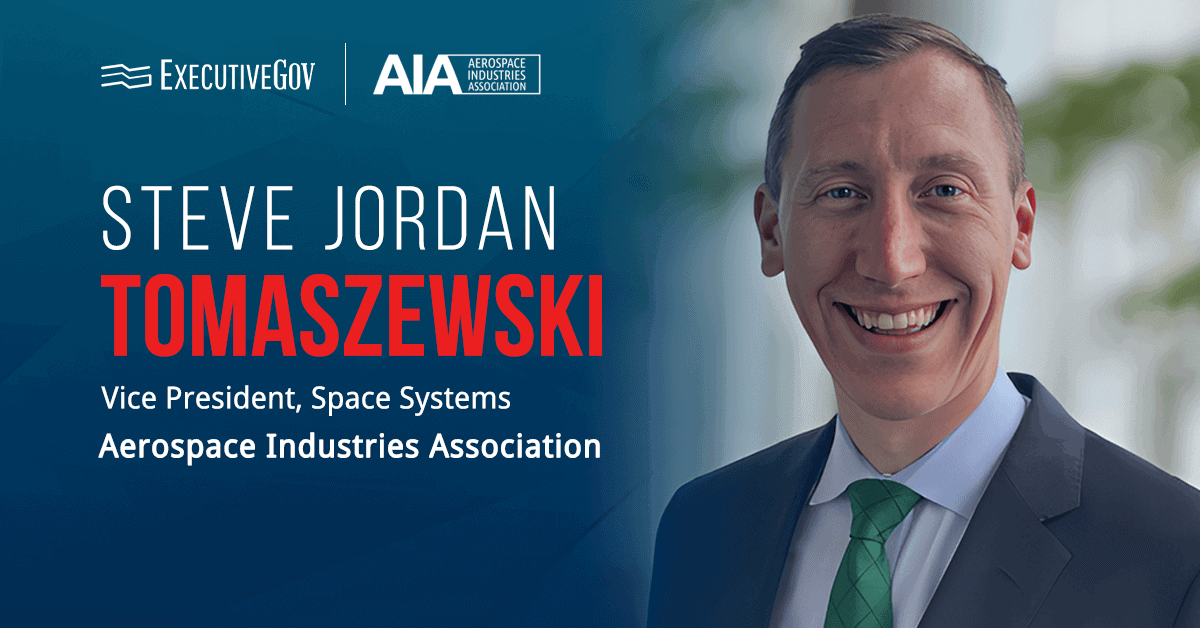
“Space is no longer a niche domain — it is foundational to our national security, economic growth, and preserving U.S. leadership in space exploration,” said Steve Jordan Tomaszewski, vice president of space systems at AIA. “These priorities reflect what industry needs from government right now: stable funding, modernized regulations, and policies that fully leverage commercial innovation.”
What Policy Actions Does AIA Recommend?
AIA urges lawmakers to deliver reliable, bipartisan and timely funding for civil, commercial and national security space initiatives to support companies’ long-term planning and global competitiveness. The association emphasizes maintaining an ambitious Artemis mission timeline and sustained lunar operations that support future crewed Mars missions, along with continued investment in key capabilities, including surface power, communications, mobility and life-support technologies, and entry, descent and landing systems.
The policy calls for maintaining a continuous U.S. human presence in low Earth orbit, or LEO, through 2030 by supporting commercial LEO destinations, diverse launch capabilities and continued microgravity research. It also urges clear regulations for launch, reentry, spectrum and mission authorization, and stronger resourcing of the Office of Space Commerce to oversee space traffic coordination, safety and emerging commercial activities such as in-space servicing and manufacturing.
AIA also stresses investment in resilient space infrastructure, domestic production, small business innovation and workforce development to mitigate supply chain risks and meet growing national space demands. The road map urges faster development of advanced missile warning and defense systems, more survivable space assets and expanded training to strengthen mission readiness in contested environments.