


The Department of the Air Force has released new strategies designed to serve as a strategic roadmap for DAF to operationalize data and artificial intelligence as strategic assets to maintain air and space dominance.
The Air Force’s push to operationalize data and AI as core mission capabilities comes as defense leaders prepare to discuss the future of air and space dominance. Attend the 2026 Air and Space Summit on July 30, and join military officials and industry executives as they explore emerging strategies and technologies transforming operations across two mission-critical domains. Register now!
DAF said Wednesday the AI and data strategies align with the Department of War’s 2026 AI Strategy and the 2026 National Defense Strategy and support priorities to strengthen deterrence and revive the warrior ethos.
Table of Contents
What Are the Strategic Imperatives of the DAF AI Strategy?
The DAF AI Strategy outlines five strategic imperatives that could help the department become an AI-first force: unleash the power of data; accelerate an AI-first culture; build the enterprise AI ecosystem; drive agile adoption and process reform; and modernize assurance for an AI-paced world.
5 Building Blocks to Operationalize the Strategy
- Data, technology and infrastructure
- Talent and workforce
- Partnerships and ecosystem
- Change management and process re-engineering
- AI governance and oversight
“Our focus is not on developing AI for its own sake, but on rapidly delivering tangible, combat-ready capabilities that solve real-world operational problems,” Troy Meink, secretary of the Air Force and a 2026 Wash100 awardee, wrote in the AI Strategy’s foreword. “By becoming an AI-first force, we will empower our warfighters to out-think, out-maneuver, and out-pace any adversary.”
What Are the 3 Pillars of the DAF Data Strategy?
The DAF Data Strategy has three core pillars: streamlined data discovery and accessibility; enhanced data trust and interoperability; increased data-centric decision-making.
The document also outlines four critical building blocks to operationalize the strategy and those are governance and responsibility; data readiness; data-centric workforce; and data mesh environment.
Key Features of the Data Mesh Environment
- A virtually federated enterprise data catalog
- Data asset search tools
- An application programming interface gateway management infrastructure
- Identity, credential and access management capabilities
“In today’s complex global security environment, data and artificial intelligence are no longer support functions—they are the foundation of our strategic overmatch” said Susan Davenport, DAF’S chief data and AI officer. “Execution of these strategies ensure the Department of the Air Force remains agile and decisively ahead of pacing threats.”
Related Articles
U.S. Indo-Pacific Command is urging companies to submit proposals through its industry engagement portal to advance the development of multidomain training capabilities, officials said during a quarterly commercial industry update. USINDOPACOM said Wednesday the command’s J7 Pacific Multi-Domain Training and Experimentation Capability, or PMTEC, hosted the March 13 event in Honolulu in partnership with Defense Innovation OnRamp Hub: Hawaii, a Defense Innovation Unit program. The session brought together military leaders and industry representatives to outline collaboration opportunities tied to training, experimentation and technology integration across the Indo-Pacific region. What Are the Technology Priorities of USINDOPACOM? Officials identified several areas where
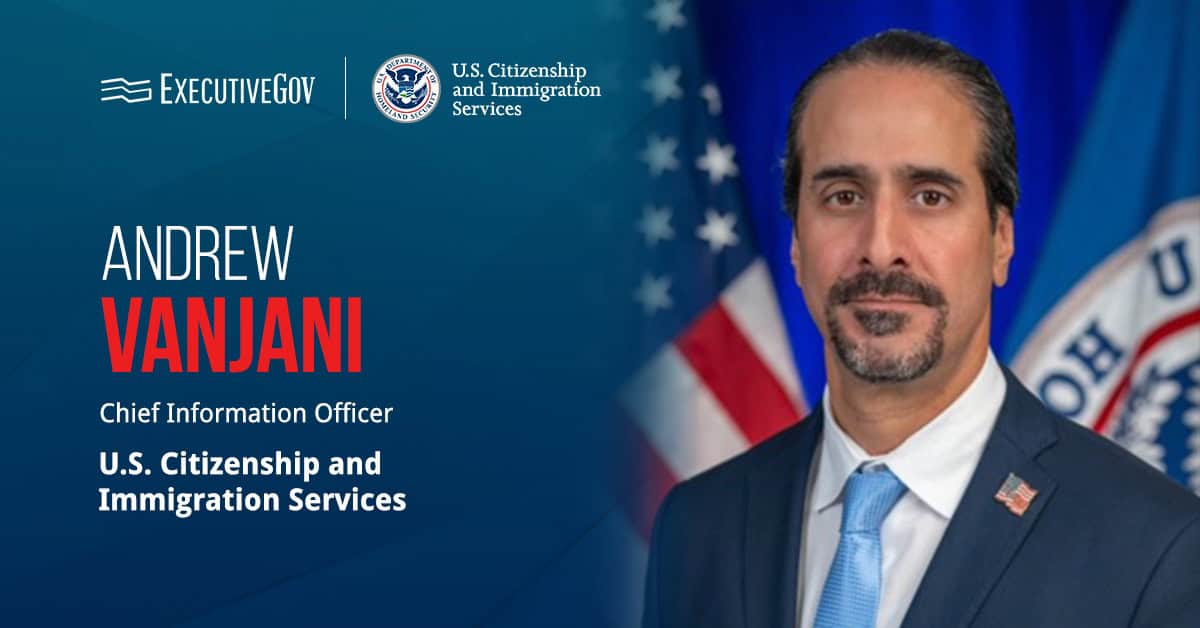
Andrew Vanjani has assumed the role of chief information officer at U.S. Citizenship and Immigration Services. Vanjani announced his appointment in a LinkedIn post on Tuesday, outlining priorities focused on strengthening cybersecurity, modernizing infrastructure and improving service delivery. “In a world of shifting dynamics and historic application volumes, the “how” of our work is just as vital as the “what.” We are not just processing paperwork; we are managing a complex ecosystem where technology must be the backbone of integrity and the engine of efficiency,” the new USCIS CIO said. USCIS operates within the Department of Homeland Security. DHS officials
U.S. Southern Command has announced plans to establish a new organization focused on integrating autonomous and unmanned technologies into regional military operations. The command, known as the SOUTHCOM Autonomous Warfare Command, will support national security and defense strategy priorities while working to strengthen regional security cooperation and operational effectiveness, SOUTHCOM said Tuesday. What Will the Autonomous Warfare Command Do? Once fully operational, SAWC will focus on deploying autonomous, semi-autonomous and unmanned systems in support of multi-domain operations. The command will also work alongside allies and partners to address regional challenges, including countering narcotics trafficking networks and responding to large-scale natural