The Defense Innovation Unit has collaborated with the Defense Autonomous Warfare Group, or DAWG, and the U.S. Navy to launch a prize challenge offering up to $100 million to develop an Autonomous Vehicle Orchestrator prototype.

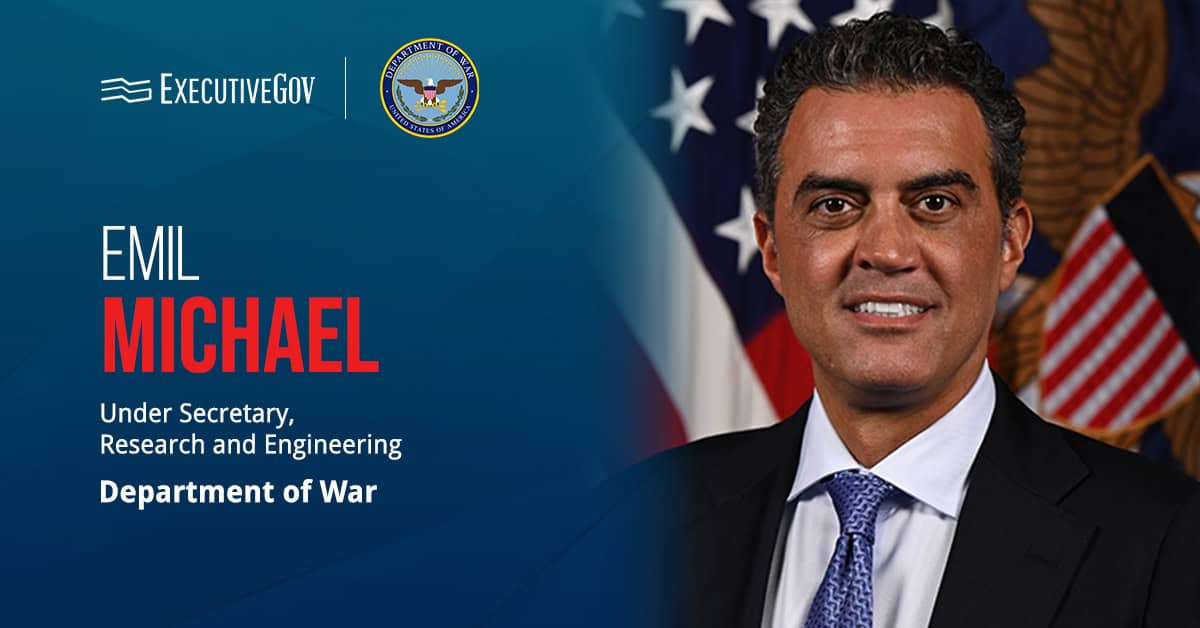
DIU Acting Director and Under Secretary of War for Research and Engineering Emil Michael is one of the speakers at the Potomac Officers Club’s 2026 Defense R&D Summit on Jan. 29. He joins other top defense and GovCon industry leaders who will discuss the technologies and strategies driving the future of warfare and U.S. national security. Register now!
The orchestrator is intended to enable commanders to task and coordinate large numbers of autonomous systems across domains by translating human intent into machine execution, DIU said in a press release published Jan. 13.
“This solicitation’s approach is the new standard—we’re moving fast to deliver tangible capabilities to the warfighter. Selected performers will be shoulder‑to‑shoulder with operators, and they will be proving that their capability works in an operational environment,” said Hon. Emil Michael, acting director of DIU and under secretary of war for research and engineering.
What Is the Autonomous Vehicle Orchestrator For?
The Autonomous Vehicle Orchestrator is intended to enable effective command and control of autonomous systems as they are increasingly deployed across multiple domains. As these systems grow in number and variety, a scalable, vehicle-agnostic orchestration layer is needed to manage fleet-level operations. The orchestrator would serve as a human-machine interface that converts commander intent received through voice, text or haptic input into coordinated actions while preserving human oversight.
“The Department’s fleet of autonomous vehicles is the future of warfighting – but they are nothing without the intelligence and experience of the operator,” said Michael Dodd, acting deputy director of DIU and assistant secretary of war for critical technologies.
“This Prize Challenge will deliver a human-machine interaction layer that will directly impact the lethality and effectiveness of these systems,” Dodd continued.
What Are the Prize Challenge Details?
The prize challenge is organized into a series of iterative sprints that tackle increasingly complex elements of the problem. Vendors are evaluated for selection before the initial sprint, and only those who complete a sprint may advance to the next phase, while unsuccessful participants are eliminated from further consideration. The challenge will remain open through Jan. 25, during which multiple awards totaling up to $100 million are expected to be issued.