
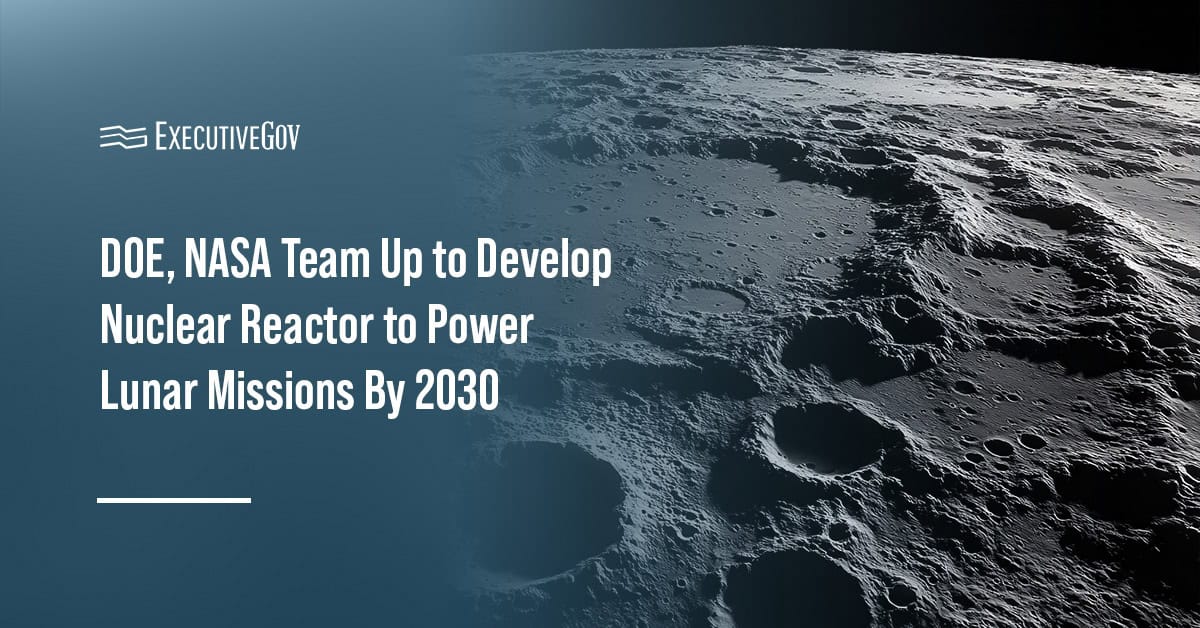
The Department of Energy is working with NASA to create a nuclear reactor that would power missions on the lunar surface by 2030.
The agencies signed a memorandum of understanding to collaborate on the research and development of a fission surface power system that will deliver safe and efficient electrical power on the moon or Mars, DOE said Tuesday.
“History shows that when American science and innovation come together, from the Manhattan Project to the Apollo Mission, our nation leads the world to reach new frontiers once thought impossible,” stated Energy Secretary Chris Wright. “This agreement continues that legacy.”
What Is Fission Surface Power?
The partnership is a continuation of the work that DOE and NASA are already doing to develop a safe and reliable energy source for space missions under the Fission Surface Power Project.
On the moon, nighttime lasts around 14.5 Earth days. A fission surface power system will deliver continuous power, even in the absence of sunlight, for several years without the need for refueling.
Why Are DOE and NASA Targeting a 2030 Timeline?
The 2030 deadline is aligned with President Donald Trump’s Ensuring American Space Superiority executive order, which called for the establishment of space nuclear power on the moon for long-term utilization.
Under the EO, the president said a lunar surface nuclear reactor must be ready for launch by 2030.