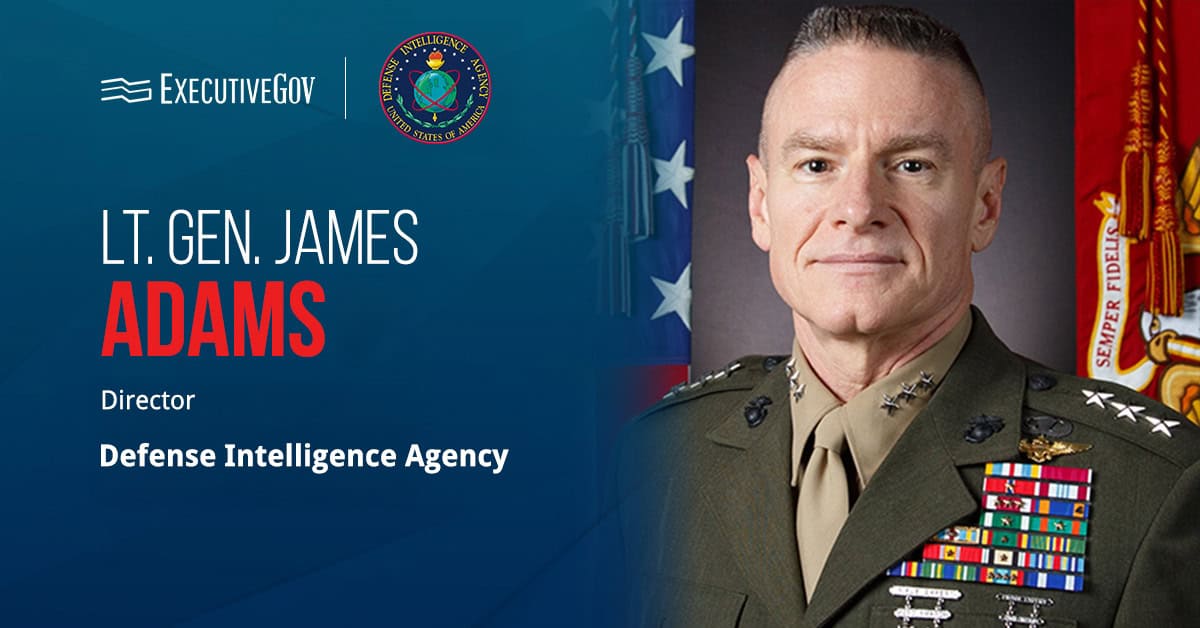
Lt. Gen. James Adams, former U.S. Marine Corps deputy commandant for programs and resources, officially assumed responsibilities as the 25th director of the Defense Intelligence Agency during a ceremony held on Feb. 20.
What Did DOW’s Bradley Hansell Say About Adams’ New Role?
During the event, Bradley Hansell, under secretary of war for intelligence, commended Adams’ work at the USMC, the only service to pass a clean financial audit.
Discover the lastest artificial intelligence requirements and business opportunities directly from top Pentagon officials like Adams at the Potomac Officers Club’s 2026 Artifical Intelligence Summit on March 18. Secure your seat today!
“He has brought success to every assignment he’s been in and I expect this one to be no different,” Hansell said. “He led the Marine Corps to yet another historic first … as they became the first service to pass a clean financial audit, setting a standard for accountability within the department. He did so, not once, but three times.”
Adams was President Donald Trump’s nominee to lead DIA. He succeeds Air Force Lt. Gen. Jeffrey Kruse, who served as the agency’s director until August, DefenseScoop reported.
What Are James Adams’ Plans for the DIA?
Speaking at the ceremony, Adams emphasized the need for the DIA to transform to meet the “speed, scale and complexity of modern warfare.”
He explained that while artificial intelligence, advanced analytics and open source data analysis have accelerated the agency’s capability to generate insights, the DIA needs to continue building a skilled workforce equipped with experience and tradecraft to deliver judgment and clarity to decision makers.
“It is my responsibility, our responsibility, to develop and empower our workforce to remove obstacles that detract from mission accomplishment,” Adams said. “[We must] ensure every analyst, operator, technologist and support professional can focus on what matters most: delivering insight, credible warning and operational capability to the combatant commands, the services and policymakers on time and on target.”