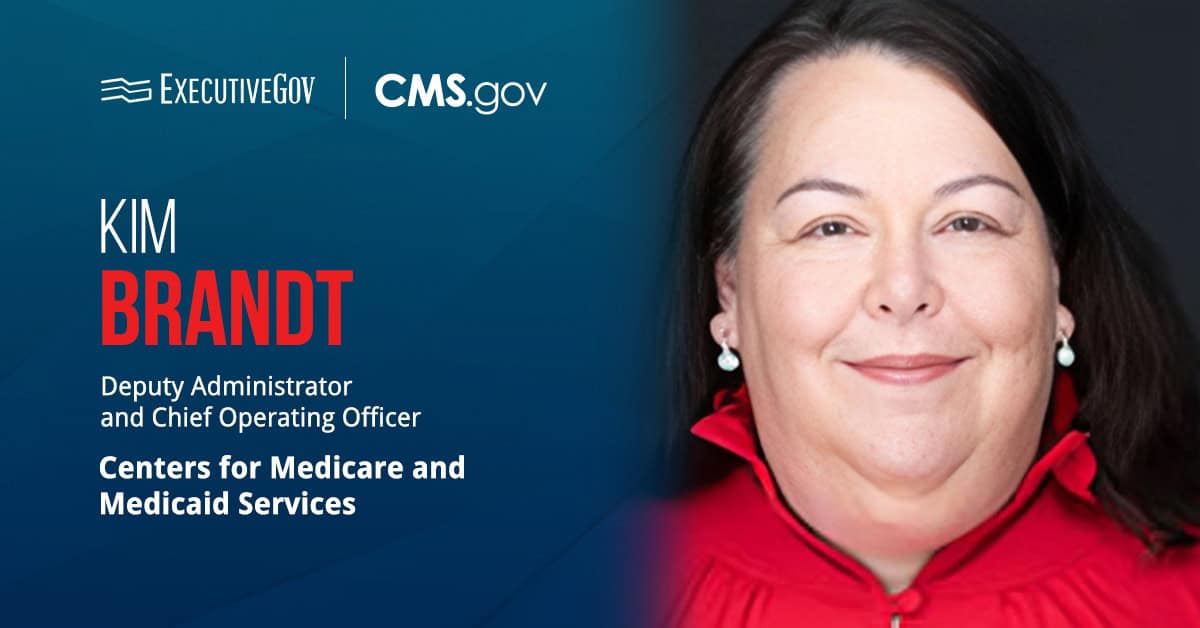
Kim Brandt, deputy administrator and chief operating officer at the Centers for Medicare and Medicaid Services, said CMS has saved $2 billion since March 2025 by using artificial intelligence to strengthen fraud detection and contract oversight, Nextgov/FCW reported Tuesday.

As agencies report measurable outcomes from AI initiatives, interest continues to grow across government and industry in how emerging technologies are being applied to mission delivery. Book your seat at the 2026 Artificial Intelligence Summit on March 18 and take part in the conversation with federal and industry leaders on the evolving role of AI across the public sector.
How Does CMS Leverage AI to Combat Fraud?
Brandt said CMS uses what she described as a “Netflix-type algorithm” that analyzes existing data to identify potentially high-risk applicants. The system flags those entities for internal monitoring, but does not block participation in CMS programs.
“Within the first year [of using AI], to be able to get rid of 90 percent of some of these potentially bad actors, it’s a huge thing for us,” she said at the Nextgov/FCW Fed Tech Priorities Summit on Feb. 18. “Our hope is that … in this next year, as we implement that even more widely, it’s going to be a huge saver for us.”
How Does CMS Prevent Contract Duplication Using AI?
CMS has also implemented an internal AI tool to compare existing contracts and identify and prevent potential duplication.
“It really gives us the ability to use historical knowledge to be able to make smart financial decisions about how we move forward on the contracts,” Brandt said of the AI tool. “The team has only been using this for a few months now [and] it’s already been extremely effective. They think it saved us maybe the better part of several hundred million [dollars] already.”
What Are the Federal Efforts to Advance AI in Healthcare?
Federal agencies and departments are taking a series of steps to integrate AI into healthcare delivery, oversight and clinical support.
CMS has launched an AI research challenge to address fraudulent activities within the Medicare program. The Department of Veterans Affairs has also released an AI inventory outlining use cases tied to suicide prevention initiatives and electronic health record modernization efforts.
Meanwhile, the Department of Health and Human Services issued a request for information to gather feedback on accelerating AI adoption in clinical settings, including regulatory and reimbursement considerations. HHS also launched a department-wide AI strategy to advance the use of the technology in improving healthcare delivery, public health, human services, biomedical research and agency operations.