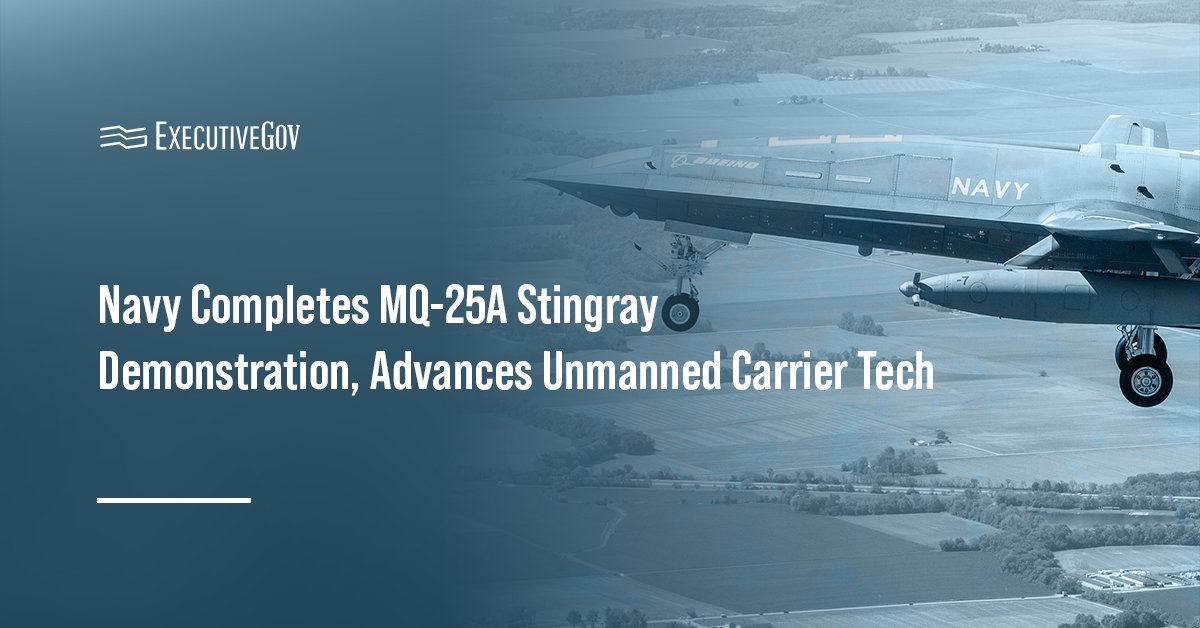
The U.S. Navy conducted the first test flight of its MQ-25A Stingray unmanned aircraft on April 25, marking progress in the development of carrier-based unmanned aviation capabilities.

The Potomac Officers Club’s 2026 Navy Summit on Aug. 27 will showcase evolving priorities across naval innovation, from autonomous systems to cyber defense. Secure your seat today.
How Was the MQ-25A Stingray Demonstration Conducted?
The aircraft took off from Boeing's facility at MidAmerica Airport in Mascoutah, Illinois, and flew for about two hours. Navy and Boeing air vehicle pilots operated the Stingray from the Unmanned Carrier Aviation Mission Control System MD-5 ground station, which incorporates Lockheed Martin's MDCX system. The team executed maneuvers and validated basic flight controls, engine performance and handling characteristics.
What Role Will the MQ-25A Serve?
The Stingray is designed primarily as an aerial refueling tanker to extend the combat range and strike capability of the carrier air wing by assuming refueling duties currently performed by crewed fighters. The aircraft is the first of four Engineering Development Model units to be delivered to the Navy under the original $805 million Engineering and Manufacturing Development contract.
“The MQ-25A is not just an aircraft; it's the first step in integrating unmanned aerial refueling onto the carrier deck, directly enabling our manned fighters to fly further and faster. This capability is vital to the future of naval aviation,” said Rear Adm. Tony Rossi, leader of the Program Executive Office for Unmanned Aviation and Strike Weapons.