Anthropic has unveiled Project Glasswing, a major cybersecurity initiative aimed at protecting critical global infrastructure, alongside a preview of its frontier AI model, Claude Mythos. The announcement signals a turning point in how artificial intelligence is reshaping cyber defense across government and industry. For government contractors operating in national security, defense and critical infrastructure sectors, the implications are immediate and far-reaching.
 To stay ahead of these rapidly evolving cybersecurity challenges, industry and government leaders will convene at the 2026 Cyber Summit on May 21, where experts will evaluate the impact of frontier AI models like Anthropic’s Claude Mythos and initiatives such as Project Glasswing. The summit will offer government contractors a valuable opportunity to gain insights into AI-driven cyber defense, emerging threats, and policy developments shaping the future of national security. Register today to secure your seat.
What Is Anthropic’s Project Glasswing?
According to Anthropic, Project Glasswing is a multi-industry cybersecurity initiative designed to safeguard the world’s most critical software systems by leveraging next-generation artificial intelligence.
The effort brings together leading technology providers, cloud platforms, financial institutions and cybersecurity firms, including Amazon Web Services, Apple, Microsoft, Google, NVIDIA, JPMorgan Stanley, Palo Alto Networks, CrowdStrike and others, in a coordinated push to strengthen the security of widely used digital infrastructure.
At its core, Project Glasswing is built around a shared premise: frontier AI models have fundamentally changed the cybersecurity landscape, and defending critical systems now requires equally advanced, AI-driven capabilities.
The initiative is designed to:
- Deploy Anthropic’s Claude Mythos Preview model in real-world defensive environments
- Enable partners to scan, test and harden both proprietary and open-source systems
- Accelerate the identification and remediation of previously undiscovered vulnerabilities
- Create a shared learning ecosystem, where insights are disseminated across industry
Anthropic says the program extends beyond its initial partners, providing access to more than 40 additional organizations responsible for maintaining key software infrastructure. This includes entities managing open-source components that underpin global technology stacks, an area historically under-resourced in cybersecurity.
To support adoption, Anthropic is committing:
- Up to $100 million in usage credits for Mythos Preview
- Millions in direct funding to open-source security organizations
- Ongoing collaboration to develop best practices and security standards for the AI era
Anthropic emphasizes that Project Glasswing is the beginning of a long-term, ecosystem-wide effort. The company plans to publish findings, share lessons learned and work with both industry and government stakeholders to shape how cybersecurity evolves in response to rapidly advancing AI capabilities.
What Is Claude Mythos?
At the center of the initiative is Claude Mythos Preview, a general-purpose frontier AI model developed by Anthropic that the company claims represents a significant leap forward in agentic coding, reasoning and autonomous cybersecurity operations.
Unlike traditional security tools or earlier AI models that require human guidance, Anthropic says Mythos Preview is capable of independently analyzing complex codebases, identifying vulnerabilities and developing exploit paths with minimal or no human intervention. This marks a shift from AI as an assistant to AI as an active cyber operator.
Anthropic attributes these capabilities to the model’s advanced performance across:
- Agentic coding tasks, where the model can write, modify and test code autonomously
- Reasoning and problem-solving, enabling it to understand complex system interactions
- Tool use and search, allowing it to navigate large software environments and identify hidden flaws
Most notably, Anthropic reports that Mythos Preview has:
- Discovered thousands of zero-day vulnerabilities across widely used systems
- Identified flaws that persisted through decades of human review and automated testing
- Developed increasingly sophisticated exploit chains, in some cases achieving full system compromise
- Operated entirely autonomously, identifying vulnerabilities and crafting exploits without human prompting or step-by-step instruction
This level of capability places Mythos Preview in a new category of AI systems, often described as frontier models, that approach or exceed expert human performance in highly specialized domains.
However, Anthropic has emphasized that these capabilities introduce dual-use risks. The same features that make Mythos effective for defense could also be leveraged by malicious actors if safeguards are not in place. As a result, Mythos Preview is not being released publicly and access is limited to vetted partners under Project Glasswing
The company’s long-term strategy is to enable safe deployment of similar capabilities in future models, ensuring that organizations particularly those responsible for critical infrastructure can benefit from advanced AI without increasing systemic risk.
For government contractors, Claude Mythos signals the emergence of AI-native cybersecurity, where machines are key actors in both offense and defense.
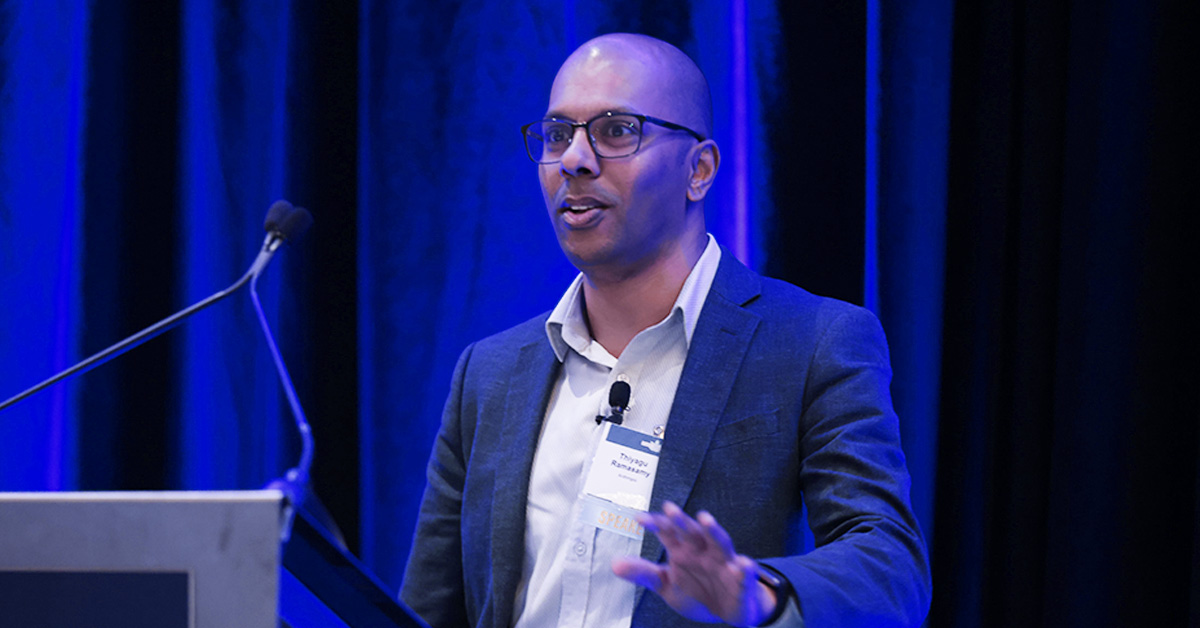
Don’t be late to the conversation—join the 2026 Cyber Summit in less than one month to take an active role in discussions shaping the role of AI in cybersecurity. The Cyber Summit will feature top cyber leaders in government and experts in industry to start critical conversations on how the community can come together to ensure U.S. cybersecurity defenses remain the strongest in the world. Click here to see who will be speaking at the 2026 Cyber Summit.
Why Does Project Glasswing Matter for Government Contractors?
For government contractors, Project Glasswing represents a shift toward collaborative, AI-enabled defense models, where public and private-sector coordination and early access to advanced tools will be essential to securing mission-critical systems.
1. Accelerated Threat Landscape
Anthropic warns that AI is dramatically lowering the barrier to entry for cyberattacks. Tasks that once required elite expertise can now be automated, increasing the speed, scale and sophistication of threats.
For contractors supporting federal agencies, this raises the stakes for:
- Defense systems
- Intelligence platforms
- Critical infrastructure networks
Anthropic estimates global cybercrime costs could reach $500 billion annually, with nation-state actors already targeting sensitive systems.
2. Shift to AI-Driven Defense
While risks are increasing, Anthropic emphasizes that the same capabilities can provide a defensive advantage.
Project Glasswing is designed to enable continuous vulnerability discovery, improve secure-by-design software development, and scale testing and threat detection.
For contractors, this signals a shift toward:
- AI-assisted DevSecOps
- Automated vulnerability management
- Real-time cyber resilience
3. Implications for Federal Cybersecurity Policy
Anthropic confirmed it is already engaging with government officials on the national security implications of Mythos’ findings.
Key areas likely to impact contractors include:
- Cybersecurity standards for AI-enabled systems
- Vulnerability disclosure and patching requirements
- Supply chain and open-source security mandates
- Regulatory frameworks for frontier AI models
Anthropic noted that maintaining a technological lead in AI is a priority for democratic nations, particularly as adversaries may adopt similar capabilities.
4. Increased Focus on Collaboration
Project Glasswing underscores a growing consensus: cybersecurity is now a shared responsibility across public and private sectors.
Anthropic plans to publish findings within 90 days, develop industry-wide best practices and collaborate on standards for vulnerability disclosure, software lifecycle security, and automated patching and triage.
For government contractors, participation in such ecosystems may become essential for maintaining compliance and competitiveness.
What’s Next for AI in Cybersecurity?
Anthropic describes Project Glasswing as “a starting point,” noting that AI capabilities are advancing faster than traditional cybersecurity defenses.
While Claude Mythos Preview is not yet broadly available, Anthropic’s long-term goal is to enable safe deployment of Mythos-class models, supported by new safeguards to prevent misuse.
For contractors, the message is clear: AI is redefining both cyber threats and defenses.
Anthropic’s Project Glasswing and Claude Mythos Preview represent a drastic shift in cybersecurity, where AI can outperform human experts in identifying and exploiting vulnerabilities.
For government contractors, this creates both urgency and opportunity: the need to defend against AI-enabled threats while leveraging the same technology to secure mission-critical systems.
Readers interested in exploring these themes further can learn more at the Potomac Officers Club’s 2026 Cyber Summit on May 21. The event will convene government and industry leaders to discuss AI cyber capabilities and strategies for collaborating across government and industry to secure our national systems. Reserve your seat today!