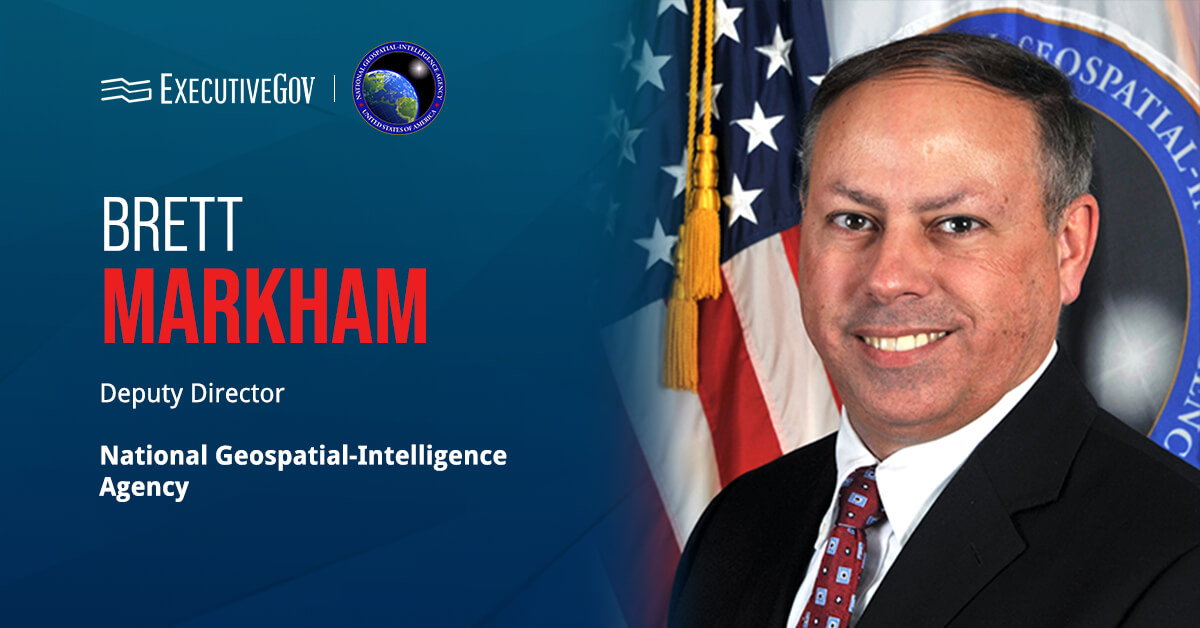
The National Geospatial-Intelligence Agency is expanding commercial participation in its programs to accelerate access to satellite data and artificial intelligence-powered analytics, SpaceNews reported Sunday.
 The Potomac Officers Club presents the 2026 Intel Summit on September 24, where leaders and industry experts will examine advancements in AI, data and secure information-sharing. Sign up now!
How Is NGA Shifting Its Acquisition Strategy?
NGA Deputy Director Brett Markham said at the GEOINT Symposium that the agency has been increasingly buying data and analytics from private companies instead of developing systems in house. Programs such as Luno utilize this approach, collaborating with vendors to procure AI-driven geospatial intelligence from satellite imagery and other sources. Markham noted that advances in computer vision and data analytics are now largely driven by startups, small businesses and other private firms.
The agency established a Rapid Capabilities Office to streamline acquisition and accelerate the integration of commercial tools and provide rapid access to emerging technologies. NGA is also encouraging small business participation through its Mentor-Protégé Program and planning industry outreach events this summer.
To manage data from over 13,000 satellites, a number expected to rise sharply by 2030, NGA is surveying the marketplace for advanced capabilities. Following the June 2025 implementation of standardized disclosures for AI-generated products, the agency has established new AI standards to ensure NGA can reliably process the surge in space-based sensor data.
What Role Does the Luno Program Play?
The Luno program focuses on acquiring finished intelligence products, such as change detection and activity analysis, rather than raw imagery. Valued at $500 million, the effort uses a multi-vendor contracting model that enables NGA to scale services and onboard new providers as capabilities advance.
The program is divided into two key areas: Luno A handles infrastructure monitoring, while Luno B focuses on human domain monitoring and situational awareness. In July 2025, the agency awarded three delivery orders under the Luno A and B contract vehicles, including a $24.4 million Facility and Object Monitoring 2 order, a $21 million TrueSight order and a $4.5 million Almanac order.