- Federal chief AI officers are developing and implementing strategies to help agencies use AI to better serve the public
- These professionals are redefining government service in realms including business, labor, international diplomacy and trade
- Hear directly from top federal chief AI officers like these at the 2026 Artificial Intelligence Summit on March 18!
Federal chief artificial intelligence officers are the nation’s top technology professionals. They’re developing and implementing intricate strategies to help agencies use AI to better serve the public in realms including business, national security, equal employment and trade.
From the Department of War to the National Archives and Records Administration and the Department of the Interior, these technology professionals are redefining federal success. They’re implementing programs to help agencies better work with proprietary technology and leverage cutting-edge technologies in industries like financial technology to provide improved services more efficiently and effectively.
Evaluate the latest business opportunities in federal AI at the Potomac Officers Club’s 2026 Artificial Intelligence Summit on March 18! Hear directly from Cameron Stanley, the Department of War’s chief digital and AI officer, during his illuminating keynote address. Get your burning questions answered by Stanley during his Q&A session. Secure your seat today for this highly anticipated GovCon event!
Why Should GovCons Care About Chief AI Officers?
These top technology professionals matter because they’re helping the government leverage technology that is revolutionizing productivity. This transformative technology will support and enhance how the federal government provides services for years to come.
Discover the backgrounds of these leading federal AI officers and how they’re redefining technology success in government.
Note: This is the second part of a regular series. We’ll share further profiles over the next few months and will link to them here.
Who Are the Top AI Officers in Government?
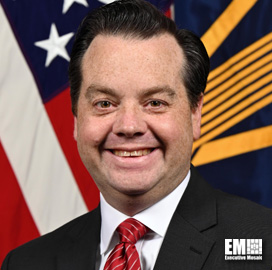
Cameron Stanley
Chief Digital and AI Officer, Department of War
Cameron Stanley is taking over at the DOW to lead a realignment as the department leans heavily into AI. This isn’t his first stint at the Pentagon as Stanley served as chief data officer for the under secretary of war for intelligence and security from 2022 to 2024.
In a video recorded for Executive Mosaic at a 4×24 Leadership Program dinner in January, Stanley discussed how the DOW is soliciting not only innovative services and products, but also novel methods to deliver and execute technology faster than ever as AI use speeds up in defense missions.

Brian Epley
Chief Information Officer, Department of Commerce
Brian Epley is a veteran AI officer with significant federal experience. He became the Department of Commerce’s CIO in 2024 after spending two years as the principal deputy CIO at the Department of Energy from 2022 to 2024. Epley was critical to helping the DOE CIO’s office define its strategy for cybersecurity, AI modernization and data use.
Epley also spent six years at the Environmental Protection Agency as deputy CIO and the IT operations director.
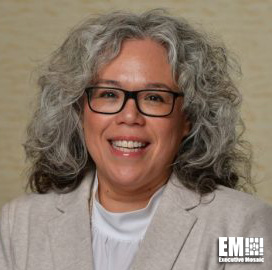
Amy Ritualo
Acting Chief Data and AI Officer, Department of State
Amy Ritualo has had an extensive federal career, including stops at the Department of Agriculture, Department of Homeland Security and Citizenship and Immigration Services, before she joined the State Department in 2022. She isn’t new to AI though, as she became the State Department’s deputy chief data and AI officer in 2024 before becoming the acting CDAO in January 2025.
Ritualo is leading a department effort to better utilize AI with its proprietary information such as diplomatic cables. She told FedScoop in a March 2025 interview that the State Department in 2023 produced about 6,300 diplomatic cables per day and that the department is focusing on bringing that data to diplomats across around the world.
“GenerativeAI and public tools aren’t that helpful until you can really bring together our proprietary information,” she said. “We’re focused on things like data quality, data access and data sharing, really making sure we have tight permissioning and role-based access to the data that the State Dept generates.”

Brian Peltier
Deputy CIO, Social Security Administration
Brian Peltier has spent over 21 years at the Social Security Administration as an IT professional, rising up the ranks to deputy CIO, which he started in May 2024. Here he strategizes on how to best implement AI applications into SSA work.
Peltier told NextGov in an October 2024 interview that the SSA has been using AI for 20 years. The difference now is that much of the recent growth in AI has been around GenAI. The SSA, he said at the time, had not experimented much with GenAI, but was evaluating options to work more with the technology.
Are you an AI professional? Then you can’t afford to miss the Potomac Officers Club’s 2026 Artificial Intelligence Summit on March 18—it’s specifically curated for you. Join the conversation during essential panel discussions on integrating AI into legacy federal systems and automating government with AI. Meet and mingle with other GovCon titans and spark new collaborations. Secure your seat now for this essential GovCon conference!
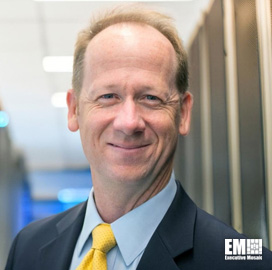
Mark Gray
Chief Information and Chief Data Officer, Federal Trade Commission
Mark Gray is no stranger to tackling the toughest technology challenges in government. He joined the FTC after a 20-plus year career in the Army, where he served in senior roles in logistics, healthcare and IT.
Gray helmed modernization programs for the services’ financial information systems while also supervising large-scale IT changes. An expert in essential government technologies including cybersecurity, data strategy and digital modernization, Gray has expanded his skillset to AI governance and ethical AI implementation.
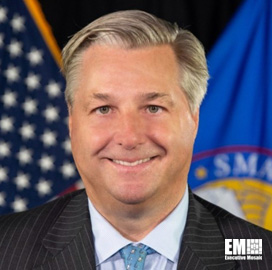
Hartley Caldwell
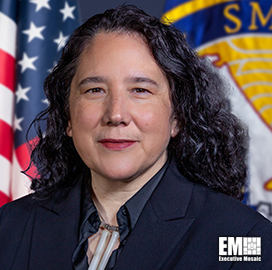
CIO, Small Business Administration
Hartley Caldwell may be new to government, but he’s not new to technology. Before becoming the Small Business Administration’s CIO, Caldwell spent four years at Fiserv in a variety of CIO positions, including global banking, senior vice president for digital banking and SVP for company credit union solutions.
Caldwell is leading technology strategy at the SBA. He’s developing and optimizing experiences to improve small business engagement and collaborating with cross-functional teams to align technology with SBA outcomes and goals, according to his LinkedIn page.
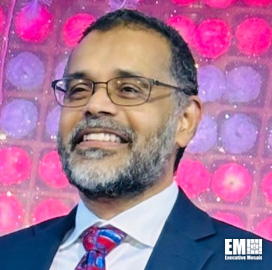
Gulam Shakir
Acting CIO, National Archives and Records Administration
Gulam Shakir is diving deep into AI at the National Archives and Records Administration. He’s leading an AI pilot to improve the search function within the NARA’s catalog.
Shakir is investigating using AI to recognize personally-identifiable information within NARA files before releasing them to the public. He’s also developing an AI-assisted first transcription of descriptive metadata for the NARA’s files.
Shakir joined NARA in 2016 after stops at PreciseTarget DataXu and JingleNetworks.
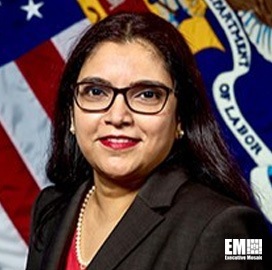
Mangala Kuppa
Acting CIO, Department of Labor
Mangala Kuppa is leveraging previous AI work at the Department of Labor to help it become a federal leader in the technology. She told FedScoop in June 2024 that earlier DOL efforts modernized internal and customer-oriented operations as part of an effort to implement AI.
The DOL has an internal shared services program that identifies the agency’s CIO office to be the shared services provider for all DOL IT capabilities. This, she said, has helped the department categorize all technologies and systems and better target legacy opportunities or systems that could use improvement with AI.
Kuppa started at the DOL in 2020 as a case management director. She previously spent 10 years at the Bureau of Labor Statistics.

Sivaram Ghorakavi
Deputy CIO and Chief AI Officer, Equal Employment Opportunity Commission
Sivaram Ghorakavi is a longtime technology expert with both private and public sector experience. He became CIO at the Equal Employment Opportunity Commission in August after previously serving as deputy CIO and CAIO, and chief technology officer.
As EEOC CTO, Ghorakavi developed and integrated a long term technology strategy, evaluated potential solutions and advocated for technology best practices that maximized the efficiency and effectiveness of the EEOC and its stakeholders.
He spent almost 10 years at the National Labor Relations Board in a variety of technology-focused positions. Ghorakavi also served as the senior level IT portfolio manager at the Patent and Trademark Office from 2015 to 2017.

Thomas “Tod” Dabolt
CIO, Department of the Interior
Tod Dabolt leads comprehensive data management, AI and evidence programs at the Department of Interior. He previously spent 10 years as the department’s chief data officer, where he created a robust data governance framework, enhancing data compliance and integrity.
Prior to joining the DOI in 2016, Dabolt spent nearly 20 years at the EPA, including 10 years as a director in the office of water.