The U.S. Marine Corps conducted “Dynamis Serial 005,” the fifth iteration of Project Dynamis, from March 3 to 20, across five sites in the U.S., including Fort Carson, Colorado, and Charleston, South Carolina.

As the Marine Corps advances AI-enabled command and control through efforts like Project Dynamis, conversations around multidomain integration and decision advantage continue to gain urgency across the naval community. Register now for the 2026 Navy Summit and join the discussion about how the service is advancing digital modernization, autonomous systems and other naval capabilities.
USMC said Friday the exercise focused on artificial intelligence-enabled battle management command-and-control, or C2, workflows using a unified, multidomain data mesh designed to accelerate decision-making and close the sensor-to-shooter gap.
The service recently released a 56-page document outlining its strategy to advance AI and machine learning adoption to improve aviation readiness and decision-making processes.
What Is Project Dynamis?
Project Dynamis is a campaign of agile software development sprints that started in December. Marines worked with joint partners and software engineers in operational environments to refine digital orchestration capabilities.
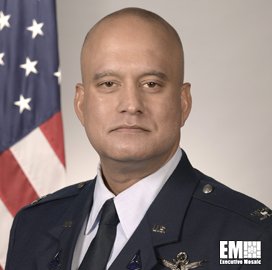
Col. Arlon Smith, director of Project Dynamis, said the effort centers on rapidly iterating commercial technologies to deliver AI-driven decision advantage to warfighters at the tactical edge.
How Did Dynamis Serial 005 Advance Joint Fires Integration?
At Fort Carson, Marines from I Marine Expeditionary Force integrated with the Army’s 4th Infantry Division and the 10th Special Forces Group during the Ivy Sting 5 exercise, which included live fire, maneuver operations and synthetic long-range precision fires.
During one scenario, Special Forces transmitted targeting data from a commercial network across classification levels through Army systems to a Marine Corps weapons platform.
The Marine Corps said the exercise reduced airspace deconfliction times by up to 80 percent by digitally sharing High-Mobility Artillery Rocket System munition flight path data across Marine Corps, Army and Navy systems.
Lt. Col. Jeremy Graham, Project Dynamis series lead, said the effort advanced development of a data-centric kill web using AI and machine learning.
What Are the 4 Technological Pillars of Dynamis Serial 005?
The Marine Corps identified four primary components that enabled the exercise:
- AI-powered decision support: Integration with the Army’s Next Generation C2 program, which uses software designed for AI-driven workflows to support operational decision-making.
- Machine-to-machine targeting: Automated data flow from sensor to shooter across multiple domains and networks with reduced manual input and human oversight, improving speed and accuracy of targeting.
- Maven Smart System: The Marine Corps' enterprise AI-enabled C2 platform, which provided a common tactical picture by ingesting and fusing data from multiple sources, including in degraded communications environments.
- Resilient mesh network: A secure, self-healing transport layer that allowed data to move across units and services without a single point of failure.
What Are the Lessons Learned From SoSNIE?
In parallel with Ivy Sting 5, a Marine Corps team participated in the Systems of Systems Naval Integration Experiment, or SoSNIE, at Naval Information Warfare Center Atlantic in Charleston. The team worked with industry partners to refine the digital architecture supporting cross-domain data integration and mission autonomy C2 capabilities.
“What we learned at SoSNIE is driving how we incorporate mission autonomy capabilities,” said Lt. Col. Ben Pimentel, lead planner for the SoSNIE portion of Dynamis Serial 005. “It also taught us how to architect information flow when operational conditions require on-premises solutions.”
The Marine Corps said the event also demonstrated the ability to transmit data from unclassified systems to higher-classification networks at machine speeds using a mix of cloud-based and on-premises platforms.