The National Security Agency has issued a cybersecurity information sheet outlining recommendations for reaching progressive levels of workload and application capabilities under the zero trust framework. The document titled Advancing Zero Trust
MoreThe Department of Defense’s Chief Digital and Artificial Intelligence Office has expanded its leadership team with the appointment of four technology leaders as part of efforts to advance DOD’s adoption of AI,
MoreCollaboration between the U.S. military, government and civilian technology leaders is critical to protecting the nation from cyber threats, according to Lt. Gen. Robert Skinner, director of the Defense Information Systems Agency and
MoreJeff Greene, senior director of the cybersecurity program at the Aspen Institute, is set to assume a top position at the Cybersecurity and Infrastructure Security Agency, The Record from Recorded Future News
MoreTodd Combs, associate laboratory director for Idaho National Laboratory’s Energy and Environment Science and Technology Directorate, has been appointed INL’s deputy laboratory director for science and technology and chief research officer. He
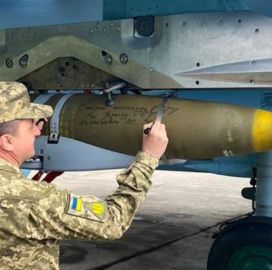
MoreThe Department of State has approved a request by the government of Canada to acquire additional Joint Direct Attack Munition tail kits, increasing the number of units sought under a previously-approved foreign
MoreBAE Systems is anticipated to test and deliver the Nancy Grace Roman Space Telescope’s Wide Field Instrument to NASA’s Goddard Space Flight Center in summer 2024 in preparation for the observatory’s May
MoreThe Defense Innovation Unit has awarded Herndon, Virginia-based satellite communications services provider iDirect Government a contract to develop a prototype of its system designed to address 5G interference-related challenges. DIU said Tuesday
MoreGina Raimondo, secretary of the Department of Commerce, has released a strategic vision for the U.S. Artificial Intelligence Safety Institute, or AISI, at the National Institute of Standards and Technology and announced
MoreThe U.S. Cyber Command and the Defense Advanced Research Projects Agency have signed a binding agreement to create an expedited pathway to advance research and development of cyber technologies for military applications.
More