Processing....

Logo

Digital News Coverage of Government Contracting and Federal Policy Landscape
Sticky Logo
  • Home
  • Acquisition & Procurement
  • Agencies
    • DoD
    • Intelligence
    • DHS
    • Civilian
    • Space
  • Cybersecurity
  • Technology
  • Executives
    • Profiles
    • Announcements
    • Awards
  • News
  • Articles
  • About
  • Wash100
  • Contact Us
    • Advertising
    • Submit your news
    • Jobs
Logo
Government Technology/News
DOD Stands up Communications-Focused Center of Excellence at University of California, Riverside
by Nichols Martin
Published on March 15, 2021
DOD Stands up Communications-Focused Center of Excellence at University of California, Riverside

The Department of Defense (DOD) has established a new center of excellence at the University of California, Riverside, dedicated to communications and situational awareness. 

DOD said Friday that it invested $7.5 million in the Networked Configurable Command, Control and Communications for Rapid Situational Awareness COE or COE-NC4.

The center will focus on large-scale networked systems and support pursuits related to data analysis, communications, computing and sensing, under the management of Army Research Laboratory (ARL).

The Office of the Undersecretary of Defense for Research and Engineering launched the COE under a research and education effort to support historically black colleges and universities and minority-serving institutions. UCR is a Hispanic-serving minority institution. 

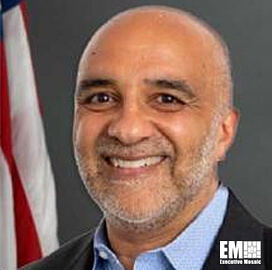
Jagadeesh Pamulapati, acting deputy director of the research, technology and laboratories office within OUSD (R&E), said partners at the University of California, San Diego, will also contribute research on novel communication and computing paradigms made to facilitate safe transfers of sensitive information.

Government Technology/News
NASA Demos 3D-Printed Launch Pad Prototype in Hot Fire Test
by Matthew Nelson
Published on March 15, 2021
NASA Demos 3D-Printed Launch Pad Prototype in Hot Fire Test

A group of students hot-fired a rocket engine in a 3D-printed launch and landing pad at Camp Swift in Texas to determine how it can handle launches. The structure, dubbed as Lunar Plume Alleviation Device, is designed to address issues brought by lunar dusts during launch and landing activities, NASA said Saturday.

NASA funded the Lunar PAD project through a competitive proposal writing workshop managed by the agency's Office of the Chief Technologist.

Texas A&M University, startup company ICON and NASA supported the construction of a small-scale prototype for the launch pad. The project is a part of NASA's Artemis Generation effort, a program that seeks to field humans and robots to the Moon's surface.

Executive Moves/Government Technology/News
FBI Agent Bryan Vorndran to Lead Agency’s Cyber Division
by Nichols Martin
Published on March 15, 2021
FBI Agent Bryan Vorndran to Lead Agency’s Cyber Division

Bryan Vorndran, a special agent at the FBI, has been appointed to serve as assistant director of the agency’s cyber division. Vorndran, who most recently served with the FBI’s New Orleans Field Office, will move to the bureau’s headquarters in Washington, D.C. for his new assignment, FBI said Friday.

He joined the FBI in 2003 as a special agent for the agency’s Washington Field Office and went on to pursue heroin- and cocaine-related investigations. His FBI career includes work with the International Contract Corruption Task Force in Afghanistan and the agency’s counterterrorism division.

The experienced FBI agent led Washington Field Office’s Joint Terrorism Task Force from 2013, then transferred to Baltimore Field Office in 2016 for leadership over cyber and counterintelligence programs.

Vorndran served as an operations manager for Merck and Co. before starting a career at the FBI.

News
Labor Department Secures TMF Investment for Data System Modernization; Maria Roat Quoted
by Brenda Marie Rivers
Published on March 15, 2021
Labor Department Secures TMF Investment for Data System Modernization; Maria Roat Quoted

The Department of Labor (DOL) has received $9.6 million in funding from the Technology Modernization Fund (TMF) program to help update the department’s data management platform. 

The General Services Administration (GSA) said Friday it will use the TMF funding to improve the accessibility and availability of department data for other agencies as well as developers, researchers and the press. The department also envisions the updated enterprise platform to support decision-making on compliance, enforcement and unemployment insurance.

Maria Roat, deputy federal chief information officer and member of the TMF Board as well as a 2020 Wash100 Award recipient, said DOL’s funding serves as the board’s first approval of the year. She noted that the investment represents the board’s commitment to federal information technology modernization efforts.

David Shive, a TMF board member and CIO of GSA, said the announcement builds on TMF’s funding increase to $1 billion as part of the American Rescue Plan.

In 2018, DOL secured TMF funding to support efforts to automate visa application procedures. The department saved $2 million annually following the update, according to GSA.

Government Technology/News
DOD Deploys Updated Health Records Platform to Collate Military COVID-19 Vaccination Data
by Brenda Marie Rivers
Published on March 15, 2021
DOD Deploys Updated Health Records Platform to Collate Military COVID-19 Vaccination Data

The Department of Defense (DOD) has used its new electronic health records system to collate data on COVID-19 vaccine administration on service members and their family members. 

The U.S. Air Force Medical Service (AFMS) said Thursday the DOD’s Military Health System GENESIS platform housed a digital repository of military COVID-19 vaccination data to support tracking efforts for the government’s vaccination campaign.

In September 2020, Naval Hospital Twentynine Palms in California received the MHS GENESIS-based “MassVax” digital archive designed to integrate with EHR data and automate the processing of large-scale vaccination information.

Col. Thomas Cantilina, chief health informatics officer at the Defense Health Agency (DHA), said the DOD enlisted Cerner to help develop the archive as MHS GENESIS contnues to evolve. He noted that MassVax also provides data on patients’ drug intake and allergic reactions to help inform clinicians prior to vaccine administration.

The DOD has administered 84 percent of COVID-19 vaccines it received as of March 5. The department is also slated to immediately secure newly approved single-shot vaccines from Johnson & Johnson.

Contract Awards/Government Technology/News/Wash100
Viasat Awarded $50.8M Contract by AFRL For Satellite Integration Research
by William McCormick
Published on March 15, 2021
Viasat Awarded $50.8M Contract by AFRL For Satellite Integration Research

Viasat has been awarded a seven-year $50.8 million indefinite delivery/indefinite quantity (IDIQ) contract by the Air Force Research Laboratory (AFRL) to research integration between government and commercial satellite networks. 

The contract is designed to help the Department of Defense (DOD) actualize its goal of a unified communication network between military and commercial satellites. Viasat announced the contract award in March. 

“The goal we are trying to get to is to create a sort of flexible system that can use all the available transport resources whether it’s ours, commercial or somebody else’s,” commented Craig Miller, Viasat’s chief technology officer for government systems. 

Viasat will work with AFRL’s Space Vehicles Directorate to discover ways to integrate commercial satcom with government-owned satellites, so they all operate as a seamless network. 

Incompatibilities between commercial and government satellites have been a problem for the DOD for years.  In 2016, the Air Force began a three-year study on replacing government-owned Wideband Global Satcom (WGS) satellites with updated technology from commercial projects. However, the Government Accountability Office (GAO) wrote in a 2019 report that no solution has been satisfactory and remains unsolved. 

Chief of the U.S. Space Force and 2021 Wash100 Award recipient Gen. John Raymond is a major proponent of an integrated system that Viasat and AFRL hope to create. He believes that the current fragmented WGS systems are not resilient enough for global U.S. military operations. 

Christopher Paul, head of AFRL’s Space Vehicle Directorate small satellite portfolio, remarked that  AFRL and Viasat would look at a “more holistic approach to future architectures that incorporates traditional large satellites, as well as small commercial satellites, other nontraditional providers as well as allies.” 

The long-term vision for the hybrid network is that it will incorporate ground-based systems as well. Viasat will also study ways to protect sensitive data from cyberattacks as information is transferred from one satellite to another and eventually to ground-based operators. 

Viasat Awarded $50.8M Contract by AFRL For Satellite Integration Research

Potomac Officers Club will host its 2021 Industrial Space Defense Summit on March 23rd featuring Gen. John Raymond, chief of Space Operations with the U.S. Space Force and 2021 Wash100 Award recipient, who will serve as a keynote speaker. He will address space technology, innovation and private-public partnerships that will expand federal space defense capabilities and help defeat adversaries.

Government Technology/News
FCC’s Covered List Includes Telecom Equipment From Five Chinese Companies; Jessica Rosenworcel Quoted
by Jane Edwards
Published on March 15, 2021
FCC’s Covered List Includes Telecom Equipment From Five Chinese Companies; Jessica Rosenworcel Quoted

The Federal Communications Commission (FCC) has issued a list of telecommunications equipment and services that pose a national security threat as part of its compliance with the Secure and Trusted Communications Networks Act of 2019. 

FCC said Friday the covered list released by the public safety and homeland security bureau includes telecom and video surveillance equipment from five Chinese companies: Huawei Technologies, ZTE, Hytera Communications, Hangzhou Hikvision Digital Technology and Dahua Technology.

Jessica Rosenworcel, acting chairwoman of FCC, said the list marks a big step in restoring trust in U.S. communications networks.

“This list provides meaningful guidance that will ensure that as next-generation networks are built across the country, they do not repeat the mistakes of the past or use equipment or services that will pose a threat to U.S. national security or the security and safety of Americans,” Rosenworcel added.

“The inclusion of these entities on the Covered List extends both to subsidiaries and affiliates of these entities, as well as to ‘telecommunications or video surveillance services provided by such entities or using such equipment,’” an FCC public notice reads.

Government Technology/News
AI National Security Commission Calls for DOD to Develop Career Pathways to Retain AI Talent; Eric Schmidt Quoted
by Jane Edwards
Published on March 15, 2021
AI National Security Commission Calls for DOD to Develop Career Pathways to Retain AI Talent; Eric Schmidt Quoted

Leaders and commissioners of the National Security Commission on Artificial Intelligence (NSCAI), said the Department of Defense (DOD) and federal civilian agencies should come up with career pathways to help recruit and retain AI talent in government service, Federal News Network reported Friday.

“I was really struck in my work with the Defense Department of how many people work there for low and in difficult conditions because they were patriotic,” Eric Schmidt, chairman of NSCAI and former CEO of Google, said Friday during a joint hearing of the House Armed Services and House Oversight and Reform Committees.

“The ones that I spoke with did not fundamentally leave for money. They left because the opportunity in their career was more interesting in the private sector – that work that they wanted to do, they could not do well as federal or military employees. That’s got to get fixed,” he added.

Mignon Clyburn, an NSCAI commissioner and former commissioner at the Federal Communications Commission (FCC), said Congress should direct the Pentagon to establish an emerging technology certification process for service personnel to help identify and retain AI talent.

Robert Work, vice president of NSCAI, former deputy defense secretary and a two-time Wash100 Award winner, said adding a computational thinking section to the Armed Services Vocational Aptitude Battery could help the military identify potential AI talent.

POC - 3rd Annual Artificial Intelligence Summit

The Potomac Officers Club will hold its 3rd Annual Artificial Intelligence Summit on March 30 to foster discussions on how to advance AI technology at speed and how private-public partnerships are key to maintaining the competitive advantage within the tech race. To register for this virtual summit and view other upcoming events, visit the Potomac Officers Club Events page.

Government Technology/News
DISA Director Lt. Gen. Robert Skinner on Commercial IT as a Service
by Jane Edwards
Published on March 15, 2021
DISA Director Lt. Gen. Robert Skinner on Commercial IT as a Service

U.S. Air Force Lt. Gen. Robert Skinner, director of the Defense Information Systems Agency (DISA), said he is in favor of outsourcing information technology services to commercial vendors to achieve cost savings, C4ISRNET reported Friday.

“I’m a big proponent of commercial IT as a service,” Skinner said Friday at the AFCEA Rocky Mountain Cyberspace Symposium. “We have to be careful as we kind of move forward with this. … I think we really need to get after this in a more holistic look and a faster pace.”

He said the military should take advantage of commercial technologies and advance the adoption of robotic process automation.

“How do we leverage the robotic process automation — bringing that into the fold with the combatant commands — to, I’ll say, take care of the irritants, so that the focus can really be on the command and control, the forces, getting after strategic competition in their area of responsibility,” Skinner said.

Government Technology/News
DOE to Support Four Vehicle Energy Consumption Mitigation Projects
by Matthew Nelson
Published on March 12, 2021
DOE to Support Four Vehicle Energy Consumption Mitigation Projects

The Department of Energy (DOE) will award $18 million in funds through the second phase of the Next-Generation Energy Technologies for Connected and Automated On-Road Vehicles program to four projects that aim to lower automobile emissions.

Michigan Technical University will work to grow its test vehicle fleet and identify opportunities for range optimization while Southwest Research Institute will expand and implement hybrid power control, eco-driving and routing approaches into vehicles with level 4 automation capabilities, DOE said Thursday.

Ohio State University will incorporate system-level control and optimization tools into a plug-in hybrid electric vehicle in a bid to increase energy efficiency by 30 percent. The University of California Berkeley will focus on expanding its set of eco-drive, route and charge controls.

DOE initially awarded $32 million in funds to 10 teams during the first phase of NEXTCAR. The current group of awardees will receive additional funds at an undisclosed date to hold demonstration activities.

Advanced Research Projects Agency-Energy launched the NEXTCAR effort to mitigate automobile energy consumption via the development of connected and automated vehicles.

The first phase of the program sought to build CAV technologies that could lower vehicle energy usage by 20 percent. Phase II seeks to decrease light-duty passenger vehicles' consumption by 30 percent.

Previous 1 … 1,196 1,197 1,198 1,199 1,200 … 2,670 Next
News Briefing
I'm Interested In:
Recent Posts
  • Pentagon Launches Patent Holiday to Accelerate Defense Tech Delivery
  • Maj. Gens. Brian Gibson, Mark Pye Nominated for LTG Promotion, Key Pentagon Roles
  • GSA Seeks Industry Input on IT Reseller Market Practices
  • Marine Corps Designates GenAI.mil as Enterprise Generative AI Platform
About

ExecutiveGov, published by Executive Mosaic, is a site dedicated to the news and headlines in the federal government. ExecutiveGov serves as a news source for the hot topics and issues facing federal government departments and agencies such as Gov 2.0, cybersecurity policy, health IT, green IT and national security. We also aim to spotlight various federal government employees and interview key government executives whose impact resonates beyond their agency.

Read More >>

RSS ExecutiveBiz
  • Tria Federal Names 3 Leaders to Business Development Team
  • T2S Solutions, Axonis Partner to Deliver Federated AI for the Tactical Edge
  • Leidos, OpenAI Partner on AI Deployment for Federal Operations
  • Raft Wins CDAO OTA for Operator-Controlled AI Mission System
  • Claroty’s Jen Sovada Discusses Dangers of Data Overload, Automation Without Skepticism
  • Carahsoft, TeKnowledge Team Up to Deliver AI, Cloud Services to Federal Agencies
RSS GovConWire
  • Chertoff Group Appoints Three Cybersecurity Experts to Advisory Board
  • Tetra Tech Acquires Federal IT Services Contractor Halvik
  • Navy Issues Sources Sought Notice for Fielded Training Systems Support VI Contract
  • Claroty Raises $150M to Boost Cyber-Physical Security Platform Development
  • BAE Systems Secures $473M Army Contract for M109A7 Paladin Howitzers
  • Leidos Names Jason O’Connor as President of Intel Sector
Footer Logo

Copyright © 2025
Executive Mosaic
All Rights Reserved

  • Executive Mosaic
  • GovCon Wire
  • ExecutiveBiz
  • GovCon Exec Magazine
  • POC
  • Home
  • Acquisition & Procurement
  • Agencies
    • DoD
    • Intelligence
    • DHS
    • Civilian
    • Space
  • Cybersecurity
  • Technology
  • Executives
    • Profiles
    • Announcements
    • Awards
  • News
  • Articles
  • About
  • Wash100
  • Contact Us
    • Advertising
    • Submit your news
    • Jobs
Go toTop