Processing....

Logo

Digital News Coverage of Government Contracting and Federal Policy Landscape
Sticky Logo
  • Home
  • Acquisition & Procurement
  • Agencies
    • DoD
    • Intelligence
    • DHS
    • Civilian
    • Space
  • Cybersecurity
  • Technology
  • Executives
    • Profiles
    • Announcements
    • Awards
  • News
  • Articles
  • About
  • Wash100
  • Contact Us
    • Advertising
    • Submit your news
    • Jobs
Logo
Government Technology/News/Wash100
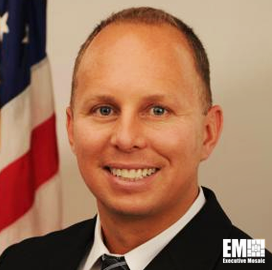
Lt. Gen. Dennis Crall, Joint Staff CIO, Recommends Areas to Improve JADC2
by Sarah Sybert
Published on March 3, 2021
Lt. Gen. Dennis Crall, Joint Staff CIO, Recommends Areas to Improve JADC2

Lt. Gen. Dennis Crall, chief information officer (CIO) of the Joint Staff and 2021 Wash100 Award recipient, recently addressed how the military’s future network-of-networks operational construct, Joint All Domain Command and Control (JADC2), can increase innovation and agility by leveraging big data, FedScoop reported on Wednesday.

Crall said the solutions he is looking for range from data management and tagging to identity, credential, and access management (ICAM). “Everything we do from this point forward, it really is all about the data,” he said.

He added that one way to improve JADC2 solutions is to move away from data standards, because the military data from sensors in battle will be presented in a variety of formats, measurements and readability. 

“There is going to be diversity; you have got to embrace the diversity,” he said. Crall added that the Joint Staff is looking to incorporate “light” and “nimble” interfaces across a data lake that can help sift through and sort incoming information. 

Crall added that, in order to send, share and collaborate with data securely as part of JADC2, there must be solutions to verify the identities of users and data sources on a network. He said it’s one of the core building blocks for the military’s use of artificial intelligence (AI). 

Last year, Crall further discussed JADC2’s strategy and how his unit will work to advance the network, as well as technology solutions. 

In Nov. 2020, Crall said that the JADC2 Strategy will formulate objectives for JADC2 around three areas, including collecting data from every platform on the battlefield and accelerating the transmission of data to warfighters for use in decision-making. 

“We’re looking at things that really are open, easy to see, easy to adjust, easy to manipulate, and truthfully work well with other things,” Crall said. He added that the Department of Defense (DoD) does not want to rely excessively on proprietary technology platforms for JADC2 and is not interested in vendor lock-in arrangement. 

“And industry has asked us, ‘Would DoD please lead and tell us what those standards, attributes, interfaces and architectures are?’ And that’s precisely what we’re building in the annexes that go with the strategy document for JADC2. So that will soon be revealed — exactly what these inputs and outputs look like from a mission engineering perspective,” Crall stated.

Executive Moves/News/Wash100
Dr. Will Roper, Former USAF Executive, Joins Volansi Board of Directors
by Sarah Sybert
Published on March 3, 2021
Dr. Will Roper, Former USAF Executive, Joins Volansi Board of Directors

Volansi has appointed Dr. Will Roper, the former assistant secretary of the U.S. Air Force and 2020 Wash100 Award recipient, to its Board of Directors, where he will help drive the company’s strategy, operations and growth in defense markets, Volansi reported on Wednesday.

“Dr. Will Roper joins Volansi’s board with a reputation as a transformative, forward-looking leader,” said Volansi CEO and co-Founder Hannan Parvizian. “His deep expertise in emerging technologies and the use of unmanned aerial vehicles (UAVs) in logistics operations will be instrumental in aiding Volansi’s mission to change the future of supply chain.

With the U.S. Air Force, Roper was the assistant secretary for Acquisition, Technology and Logistics, where he supervised an annual budget of $60 billion. In the role, he was responsible for all research and development, test, production, modernization and logistics efforts for the Air Force and Space Force. He also helped accelerate acquisition processes and develop disruptive innovative culture inside of government.

Roper spearheaded open defense market opportunities to commercial companies and private investors. He launched innovative initiatives, such as AFWERX and Small Business Innovative Research (SBIR) reform.

Additionally, Roper led Air Force-wide technology transformations for software development, artificial intelligence (AI), and digital engineering. He also initiated high tech programs for hypersonic weapons, autonomous drones and a militarized internet of things (IoT).

“Commercial technology companies like Volansi are leading a wave of disruptive innovation for defense missions,” said Dr. Roper. “Bringing speed and agility historically absent in government procurement, many vendors have early revenue-generating opportunities in national security as a path to commercial success,” Roper said.

Volansi has developed deep relationships with the Air Force and Department of Defense (DoD). The company has been awarded a Phase II Small Business Innovation Research (SBIR) through the Department of the Air Force Small Business Technology Transfer (SBIR/STTR) Center of Excellence innovation program.

“Volansi is uniquely positioned in the commercial UAV market because of their focus on cargo and logistics, both huge components of modern militaries. I am excited to help them think through opportunities to bring on-demand, life-saving capabilities to men and women in uniform,” Roper added.

Government Technology/News/Press Releases
NIST Develops Interactive Tool for Military Fire Extinguisher Agent Calculations
by Matthew Nelson
Published on March 3, 2021
NIST Develops Interactive Tool for Military Fire Extinguisher Agent Calculations

The National Institute of Standards and Technology (NIST) has created an interactive spreadsheet to help military personnel calculate the amount of chemicals needed to suppress ground and aerial vehicle fires. 

NIST said Tuesday that the application is an updated version of the PROperties of FIre Suppressant SYstems (PROFISSY) tool, a Microsoft DOS-based computer program that works to determine how much fire-extinguishing agents can be combined with nitrogen to prevent unintended explosions.

The spreadsheet includes a link that will direct the user to NIST's Reference Fluid Thermodynamic and Transport Properties Database containing information about fire suppressants, environment-friendly halon alternatives and chemical and mixture properties.

Jiann Yang, deputy chief of NIST's fire research division, said he believes many U.S. military and commercial aircraft manufacturing companies have used PROFISSY to design and produce fire suppression systems.

“We've been using PROFISSY for many years to facilitate design of fire extinguishers for test and evaluation, especially with non-halon and low-GWP fire suppression agents where off-the-shelf products are not available,” said Steven Hodges, a member of the U.S. Army’s Ground Vehicle Systems Center Fire Protection Team. 

Hodges added the branch is exploring the use of low global warming potential chemicals to put out fire.

Government Technology/News
DHS S&T Partners With Law Enforcement Community to Study Police-Citizen Interactions
by Nichols Martin
Published on March 3, 2021
DHS S&T Partners With Law Enforcement Community to Study Police-Citizen Interactions

The Science and Technology Directorate of the Department of Homeland Security (DHS S&T) has partnered with Federal Law Enforcement Training Centers (FLETC) and Dallas Police Department to study how interactions between officers and citizens affect conflict management.

DHS said Tuesday its study aims to develop conflict resolution strategies that prevent personal interactions from escalating into damaging events. Researchers will classify behaviors and identify engagement patterns based on video footage of police encounters.

S&T and FLETC will build on previous assessments conducted in April 2017 for the centers' conflict management training course. FLETC’s Behavioral Science Division and Innovation Operations Branch worked together to develop a conflict management and de-escalation strategy.

FLETC is also working with the DHS Center of Excellence at the Center for Accelerating Operational Efficiency within the Arizona State University to explore the potential of developing conflict management models based on police behaviors. They plan to publish the results of video coding and analysis by the middle of summer, with the help of ASU’s School of Criminology and Criminal Justice.

Now, the S&T-FLETC team will evaluate the feasibility of an automated coding system designed to help law enforcement officers and researchers study personal officer-citizen interactions. Jim Grove, FLETC portfolio manager at S&T, said they hope to convert manual coding into an algorithm for automation.

“We want to learn what helps to keep a situation from escalating or what helps to de-escalate a situation,” said Laura Zimmerman, a senior researcher at FLETC.

Government Technology/News
FAA to Test UAS Security Systems at Five U.S. Airports
by Nichols Martin
Published on March 3, 2021
FAA to Test UAS Security Systems at Five U.S. Airports

The Federal Aviation Administration has named five host airports that will test new security systems designed to boost security against drone threats.

FAA said Tuesday its Airport Unmanned Aircraft Systems Detection and Mitigation Research Program will use the gathered input to implement new standards and technologies for airport protection against unauthorized UAS.

The program's researchers will run tests on 10 or more technologies in New Jersey, New York, Ohio, Alabama and Washington, through 2023. Tests will commence later this year.

The selected airports are:

  • Atlantic City International Airport in Atlantic City, New Jersey
  • Huntsville International Airport in Huntsville, Alabama
  • Rickenbacker International Airport in Columbus, Ohio
  • Seattle-Tacoma International Airport in Seattle, Washington
  • Syracuse Hancock International Airport in Syracuse, New York

The facilities meet the testing requirements of the agency and demonstrate operating conditions of airports across the U.S.

Contract Awards/News
Deep North Secures DHS Funds for Airport Video Analytics Project
by Matthew Nelson
Published on March 3, 2021
Deep North Secures DHS Funds for Airport Video Analytics Project

California-based startup company Deep North has secured a $196,880 grant from the Department of Homeland Security to implement video analytics technology in the Transportation Security Administration’s passenger screening procedure at airports.

DHS said its science and technology directorate awarded the funds as part of the “Emerging Needs: COVID-19 Response & Future Mitigation initiative under the Silicon Valley Innovation Program.

Deep North proposed updating its current technology to develop and integrate a video analytics platform into self-screening portals for TSA personnel to manage airport security and physical contact with travelers.

The company plans to use artificial intelligence to support full video and feedback processing in real time, the department noted. DHS expects the self-screening system to assign a unique identifier while the passenger is being screened and to make the UID invalid once the individual leaves the checkpoint area.

Phase I of the project will also look to incorporate automated body and baggage scanning software into the system.

Government Technology/News/Press Releases
GAO Adds Small Business Emergency Loans, Drug Misuse to High-Risk List
by Jane Edwards
Published on March 3, 2021
GAO Adds Small Business Emergency Loans, Drug Misuse to High-Risk List

The Government Accountability Office (GAO) has added national initiatives to respond to, recover from and prevent drug misuse and emergency loans for small businesses to its “high-risk list” or areas in federal operations that require major reforms to reduce waste and address fraud, mismanagement and abuse.

The addition of the two new areas to the 2021 list brings the total number of high-risk areas to 36, GAO said in a report published Tuesday. The agency evaluated the high-risk areas based on leadership commitment, agency capacity, action plan, monitoring efforts and demonstrated progress. 

GAO removed the area related to the Department of Defense’s support infrastructure management after DOD reduced its infrastructure footprint and use of leases and made improvements in its use of military installation space and installation agreements.

Several areas showed improvements, including federal real property management, governmentwide personnel security clearance process, DOD’s financial management and NASA’s acquisition management.

The congressional watchdog also identified high-risk areas that require attention, including the U.S. Postal Service’s financial viability, Decennial Census, cybersecurity, strategic human capital management and the Environmental Protection Agency’s process for assessing and controlling toxic chemicals.

Government Technology/News
Defense Innovation Unit Transitioned 11 Commercial Prototypes in 2020
by Jane Edwards
Published on March 3, 2021
Defense Innovation Unit Transitioned 11 Commercial Prototypes in 2020

The Defense Innovation Unit (DIU) said in its annual report that it launched 23 new projects in 2020, which reflects a year-over-year increase of 35 percent, and transitioned 11 prototypes to Department of Defense partners for large-scale procurement.

DIU received 944 commercial proposals and awarded 56 prototype other transaction agreements to companies in 2020, bringing the total number of prototype OTAs issued to 208, according to the agency’s 2020 annual report.

The agency has transitioned a total of 26 commercial platforms to DOD partners since it started facilitating prototype projects in 2016. To date, 43 percent of its projects have generated at least one prototype that moved to commercial production.

“Additionally, 51 DIU projects have ongoing prototypes that will be eligible for transition to production if successfully completed,” the report’s executive summary reads.

DIU listed some of its key achievements in the previous year, such as making five small unmanned aerial systems available for federal procurement on the General Services Administration schedule as part of the Blue sUAS program, scaling the predictive maintenance platform to additional Air Force and Army partners and aircraft and launching advanced energy and materials as the sixth technology portfolio in addition to artificial intelligence, cyber, autonomy, space and human systems portfolios.

Government Technology/News
Army Researchers to Help DARPA Develop Coronavirus Detector; Matthew Coppock Quoted
by Nichols Martin
Published on March 2, 2021
Army Researchers to Help DARPA Develop Coronavirus Detector; Matthew Coppock Quoted

Army Research Laboratory (ARL) will help the Defense Advanced Research Projects Agency (DARPA) compose a bio-aerosol monitor designed to detect the coronavirus. DARPA leads an 18-month effort to develop the monitor based on a combination of different technologies, the U.S. Army said Monday.

ARL joins Georgia Tech Research Institute, the University of Georgia and Cardea Bio to prototype a system that can identify the SARS-CoV-2 virus' presence in the air. The system would produce information to help communities prevent indoor infections.

“ARL’s biodetection technology is a crucial enabler for persistent biosensing in operational environments,” said Matthew Coppock, a chemist and team leader at ARL.

His team uses Protein Catalyzed Capture agents or PCC biodetection technology, originally made by California Institute of Technology's Jim Heath Laboratory.

Coppock said PCCs mimic the mechanism through which antibodies attach. The technology also allows for rapid production, with a development period of two to three weeks.

Executive Moves/News
Connecticut-Based Educator Miguel Cardona Confirmed to Lead Education Department
by Nichols Martin
Published on March 2, 2021
Connecticut-Based Educator Miguel Cardona Confirmed to Lead Education Department

Miguel Cardona, President Biden’s nominee for leadership over the Department of Education, has received Senate confirmation for the role, NPR reported Monday.

Cardona, who most recently was Connecticut’s education commissioner, won the Senate’s favor to become the secretary of education with a 64-33 vote on Monday.

His career includes work as a teacher and principal within the U.S. public school system, and as an adjunct professor at the University of Connecticut where he taught educational leadership.

Cardona, in Feb. 2020, had his confirmation hearing, where he said the administration must assess student performance levels to address educational issues caused by the COVID-19 pandemic. His swearing-in ceremony is scheduled to take place on Tuesday.

Previous 1 … 1,207 1,208 1,209 1,210 1,211 … 2,670 Next
News Briefing
I'm Interested In:
Recent Posts
  • Pentagon Launches Patent Holiday to Accelerate Defense Tech Delivery
  • Maj. Gens. Brian Gibson, Mark Pye Nominated for LTG Promotion, Key Pentagon Roles
  • GSA Seeks Industry Input on IT Reseller Market Practices
  • Marine Corps Designates GenAI.mil as Enterprise Generative AI Platform
About

ExecutiveGov, published by Executive Mosaic, is a site dedicated to the news and headlines in the federal government. ExecutiveGov serves as a news source for the hot topics and issues facing federal government departments and agencies such as Gov 2.0, cybersecurity policy, health IT, green IT and national security. We also aim to spotlight various federal government employees and interview key government executives whose impact resonates beyond their agency.

Read More >>

RSS ExecutiveBiz
  • Tria Federal Names 3 Leaders to Business Development Team
  • T2S Solutions, Axonis Partner to Deliver Federated AI for the Tactical Edge
  • Leidos, OpenAI Partner on AI Deployment for Federal Operations
  • Raft Wins CDAO OTA for Operator-Controlled AI Mission System
  • Claroty’s Jen Sovada Discusses Dangers of Data Overload, Automation Without Skepticism
  • Carahsoft, TeKnowledge Team Up to Deliver AI, Cloud Services to Federal Agencies
RSS GovConWire
  • Chertoff Group Appoints Three Cybersecurity Experts to Advisory Board
  • Tetra Tech Acquires Federal IT Services Contractor Halvik
  • Navy Issues Sources Sought Notice for Fielded Training Systems Support VI Contract
  • Claroty Raises $150M to Boost Cyber-Physical Security Platform Development
  • BAE Systems Secures $473M Army Contract for M109A7 Paladin Howitzers
  • Leidos Names Jason O’Connor as President of Intel Sector
Footer Logo

Copyright © 2025
Executive Mosaic
All Rights Reserved

  • Executive Mosaic
  • GovCon Wire
  • ExecutiveBiz
  • GovCon Exec Magazine
  • POC
  • Home
  • Acquisition & Procurement
  • Agencies
    • DoD
    • Intelligence
    • DHS
    • Civilian
    • Space
  • Cybersecurity
  • Technology
  • Executives
    • Profiles
    • Announcements
    • Awards
  • News
  • Articles
  • About
  • Wash100
  • Contact Us
    • Advertising
    • Submit your news
    • Jobs
Go toTop