
Processing....

Executive Gov

Digital News Coverage of Government Contracting and Federal Policy Landscape
Sticky Logo
  • Home
  • Acquisition & Procurement
  • Agencies
    • DoD
    • Intelligence
    • DHS
    • Civilian
    • Space
  • Cybersecurity
  • Technology
  • Executives
    • Profiles
    • Announcements
    • Awards
  • News
  • Articles
  • About
  • Wash100
  • Contact Us
    • Advertising
    • Submit your news
    • Jobs
Logo
Cybersecurity/News
Pentagon Releases Zero Trust Guidance for Securing OT Systems
by Elodie Collins
Published on November 26, 2025
The Department of Defense's seal. DOD issued its Zero Trust for Operational Technology guidance

The Department of Defense has issued new guidance detailing how its components must implement zero trust principles across operational technology environments.

The 28-page document titled Zero Trust for Operational Technology offers activities and outcomes that are specific to zero trust adoption for department-owned OT systems, DOD said.

Pentagon Releases Zero Trust Guidance for Securing OT Systems

Get updates on DOD’s zero trust journey at the Potomac Officers Club’s 2026 Cyber Summit on May 21. The event will bring together leaders from across the private and public sectors to network and discuss threats to American systems and innovations to defeat adversaries in the cyber domain. Reserve your spot at this critical GovCon conference by purchasing your tickets today. 

What Is the Scope of the New Zero Trust Guidance?

The document applies to a wide range of operational technology, including industrial control systems, building automation, transportation and physical access control. These systems support functions in energy management, water treatment, logistics handling and facility operations.

According to the Pentagon, applying traditional IT security methods to OT may be ineffective or may create risk. OT environments, the document explained, rely on legacy equipment, specialized engineering expertise and safety-driven requirements.

The guidance comes a few months after DOD issued its Directive-Type Memorandum 25-003, which requires components to achieve Target Level Zero Trust across unclassified and classified systems.

It also aligns with existing DOD and U.S. government cybersecurity policies, including the Zero Trust Overlays, the Cybersecurity Reference Architecture and the National Institute of Standards and Technology’s Special Publication 800-82 for improving OT security.


Artificial Intelligence/News
House Bill Seeks to Create Unified Federal AI Strategy as Global Competition Accelerates
by Kristen Smith
Published on November 26, 2025
Artificial intelligence. The AI for America Act aims to establish a coordinated federal AI strategy.

A new House bill is seeking to establish a unified federal strategy for artificial intelligence and modernize the government’s research and regulatory approach to the technology. 

The office of Rep. Jen Kiggans, R-Va., who introduced the AI for America Act, said Tuesday that the bill is intended to strengthen U.S. leadership amid accelerating global competition in AI, particularly with China. “Artificial intelligence will define the next century of economic growth, national security, and global competitiveness,” Kiggans said.

House Bill Seeks to Create Unified Federal AI Strategy as Global Competition Accelerates

The introduction of the AI for America Act reflects the U.S. government’s push to bring greater coherence, coordination and accountability to federal AI efforts. At the 2026 Artificial Intelligence Summit on March 19, practitioners from across government and industry will share how they’re aligning AI innovation with mission needs. Reserve your seat now to join this relevant AI-centered event.

What Would the AI for America Act Require?

The proposed legislation directs the Office of Science and Technology Policy to produce an AI action plan by July 31, 2027. The plan must outline measurable goals for U.S. AI leadership and workforce development, public-private partnerships, security safeguards and measures to prevent bias in data and model outputs. OSTP would update the plan every two years.

The bill also tasks OSTP with detailing steps to modernize civilian AI research infrastructure, particularly those involved in partnerships with the Department of Energy, NASA, the National Institute of Standards and Technology, and the National Science Foundation.

Under the proposal, NIST will issue a report on audit mechanisms, review protocols and disclosure practices to help detect security risks and potential bias across AI systems. OSTP and relevant federal agencies, including DOE and the Departments of Transportation and Health and Human Services, should identify outdated regulatory obstacles that hinder AI deployment across sectors such as healthcare, transportation and scientific research. Both actions must be performed a year after the legislation’s enactment.

The measure builds on Executive Order 14179, which aims to remove barriers hindering American leadership in AI.

“Right now, federal agencies lack a unified strategy for integrating AI into mission-critical functions,” said Kiggans. “This bill ensures the federal government takes a coordinated, strategic approach across agencies, strengthens public-private partnerships, and protects Americans from bias, cybersecurity threats, or misuse of data.”

Civilian/News
HHS Expands Leadership Team With New Appointments
by Elodie Collins
Published on November 26, 2025
Department of Health and Human Services' logo. HHS appointed new officials

The Department of Health and Human Services has appointed Adm. Brian Christine, Alex Adams and Michael Stuart to leadership roles.

Christine, Adams and Stuart were nominated to their new roles by President Donald Trump and received Senate confirmation in early October.

“I promised President Trump I would deliver meaningful reform at HHS and improve the health and well-being of every American. Fulfilling that commitment includes placing strong, capable leaders where they can make the greatest impact,” said Health and Human Services Secretary Robert F. Kennedy Jr. “Each of these appointees brings a record of achievement, leadership and a deep dedication to restoring the nation’s health and wellness.”

HHS Expands Leadership Team With New Appointments

Meet leaders from across the federal healthcare industry at the Potomac Officers Club’s 2025 Healthcare Summit on Feb. 12. The event will feature panel discussions on modernization, the adoption of cloud and artificial intelligence, and utilizing data to promote HHS’ Make America Healthy Again agenda. Companies that wish to strengthen their partnership with agencies or enter the federal healthcare market should attend the highly anticipated event. Purchase your tickets here.

Who Are the New HHS Appointees?

HHS named Christine, a men’s health expert who has published peer-reviewed research and trains surgeons around the world, as the assistant secretary for health. Christine earned his medical degree from Emory University and had his residency in urology at the University of Alabama at Birmingham

In his new role, he will focus on restoring trust in public health, increasing transparency and strengthening chronic disease prevention.

Christine will also continue to oversee the U.S. Public Health Service Commissioned Corps., a uniformed service that protects health and safety across the nation.

Alex Adams was appointed assistant secretary for family support within the Administration for Children and Families. Before joining HHS, he served as director of Idaho’s Department of Health & Welfare. He also led as budget and regulatory director under Idaho Gov. Brad Little.

Adams earned his bachelor’s and doctorate degrees in pharmacy from the University of Toledo and his master’s in public health from Johns Hopkins University.

Michael Stuart, former U.S. attorney for the Southern District of West Virginia, will oversee regulatory reform and oversight within the HHS as general counsel. As U.S. attorney, he led federal enforcement efforts in West Virginia and had a hand at the largest Medicaid fraud prosecution in the state’s history.

Stuart earned his law degree from the Boston University School of Law. 

DoD/News
GAO Says DOD Needs Clearer Rules to Track Funding for Pacific Deterrence
by Kristen Smith
Published on November 26, 2025
GAO logo. GAO urged DOD to develop clearer guidance for selecting programs to be included in PDI budget exhibits.

The Government Accountability Office says the Pentagon’s annual budget reporting for the Pacific Deterrence Initiative does not give Congress a reliable picture of how the department is resourcing efforts to counter China in the Indo-Pacific. According to a GAO report published Tuesday, the military services applied inconsistent criteria when deciding which programs to include in PDI budget exhibits for fiscal years 2023 through 2025.

The government watchdog noted that the U.S. Air Force and Marine Corps included facilities sustainment efforts, while the Army and Navy excluded similar activities. It also stated that some programs east of the International Date Line were included despite guidance focusing primarily on activities west of the line and that other submissions listed development efforts unlikely to yield operational results within five years, even though PDI is intended to emphasize near-term impact.

Table of Contents

  • Where Do Pentagon and INDOPACOM Assessments Conflict?
  • How Should DOD Improve PDI Guidance and Alignment?

Where Do Pentagon and INDOPACOM Assessments Conflict?

GAO found that the programs and funding detailed in the Department of Defense’s annual budget exhibit differ from the Indo-Pacific Command’s independent assessment. While some discrepancies stem from INDOPACOM’s assumption of unlimited resources, others arise from different program priorities. These inconsistencies, GAO said, hinder Congress’ ability to assess whether the DOD resources align with strategic goals and create uncertainty about the DOD’s most critical needs for the Indo-Pacific region.

How Should DOD Improve PDI Guidance and Alignment?

GAO issued two recommendations. It said the under secretary of defense for policy should revise its guidance to clearly define how programs are selected for inclusion in PDI budget exhibits—covering enhancements; research, development, test and evaluation; facilities sustainment; and geographic scope—and establish processes and roles for validating programs. The official should also update PDI processes to ensure the Pentagon reviews and considers INDOPACOM’s funded priorities when preparing annual budget reports.

DOD concurred with both recommendations.

Acquisition & Procurement/Contract Awards/DoD/News
Space Force Issues First Hardware Contracts for Golden Dome Interceptor Prototypes
by Miles Jamison
Published on November 26, 2025
Space Force logo. USSF has awarded multiple contracts to for space-based interceptor prototypes under Golden Dome.

The U.S. Space Force has awarded several contracts under $9 million each to advance prototypes for space-based interceptors, or SBIs, for the Golden Dome missile defense program, Bloomberg reported.

Space Force Issues First Hardware Contracts for Golden Dome Interceptor Prototypes

The Golden Dome program will be one of the main topics of discussion at the Potomac Officers Club’s 2026 Defense R&D Summit on Jan. 29. Don’t miss this opportunity to learn more about the initiative and other equally significant programs and innovations. Register now!

The Space Force withheld the contractor names due to enhanced security measures and because the awards fall below regulatory disclosure thresholds. The service recently announced plans to issue a request for prototype proposals for kinetic energy SBIs designed to reinforce midcourse missile defense by neutralizing adversary missiles during their orbital phase.

According to Tom Karako, director of the missile defense project at the Center for Strategic and International Studies, these awards represent the first hardware contracts for the Golden Dome program.

What Challenges Do Interceptor Prototypes Face in the Golden Dome Program?

The Golden Dome program aims to field space-based interceptors and related technologies as part of a broader missile defense architecture. Hannah Dennis, an analyst with the Congressional Research Service, noted that one of the primary hurdles is ensuring the systems can accurately differentiate between incoming missiles, space debris and decoys.

Another challenge involves maturing the technology—such as space-based interceptor capabilities—needed to make the system fully operational.

DoD/News
Navy Terminates 4 Constellation-Class Frigates Amid Strategic Shift
by Miles Jamison
Published on November 26, 2025
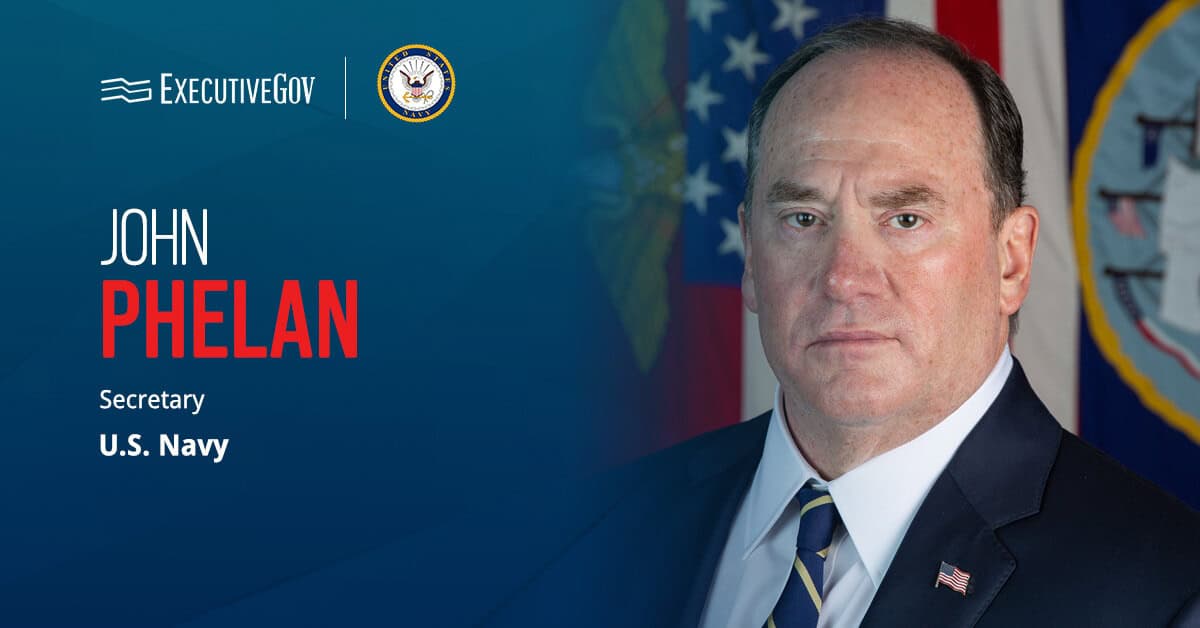
Navy Secretary John Phelan. The U.S. Navy plans to cancel the final four ships in its Constellation-class frigate program.

The U.S. Navy has announced plans to cancel the final four ships in its $22 billion Constellation-class frigate program.

Table of Contents

  • Why Is the Navy Keeping Only Two Constellation-Class Frigates?
  • How Does the Navy Plan to Accelerate Shipbuilding?
  • Why Has the Constellation-Class Frigate Program Been Delayed?

Why Is the Navy Keeping Only Two Constellation-Class Frigates?

In a video posted to X on Wednesday, Navy Secretary John Phelan said the service intends to retain the two vessels currently under construction. He described the decision as part of a strategic shift to prioritize fleet readiness and deliver warfighting advantage more efficiently.

“From day one I made it clear: I won’t spend a dollar if it doesn’t strengthen readiness or our ability to win,” said Phelan. “To keep that promise, we’re reshaping how we build and field the fleet—working with industry to deliver warfighting advantage, beginning with a strategic shift away from the Constellation-class frigate program.”

How Does the Navy Plan to Accelerate Shipbuilding?

Phelan also emphasized the need to revitalize the U.S. shipbuilding industrial base by adopting a new framework that focuses on fast-tracking the construction and deployment of more ships.

“A key factor to this decision is the need to grow the fleet faster to meet tomorrow’s threats,” said Phelan. “This framework puts the Navy on a path to more rapidly construct new classes of ships and deliver the capability our warfighters need in greater numbers and on a more urgent timeline.”

Why Has the Constellation-Class Frigate Program Been Delayed?

The shipbuilding initiative, awarded to Fincantieri Marinette Marine, has faced criticism over repeated schedule delays and budget overruns, Breaking Defense reported. In May 2024, the Government Accountability Office released a report titled, Unstable Design Has Stalled Construction and Compromised Delivery Schedules, which noted the Navy’s decision to start building the FFG 62 Constellation-class frigate before finalizing its design caused at least a three-year delay in the program.

DoD/Executive Moves/News
Senate Confirms Richard Correll as New STRATCOM Commander
by Elodie Collins
Published on November 25, 2025
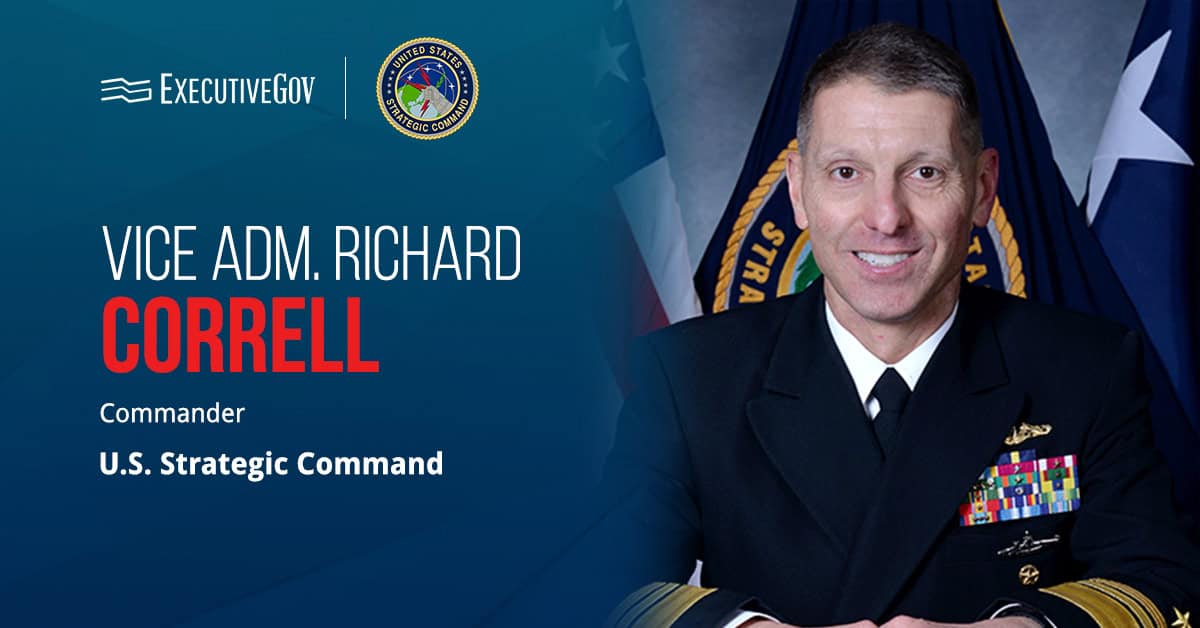
Vice Adm. Richard Correll, commander of STRATCOM. Correll previously served as deputy commander of STRATCOM

The Senate confirmed Vice Adm. Richard Correll’s nomination as commander of the U.S. Strategic Command during a voice vote Thursday, according to congressional records.

Correll succeeds Air Force Gen. Anthony Cotton, who has led the combatant command since 2022.

Table of Contents

  • Who Is STRATCOM’s New Commander?
  • What Are Richard Correll’s Priorities as STRATCOM Commander?

Who Is STRATCOM’s New Commander?

Correll joined STRATCOM as director of plans and policy and then later became its deputy commander, a role he has held for three years.

An experienced submariner, Correll has commanded USS Topeka, Submarine Squadron 11 and Submarine Group 7. He has also deployed aboard the USS Henry M. Jackson, USS Hyman G. Rickover and USS Buffalo.

His staff assignments include director of strategic integration within the Office of the Chief of Naval Operations and as military assistant for the under secretary of defense for policy and the deputy under secretary of defense for strategy plans and forces.

What Are Richard Correll’s Priorities as STRATCOM Commander?

STRATCOM is responsible for missile threat assessment, nuclear operations, and nuclear command, control and communications. The command oversaw Operation Midnight Hammer in June, which included long-range B-2 stealth bomber strikes on Iran’s nuclear facilities. Stratcom units have also been conducting B-52 flights near Latin America, according to DefenseScoop.

During his confirmation hearing, Correll echoed his predecessor’s assessment that the command needs more B-21 bombers.

“I agree with Gen. Cotton’s assessment, and I believe he’s been on the record saying between 140 and 150 B-21s,” he told lawmakers. He also added that the B-52 life-extension program is essential to deterrence, Air and Space Forces Magazine reported.

In his written statement, he also highlighted the need to build the nation’s electronic warfare capabilities

“As demonstrated in recent exercises, deficiencies continue to be repeated, which range from the lack of the availability of high-end training equipment to the infrequency of training opportunities across the force,” he explained. “Training deficiencies, coupled with shortcomings in blue force capabilities, contribute to the force’s inability to maintain previous [electro-magnetic spectrum] advantages.”

Artificial Intelligence/News
Trump Signs EO Establishing Genesis Mission to Bolster AI Use for Scientific Research
by Elodie Collins
Published on November 25, 2025
The White House. The White House issued a new AI executive order centered on the Genesis Mission initiative.

President Donald Trump has signed an executive order establishing the Genesis Mission, a national effort to use artificial intelligence to accelerate scientific discovery and strengthen U.S. leadership in AI.

Trump Signs EO Establishing Genesis Mission to Bolster AI Use for Scientific Research

Learn how government, military and industry are utilizing AI to process data and carry out complex missions at the Potomac Officers Club’s 2026 Artificial Intelligence Summit on March 19. The event will bring together AI experts from public and private sectors to identify new use cases in insightful speeches and panel discussions and build new partnerships. Secure your tickets as early as today!

What Is Genesis Mission?

The order, issued Monday, directs Energy Secretary Chris Wright to bring together data, high-performance computing and scientific expertise across all national laboratories into a coordinated system, with the aim to enhance federal research and development activities.

According to the White House, scientific progress has slowed and new drug approvals have declined despite rising research budgets. The EO noted that AI tools can analyze experiments and accelerate the production of data.

The Department of Energy will also establish a closed-loop AI experimentation platform linking supercomputers with data resources to generate scientific foundation models and support robotic laboratories.

“Throughout history, from the Manhattan Project to the Apollo mission, our nation’s brightest minds and industries have answered the call when their nation needed them,” Wright stated on Monday. “Today, the United States is calling on them once again. Under President Trump’s leadership, the Genesis Mission will unleash the full power of our National Laboratories, supercomputers, and data resources to ensure that America is the global leader in artificial intelligence and to usher in a new golden era of American discovery.”

The EO builds on earlier policies that the Trump administration has introduced to strengthen U.S. superiority in AI globally. In July, the White House published the AI Action Plan to remove red tape and regulations that hinder innovation. Trump also issued an EO to streamline the authorization of AI data center construction on federal lands.

Acquisition & Procurement/DoD/News
Army Issues Second Sources Sought Notification for Company-Level SUAS
by Miles Jamison
Published on November 25, 2025
US Army logo. The Army issued its second sources sought notification for the Company-Level Directed Requirement SUAS program.

The U.S. Army has released its second sources sought notification for the Company-Level Directed Requirement, or CoLvl DR, Small Uncrewed Aircraft System program.

Army Issues Second Sources Sought Notification for Company-Level SUAS

Join industry leaders and government officials at the Potomac Officers Club’s 2026 Army Summit on June 18. Attendees will gain insights into how the revitalized Army is modernizing technology, streamlining contracting and strengthening a unified network.

The Army said Monday the SSN seeks to leverage industry innovation to advance SUAS technologies and fast-track their deployment to troops. The solicitation aims to determine how vendors’ software supports the Army’s Uncrewed Vehicle Control and Software Product Development Services initiatives, enabling integration with future programs like Medium Range Reconnaissance and building more adaptable SUAS systems.

Table of Contents

  • What Is the CoLvl DR Program?
  • What Is the Role of the UAS Marketplace Strategy?

What Is the CoLvl DR Program?

The CoLvl DR program, which supports the Army’s Transformation in Contact strategy, provides commercially available SUAS capabilities to brigade combat teams for urgent operational needs. It treats the UAS as a full system rather than just an aircraft, enabling maneuver units to employ modular, reconfigurable and expendable payloads for reconnaissance, surveillance and target acquisition.

What Is the Role of the UAS Marketplace Strategy?

The UAS Marketplace Strategy identifies vetted commercial systems for the Army’s Marketplace Storefront, which is intended to optimize SUAS procurement processes and delivery of advanced capabilities, while fostering competition for SUAS technology. Industry responses to the SSN will help populate the Marketplace Storefront.

Contract Awards/News/Space
NASA Restructures Boeing Starliner Crew Transport Contract
by Kristen Smith
Published on November 25, 2025
Starliner. NASA has revised its commercial crew contract with Boeing.

NASA has revised its commercial crew contract with Boeing, changing the number of committed Starliner flights and shifting the program’s next mission to an uncrewed demonstration as certification work continues.

Table of Contents

  • What Has Changed in the Boeing Commercial Crew Contract?
  • Why Was the Starliner Mission Plan Adjusted?
  • What Comes Next for Starliner?

What Has Changed in the Boeing Commercial Crew Contract?

NASA said Monday that under the modified Commercial Crew Transportation Capability contract, it will order four Starliner flights to the International Space Station, with two additional flights retained as options. The original 2014 contract had envisioned up to six crewed rotations.

The Starliner-1 mission will now launch without astronauts on board and carry cargo to the station while validating propulsion system upgrades and other changes. NASA and Boeing are targeting no earlier than April 2026 for that flight, pending the completion of testing, certification activities and mission readiness reviews.

Why Was the Starliner Mission Plan Adjusted?

The June 2024 Starliner crew flight test revealed several propulsion anomalies, including multiple helium leaks in the service module and failures in reaction control thrusters during approach to the ISS. Follow-on ground work determined that a Teflon seal had expanded under heat, likely constricting propellant flow and contributing to the thruster issues.

As NASA and Boeing evaluated the findings, the vehicle’s return was delayed and ultimately completed without a crew on board while additional certification work began.

What Comes Next for Starliner?

Steve Stich, manager of NASA’s Commercial Crew Program, said the contract modification allows the program to focus on safely completing certification in 2026 and planning future missions based on station needs through 2030.

If Starliner-1 is successful and the spacecraft is certified, Boeing would then conduct up to three crewed flights under the revised order.

NASA emphasized that bringing Starliner to full operational status remains essential to its long-term strategy for maintaining a continuous human presence in low Earth orbit and preserving dissimilar redundancy in commercial crew access.

Currently, NASA is using SpaceX’s Crew Dragon spacecraft to transport astronauts to and from the ISS.

Previous 1 … 72 73 74 75 76 … 2,719 Next
News Briefing
I'm Interested In:
Recent Posts
  • Leonel Garciga Steps Down as Army CIO
  • CAISI Signs Frontier AI Testing Agreements With 3 Companies
  • New ARPA-H Program Aims to Accelerate Biomedical Research With AI
  • Army, Defense Firms Launch ‘Right to Integrate’ Hackathon Initiative
About

ExecutiveGov, published by Executive Mosaic, is a site dedicated to the news and headlines in the federal government. ExecutiveGov serves as a news source for the hot topics and issues facing federal government departments and agencies such as Gov 2.0, cybersecurity policy, health IT, green IT and national security. We also aim to spotlight various federal government employees and interview key government executives whose impact resonates beyond their agency.

Read More >>

RSS ExecutiveBiz
  • Exiger VP Dan Kunze on the Interconnection of Emerging Technologies, Energy & Space
  • LMI’s RAPTR Platform Earns DOW Tradewinds ‘Awardable’ Status
  • Patrick Roddy Joins Sodexo as COO for Facility Management, Government Services
  • Peraton Labs Secures NSF Award for Low-Latency XR Medical Collaboration Research
  • Nokia Federal, Lockheed Martin Launch Modular 5G Capability for Defense Platforms
  • LogicMonitor, IBM, Red Hat Collaborate to Automate IT Operations
RSS GovConWire
  • Intel Taps Alex Katouzian to Lead Client Computing & Physical AI; Pushkar Ranade Named CTO
  • Anduril Books $100M Space Force Contract Modification for SDA Mesh Networking Work
  • ICE Plans Shared EHR Platform BPA Exceeding $100M
  • Leidos Reports $4.4B Q1 FY26 Revenue Driven by Strong Demand Across Key Markets
  • Sarah Campbell Named Future Technologies COO
  • SAP NS2 Appoints Retired Army Gen. Gus Perna as EVP & Strategic Customer Officer
Executive Gov

Copyright © 2025
Executive Mosaic
All Rights Reserved

  • Executive Mosaic
  • GovCon Wire
  • ExecutiveBiz
  • GovCon Exec Magazine
  • POC
  • Home
  • Acquisition & Procurement
  • Agencies
    • DoD
    • Intelligence
    • DHS
    • Civilian
    • Space
  • Cybersecurity
  • Technology
  • Executives
    • Profiles
    • Announcements
    • Awards
  • News
  • Articles
  • About
  • Wash100
  • Contact Us
    • Advertising
    • Submit your news
    • Jobs
Go toTop