Processing....

Executive Gov

Digital News Coverage of Government Contracting and Federal Policy Landscape
Sticky Logo
  • Home
  • Acquisition & Procurement
  • Agencies
    • DoD
    • Intelligence
    • DHS
    • Civilian
    • Space
  • Cybersecurity
  • Technology
  • Executives
    • Profiles
    • Announcements
    • Awards
  • News
  • Articles
  • About
  • Wash100
  • Contact Us
    • Advertising
    • Submit your news
    • Jobs
Logo
DoD/Executive Moves/Intelligence/News
Lt. Gen. Michele Bredenkamp Takes on NGA Director Role
by Jane Edwards
Published on November 11, 2025
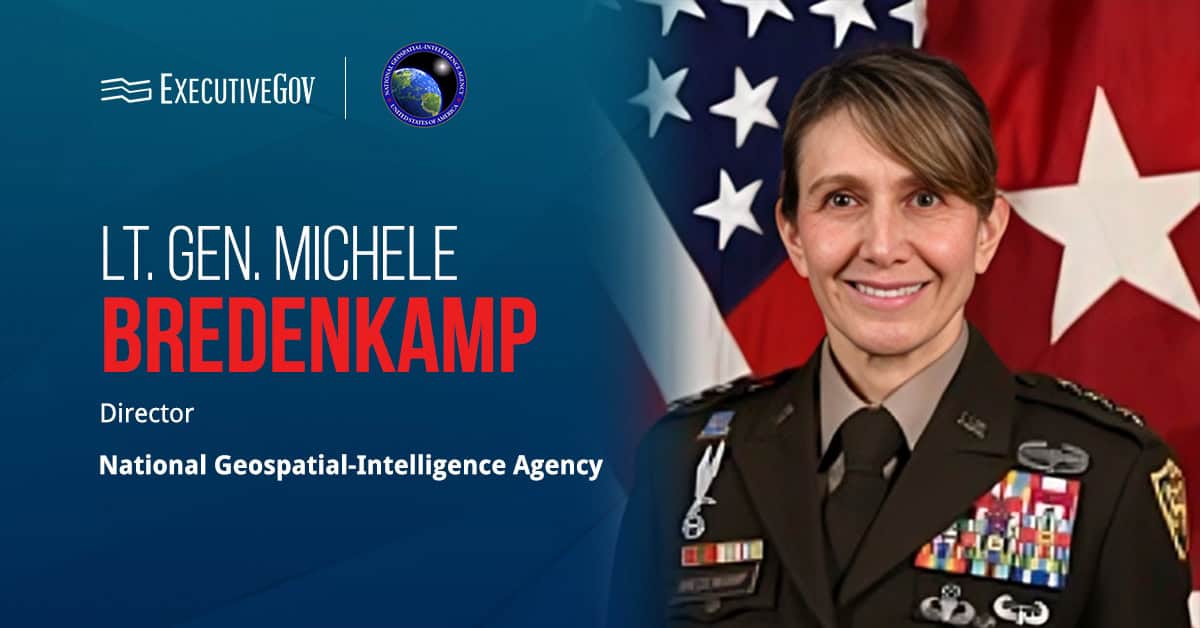
Michele Bredenkamp. The lieutenant general took on the role of director of NGA.

Lt. Gen. Michele Bredenkamp assumed the role of director of the National Geospatial-Intelligence Agency during a change of directorship ceremony at NGA headquarters.

The Office of the Director of National Intelligence said Monday the event was attended by Principal Deputy Director of National Intelligence Aaron Lukas and Bradley Hansell, under secretary of defense for intelligence and security.

Table of Contents

  • Who Is Bredenkamp Succeeding?
  • Who Is Lt. Gen. Michele Bredenkamp?

Who Is Bredenkamp Succeeding?

The ceremony also recognized Vice Adm. Frank Whitworth, the outgoing NGA director, with the George Washington Spymaster Award for his leadership across 30 years of public service.

Whitworth, a four-time Wash100 awardee, noted that Bredenkamp is inheriting an agency at the height of its capabilities, but emphasized that there is still much more work ahead.

“I could not be more confident in NGA’s future. Thank you for stepping up to the plate, and thank you for your friendship,” the vice admiral added.

As head of NGA, Bredenkamp will oversee GEOINT collection, analysis and distribution in support of national security missions.

Who Is Lt. Gen. Michele Bredenkamp?

Bredenkamp has over three decades of military experience. She most recently served as the director’s adviser for military affairs at ODNI. 

Prior to this role, she was commanding general of U.S. Army Intelligence and Security Command at Fort Belvoir in Virginia.

Her joint assignments include director of intelligence for U.S. Forces Korea; vice director for intelligence, J-2, on the Joint Staff; and deputy director of program analysis and evaluation, G-8, U.S. Army. 

Bredenkamp said she witnessed firsthand how GEOINT provides clarity, enhances understanding and gives commanders and policymakers a decision advantage. She noted that NGA experts play a crucial role in supporting critical operations worldwide by protecting intelligence sources, safeguarding the homeland and advancing American interests.

“I look forward to building on our GEOINT foundation and rapidly advancing our role as the world-class leader in producing decisive and actionable geospatial intelligence to decisionmakers and warfighters at every level,” she added.
DoD/Executive Moves/News
Tom Harker Appointed DOD Deputy CFO
by Miles Jamison
Published on November 11, 2025
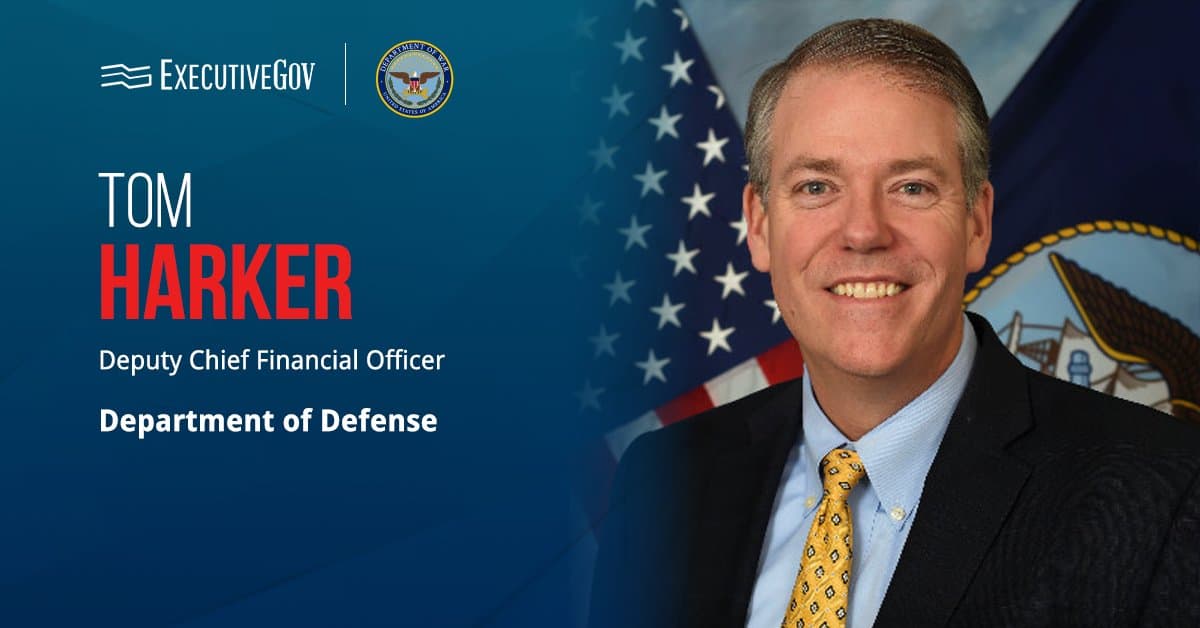
DOD Deputy CFO Tom Harker. Tom Harker has been appointed deputy chief financial officer at the Department of Defense.

Tom Harker announced on LinkedIn Monday that he has been officially named deputy chief financial officer of the Department of Defense.

According to Harker, he has been tasked with overseeing the department’s first-ever clean audit and will implement enhancements to business processes and systems to boost transparency, efficiency, effectiveness and audit readiness.

Who Is Tom Harker?

Harker is a seasoned executive and government leader with extensive experience in federal service, military operations and private-sector consulting. He currently serves as president of Harker Group, providing strategic guidance to corporations, partnerships and government entities while serving on boards of directors and advisory councils.

In government, he held various senior leadership roles while with the Department of the Navy. He served as acting secretary of the Navy, as well as assistant secretary and CFO. He was also under secretary of defense comptroller and CFO of the DOD.

His prior experience includes executive financial leadership roles at the Departments of Veterans Affairs, Housing and Urban Development, and the U.S. Coast Guard. He also held senior positions in private-sector consulting at Grant Thornton and served as a policy analyst at the Office of Management and Budget.

Harker began his career in the Coast Guard, progressing from ensign to senior operational and financial management positions, combining operational leadership with strategic financial oversight to enhance organizational effectiveness across military and civilian sectors.

Executive Moves/News
Former USDA CIO Gary Washington Named ACT-IAC Chief Strategy Officer
by Jane Edwards
Published on November 11, 2025
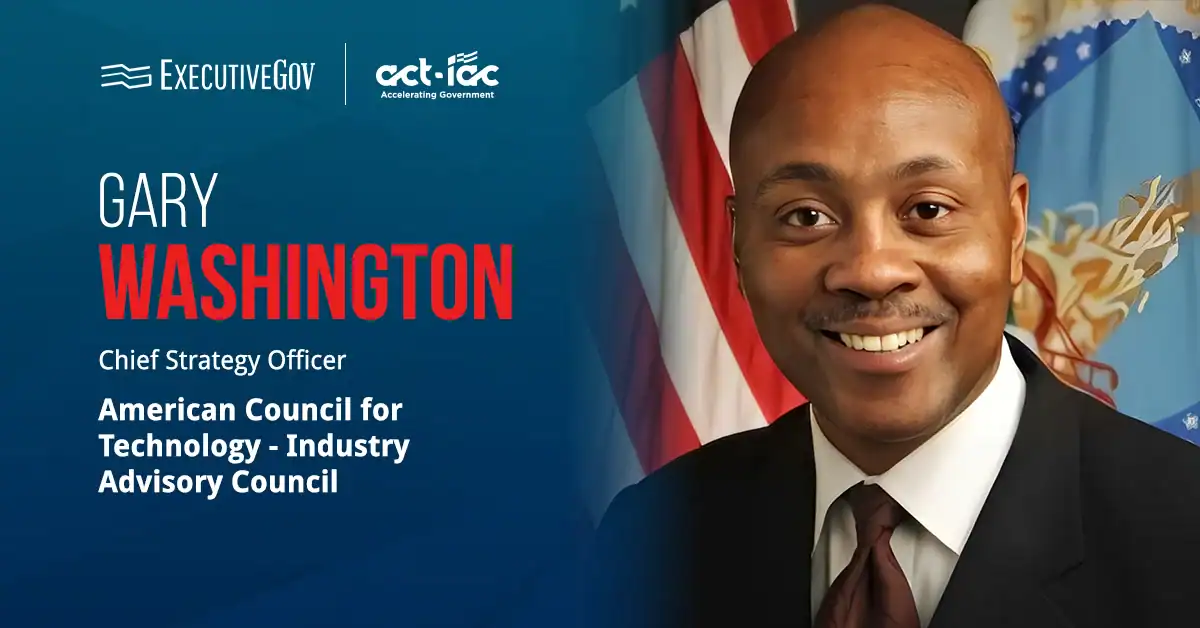
Gary Washington. The former CIO at USDA has been named ACT-IAC’s chief strategy officer.

The American Council for Technology-Industry Advisory Council, or ACT-IAC, has appointed Gary Washington, former chief information officer at the U.S. Department of Agriculture, as chief strategy officer.

In a LinkedIn post, ACT-IAC said Washington will assume his new role at the nonprofit organization later in November.

“Gary Washington is an outstanding federal technology leader with keen insights and experience across government and the commercial sector,” said Dave Wennergren, CEO of ACT-IAC CEO and a two-time Wash100 awardee. “We are absolutely delighted to have Gary join the ACT-IAC leadership team and support our continuing mission to accelerate government mission outcomes through collaboration, leadership and education.”

Nextgov/FCW reported Monday that Washington transitioned to the newly created role of chief innovation officer at USDA after the department tapped Sam Berry, an associate from the Department of Government Efficiency, to serve as CIO in September.

Who Is Gary Washington?

Washington spent eight years as CIO of USDA. In this capacity, he oversaw the development of IT strategies, portfolio management, IT operations and information security. He helped establish five IT modernization centers of excellence and advanced cloud adoption, IT infrastructure optimization, service delivery analytics and customer experience.

He also served as acting secretary of USDA and the department’s acting deputy secretary.

Washington’s federal career spans multiple agencies, including the Office of Management and Budget, the Food and Drug Administration and the Bureau of Alcohol, Tobacco and Firearms. At FDA, he served as director of IT governance and deputy director of infrastructure.

The Strayer University graduate spent a decade in the U.S. Air Force as a computer operator and command control specialist.

DoD/Government Technology/News
Army Secretary Shares Plans to Procure 1 Million Drones, Bolster Domestic Supply Chain
by Elodie Collins
Published on November 11, 2025
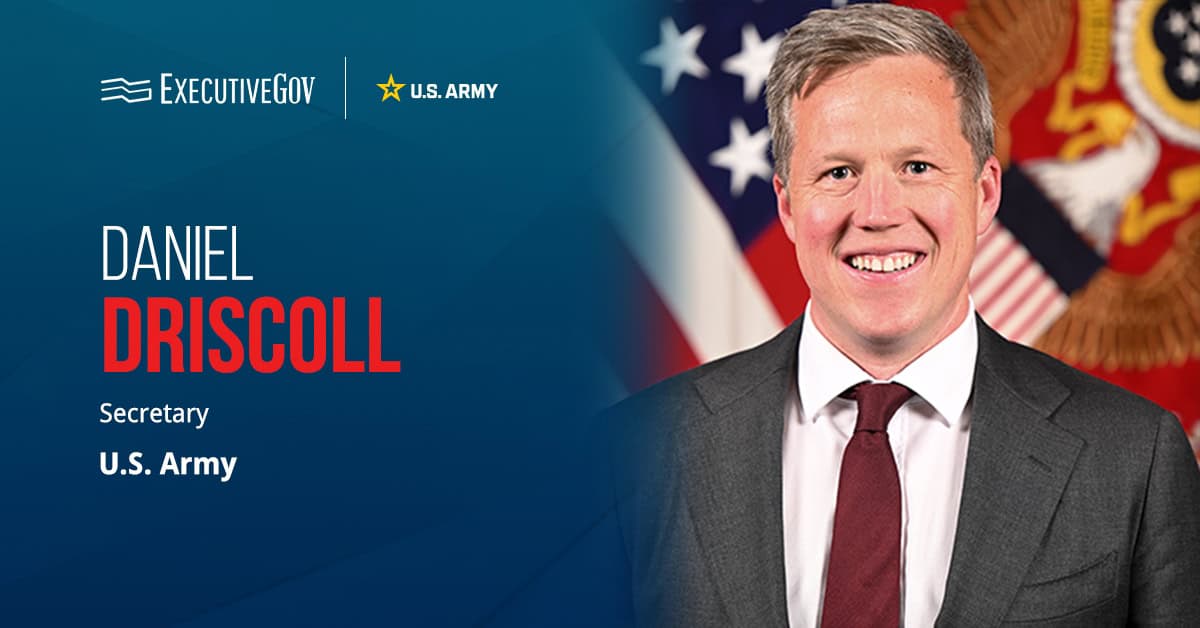
Army Secretary Daniel Driscoll. Driscoll shared Army plans to scale drone procurement

The U.S. Army plans to buy at least one million drones over the next two to three years as it prepares for future conflicts, Army Secretary Daniel Driscoll said in an interview with Reuters.

The service could later acquire anywhere from half a million to several million drones annually, a significant expansion from the roughly 50,000 the Army purchases each year.

“It is a big lift,” the official admitted. “But it is a lift we’re very capable of doing.”

Table of Contents

  • Why Is the Army Accelerating Drone Procurement?
  • How Will the Pentagon Support Its Drone Goals?

Why Is the Army Accelerating Drone Procurement?

He said the Army is drawing lessons from the Russia-Ukraine war, where small and low-cost drones have been used at scale because of the heavy presence of anti-aircraft systems that prevent conventional warplanes from approaching the frontlines.

Driscoll said his priority is building a domestic supply chain capable of manufacturing critical components such as motors, sensors, batteries and circuit boards. China currently dominates drone manufacturing.

Ukraine and Russia each produce about 4 million drones a year, while China likely produces more than twice that amount, he noted.

How Will the Pentagon Support Its Drone Goals?

The Pentagon is already making significant changes to how it acquires drones. 

In 2023, the DOD introduced Replicator, a department-wide initiative to rapidly acquire and field thousands of autonomous platforms.

Defense Secretary Pete Hegseth, a 2025 Wash100 Award winner, also issued a memo in July that rolls back policies that limited drone production and access. He also said the DOD will approve hundreds of American products for military procurement, a move that could strengthen the U.S. drone manufacturing base.

In addition, lawmakers have introduced legislation that would establish a drone manufacturing facility in Texas.

However, Driscoll shared that he plans to spread funding across companies rather than rely on a single site. He is aiming to partner with companies that also build drones for commercial use.

“Drones are the future of warfare, and we’ve got to invest in both the offensive and defense capabilities against them,” he stated.

Acquisition & Procurement/DoD/News/Space
SDA Missile Tracking Contracts Delayed as DOD Diverts Funds to Military Pay
by Kristen Smith
Published on November 11, 2025
Space Development Agency logo. The DOD has redirected SDA Tranche 3 satellite funding to cover troop salaries.

Funding for the Space Development Agency’s next round of missile tracking satellite contracts has been temporarily diverted to cover troop salaries during the ongoing government shutdown, according to a Breaking Defense report citing government and industry sources.

The diversion affects awards planned for SDA’s Tranche 3 Tracking Layer. The awards, originally expected this month, are now on hold pending new budget authorizations.

Table of Contents

  • How Much SDA Funding Is Affected?
  • What Is the Tranche 3 Tracking Layer?
  • Will Funding Be Restored?

How Much SDA Funding Is Affected?

The Department of Defense previously announced plans to reallocate about $8 billion from unobligated research and development accounts to sustain military pay through the shutdown. Multiple programs, including SDA’s Tranche 3 effort, are among those impacted.

An industry source familiar with the program told Breaking Defense that the SDA faces a reduction of roughly $700 million, affecting both Tranche 3 planning and milestone payments tied to Tranche 2 development.

What Is the Tranche 3 Tracking Layer?

The Tranche 3 Tracking Layer is a network of low Earth orbit satellites designed to detect and track ballistic and hypersonic missile launches. SDA intends to select three companies, each delivering 18 satellites, to expand global missile detection and early warning coverage.

The new constellation will build upon capabilities from earlier iterations, which include infrared sensors capable of identifying missile launches and supporting targeting data for interceptors.

Will Funding Be Restored?

​A government source knowledgeable in acquisition matters indicated that research and development accounts used to pay military salaries will be reimbursed once full fiscal year funding resumes, noting that the repayment will likely include Tranche 3 Tracking Layer funding because of its direct link to the Golden Dome defense shield.

Acquisition & Procurement/DHS/News
Coast Guard Launches Search for Training Center Location Amid Planned Personnel Growth
by Elodie Collins
Published on November 11, 2025
The official seal of the U.S. Coast Guard. The Coast Guard posted an RFI for its planned national training center

The U.S. Coast Guard has issued a request for information to identify potential sites for a new national training center.

The service said the planned facility will address current training space shortfalls and expand capacity to support long-term operational needs in line with Force Design 2028.

Introduced in April, Force Design 2028 outlines campaigns that aim to modernize the service and ensure readiness for future national requirements. As part of the initiative, the Coast Guard plans to expand its workforce by up to 15,000 personnel.

Coast Guard Launches Search for Training Center Location Amid Planned Personnel Growth

The Coast Guard operates under the Department of Homeland Security during peacetime. Learn more about how the private sector can support USCG initiatives at the Potomac Officers Club’s 2025 Homeland Security Summit — happening tomorrow, Nov. 12! The event will feature a keynote speech from Homeland Security Secretary Kristi Noem, a 2025 Wash100 Award winner, and panel discussions on key developments in homeland security. You can still get your tickets to the highly anticipated event today.

What Facilities Does the Coast Guard Need?

The Coast Guard outlined minimum requirements for candidate sites, including lodging for 1,200 recruits, a dining facility for 400 personnel and a medical clinic that can support 1,000 individuals with at least 200 medical and 200 dental encounters each day. Additional needs include 14 classrooms, an auditorium, a six-lane pool, a multipurpose gym and office space.

According to the RFI posted on SAM.gov Monday, the training facility must be fully enclosed with controlled access or able to be secured as a single parcel and located in one of the 150 largest metropolitan areas within the continental United States. It must also be located near airports, schools, emergency services, public transportation and other essential amenities.

Communities that meet initial criteria may submit expressions of interest until Dec. 8.

Acquisition & Procurement/DoD/News
DIU Seeks Advanced Industrialized Construction Methods to Modernize Barracks
by Miles Jamison
Published on November 11, 2025
DIU logo. DIU is seeking advanced industrialized construction methods to modernize aging barracks.

The Defense Innovation Unit has issued a commercial solutions opening seeking advanced manufacturing and industrialized construction, or IC, methods to modernize the Department of Defense’s aging barracks.

Table of Contents

  • What Is the BR-IC Project?
  • Who Does DIU Want to Partner With?

What Is the BR-IC Project?

DIU said the Barracks Resilience Through Industrialized Construction, or BR-IC, project aims to address structural issues, environmental decay and outdated heating, ventilation, and air conditioning systems affecting servicemember health and morale, and force readiness.

Who Does DIU Want to Partner With?

The agency is seeking U.S. and international vendors capable of developing IC designs that rapidly deliver high-quality, energy-efficient facilities. The project centers on repeatable, modular designs and construction processes adaptable to diverse geographical locations.

Proposed approaches should utilize modular, hybrid or Kit of Parts methods to reduce design and build timelines by 30 percent or more and lower costs by 20 percent or more compared to traditional construction methods. Vendors must also deliver durable, sustainable buildings validated by third-party certification.

Defense Secretary Pete Hegseth, a 2025 Wash100 Award winner, highlighted the urgency during his announcement of the Barracks Taskforce on Oct. 7, stressing the need for livable, resilient facilities that match battlefield standards.

“How can we expect them to be ready for anything on the battlefield when their own living space is a constant source of stress and frustration,” said Hegseth.

Executive Moves/News
Energy Department Names Dawn Zimmer Permanent CIO
by Miles Jamison
Published on November 10, 2025
Energy Department CIO Dawn Zimmer. Dawn Zimmer has been named chief information officer of the Department of Energy.

The Department of Energy has named Dawn Zimmer as its permanent chief information officer, marking the third official to hold the role since the start of the second Trump administration, NextGov reported Friday.

Table of Contents

  • How Did Dawn Zimmer Take on Acting CIO Roles at Energy?
  • Who Is Dawn Zimmer?

How Did Dawn Zimmer Take on Acting CIO Roles at Energy?

Zimmer, who joined the Energy Department as principal deputy CIO in November 2024, served as acting CIO multiple times during a rotation of short-lived permanent officials under Trump’s second term. She first assumed the role during the presidential transition, then briefly served as acting CIO after Ryan Riedel, who was appointed CIO in early February, vacated the position in March. Ross Graber was then appointed CIO but stepped down in July to take on the chief information security officer role at the National Nuclear Security Administration, paving the way for Zimmer to assume the acting CIO role once more.

Who Is Dawn Zimmer?

Zimmer is a 25-year IT veteran with extensive expertise in service delivery, business partnerships, relationship management, and strategic planning and execution. Before joining the Energy Department, Zimmer was the executive director of IT engagement and experience at Virginia Tech. She also served at the Federal Aviation Administration and the Department of Justice. Earlier in her career, Zimmer spent time at Ulticom, GE Capital and Gartner Group.

Government Technology/News
X-energy Kicks Off Irradiation Tests of TRISO-X Nuclear Fuel at INL
by Jane Edwards
Published on November 10, 2025
TRISO-X fuel experiment. X-energy started the first irradiation tests of its TRISO-X nuclear fuel at Idaho National Lab.

X-energy has launched the first U.S. irradiation tests of its advanced nuclear fuel, TRISO-X, at Idaho National Laboratory’s Advanced Test Reactor. 

The Department of Energy said Thursday the 13-month testing campaign is part of X-energy’s efforts to establish the country’s first commercial advanced nuclear fuel fabrication facility to advance the deployment of its small modular reactor design, Xe-100, and other commercial reactors.

Table of Contents

  • Why Is TRISO-X Testing at INL Important for Advanced Nuclear Energy?
  • What’s Next for TRISO-X?

Why Is TRISO-X Testing at INL Important for Advanced Nuclear Energy?

According to DOE’s Office of Nuclear Energy, the experiments will evaluate how the company’s fuel performs under a range of power levels, burnup conditions and temperatures.

“TRISO-X embodies decades of U.S. innovation in fuel design and this testing program brings us one step closer to redefining the standard for safety and reliability in nuclear energy,” said X-energy CEO J. Clay Sell.

This marks the first time that TRISO-X fuel pebbles have undergone irradiation testing in a U.S. facility. TRISO-X, a specialized version of TRISO fuel, consists of uranium, carbon and oxygen fuel kernels encapsulated by multiple layers of carbon- and ceramic-based materials. This structure prevents the release of radioactive fission products and allows the fuel to withstand extreme heat and radiation.

“The experiment cycle that started at INL’s Advanced Test Reactor is a huge one for supporters of advanced nuclear,” said Dan Wachs, national technical director for DOE’s Advanced Fuels Campaign. “The test marks INL’s first irradiations of TRISO fuel for advanced reactors since 2020 and the first use a new lead-out test capability at ATR that makes these advanced fuel tests possible.”

What’s Next for TRISO-X?

Once irradiation testing at INL is complete, post-irradiation examinations will commence at INL and Oak Ridge National Laboratory.

X-energy is also building the TX-1 fuel fabrication facility in Oak Ridge, Tennessee, which could be the first advanced nuclear fuel plant licensed by the Nuclear Regulatory Commission in over 50 years.

According to DOE, the first Xe-100 reactors will be constructed at Dow’s Seadrift, Texas-based manufacturing site, potentially becoming the first grid-scale advanced reactors to provide both electricity and high-temperature heat for industrial operations.

Acquisition & Procurement/DoD/News
Hegseth Announces Pentagon Acquisition Overhaul
by Jane Edwards
Published on November 10, 2025
Pentagon. DOD Secretary Pete Hegseth announced major reforms to the Pentagon's weapons procurement process.

Defense Secretary Pete Hegseth, a 2025 Wash100 awardee, unveiled sweeping reforms to the Department of Defense’s weapons acquisition system during his speech Friday at the National War College in Washington, D.C.

“Speed to delivery is now our organizing principle,” Hegseth said in his speech titled the “Arsenal of Freedom.” “It is the decisive factor in maintaining deterrence and warfighting advantage.”

Hegseth Announces Pentagon Acquisition Overhaul

Following Hegseth’s announcement, the Potomac Officers Club’s 2026 Defense R&D Summit on Jan. 29 offers a timely opportunity to engage with the leaders shaping the future of U.S. military capabilities. Don’t miss your chance to connect with decision-makers and innovators driving the next generation of defense technologies — and see how your organization can thrive in an era of faster, more agile acquisition. Book your spot now!

According to Federal News Network, Hegseth said defense contractors willing to take risks and adapt to DOD’s faster, more competitive acquisition model will find new growth opportunities, while companies resistant to change may be left behind. 

He added that the Pentagon intends to “make defense contracting competitive again” and that firms “too comfortable with the status quo” will no longer be welcome.

Days before Hegseth’s address, a six-page draft memo detailing key DOD acquisition reforms circulated.

Table of Contents

  • What Are the New Defense Acquisition Reforms?
  • How Does the Potomac Officers Club View Hegseth’s Reforms?

What Are the New Defense Acquisition Reforms?

  • Transition to a Warfighting Acquisition System: The Pentagon has redesignated the Defense Acquisition System as the Warfighting Acquisition System to prioritize the urgent delivery of operational capabilities to warfighters. The change seeks to recognize acquisition as a warfighting function and enable the continuous improvement of warfighting capabilities, according to a memo signed by Hegseth on Friday.
  • Appoint Portfolio Acquisition Executives or PAEs: PAEs will replace program executive officers, manage weapon portfolios and reallocate funding to high-priority efforts.
  • Adopt commercial-first practices: According to the Air and Space Forces Magazine, the secretary stated that the DOD will prioritize commercial off-the-shelf technology, accept imperfect platforms that can be iterated and delivered more quickly, and expand competition and modularity in procurement.
  • Introduce portfolio scorecards: The department will hold companies accountable by tracking program performance, including how much commercial capability a program contains and whether it meets schedule targets. 
  • Reform industrial base production: New incentives will encourage manufacturers to scale production at “wartime speed.” The department will also negotiate contracts on faster timelines.
  • Streamline foreign military sales: The Defense Security Cooperation Agency will relocate from the Pentagon’s policy shop to its acquisition office to expedite the sale of weapons to foreign governments.

How Does the Potomac Officers Club View Hegseth’s Reforms?

Jim Garrettson, founder of the Potomac Officers Club and CEO of Executive Mosaic, praised Hegseth’s initiative, saying:

“We recognize and salute Secretary Hegseth’s initiative. The Potomac Officers Club is dedicated to helping government agencies like the Department of Defense achieve their procurement needs more quickly and effectively. Our mission is to weave an executive-level fabric of leaders to the benefit of the government contracting community, so that together the best vendor solutions can be brought to bear on the GovCon market.”

Previous 1 … 79 80 81 82 83 … 2,719 Next
News Briefing
I'm Interested In:
Recent Posts
  • Leonel Garciga Steps Down as Army CIO
  • CAISI Signs Frontier AI Testing Agreements With 3 Companies
  • New ARPA-H Program Aims to Accelerate Biomedical Research With AI
  • Army, Defense Firms Launch ‘Right to Integrate’ Hackathon Initiative
About

ExecutiveGov, published by Executive Mosaic, is a site dedicated to the news and headlines in the federal government. ExecutiveGov serves as a news source for the hot topics and issues facing federal government departments and agencies such as Gov 2.0, cybersecurity policy, health IT, green IT and national security. We also aim to spotlight various federal government employees and interview key government executives whose impact resonates beyond their agency.

Read More >>

RSS ExecutiveBiz
  • Exiger VP Dan Kunze on the Interconnection of Emerging Technologies, Energy & Space
  • LMI’s RAPTR Platform Earns DOW Tradewinds ‘Awardable’ Status
  • Patrick Roddy Joins Sodexo as COO for Facility Management, Government Services
  • Peraton Labs Secures NSF Award for Low-Latency XR Medical Collaboration Research
  • Nokia Federal, Lockheed Martin Launch Modular 5G Capability for Defense Platforms
  • LogicMonitor, IBM, Red Hat Collaborate to Automate IT Operations
RSS GovConWire
  • Intel Taps Alex Katouzian to Lead Client Computing & Physical AI; Pushkar Ranade Named CTO
  • Anduril Books $100M Space Force Contract Modification for SDA Mesh Networking Work
  • ICE Plans Shared EHR Platform BPA Exceeding $100M
  • Leidos Reports $4.4B Q1 FY26 Revenue Driven by Strong Demand Across Key Markets
  • Sarah Campbell Named Future Technologies COO
  • SAP NS2 Appoints Retired Army Gen. Gus Perna as EVP & Strategic Customer Officer
Executive Gov

Copyright © 2025
Executive Mosaic
All Rights Reserved

  • Executive Mosaic
  • GovCon Wire
  • ExecutiveBiz
  • GovCon Exec Magazine
  • POC
  • Home
  • Acquisition & Procurement
  • Agencies
    • DoD
    • Intelligence
    • DHS
    • Civilian
    • Space
  • Cybersecurity
  • Technology
  • Executives
    • Profiles
    • Announcements
    • Awards
  • News
  • Articles
  • About
  • Wash100
  • Contact Us
    • Advertising
    • Submit your news
    • Jobs
Go toTop